
Meta Looked at Kalshi Before Building Arena as Prediction Markets Enter Big Tech's Orbit
Meta explored acquiring Kalshi before building its own experimental prediction market app, highlighting how a niche financial product is attracting growing interest from major technology companies and institutional investors.

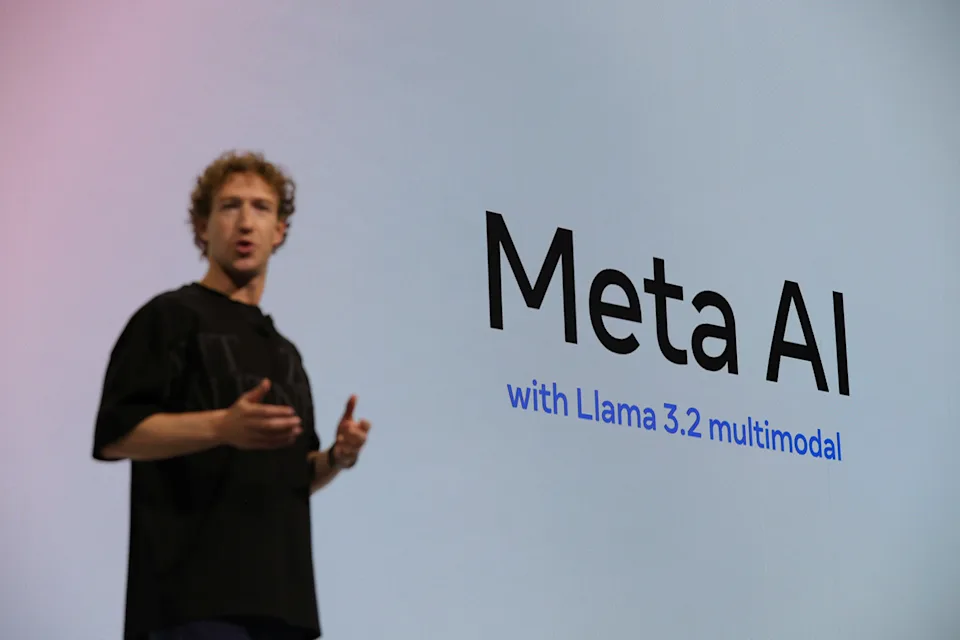
Meta explored a Kalshi acquisition before deciding to build its own prediction market platform, according to reports that offer a closer look at the company’s latest product strategy. Rather than purchasing the market leader, the company has moved ahead with Arena, a standalone application designed around virtual predictions instead of real-money wagering. The reported discussions place Meta at the center of a business that has attracted billions of dollars in trading activity and growing interest from technology companies, investors, financial institutions and policymakers.
The move also reflects a familiar pattern inside Meta. Rather than responding to a single competitor, the company has increasingly sought to identify emerging forms of online behavior before deciding whether to acquire, replicate or build around them. Prediction markets have become one of the fastest-growing examples of that shift.
Meta Looked at Acquisition Before Building Arena
According to NPR, Meta Chief Executive Mark Zuckerberg held discussions with Kalshi co-founder and chief executive Tarek Mansour about a possible acquisition last year. The conversations never progressed into a deal, although accounts differ on why negotiations ended.
One explanation is that Kalshi was unwilling to sell as its business gathered momentum. Another is that Meta weighed the legal and policy questions surrounding regulated prediction markets before deciding against an acquisition.
-
 Meta is taking its AI stack directly into the enterprise marketSeptember 29, 2026
 -

Whatever the reason, the reported talks show Meta identified prediction markets as an area worth pursuing before assigning internal teams to build Arena.
Instead of expanding through acquisition, the company has chosen to compete directly.

Meta is also entering a market that looks markedly different from even two years ago. Regulatory uncertainty has eased for some operators, institutional capital has flowed into leading platforms, and established companies have demonstrated that prediction markets can attract sustained participation beyond cryptocurrency communities.
Internal reporting suggests Arena remains an experimental project rather than a confirmed product launch. Employees familiar with the plans have described it as a priority inside the company, but Meta has not committed to releasing the app publicly. That uncertainty reflects the company’s history of testing standalone products before deciding whether they warrant wider deployment.
Reports also suggest the initiative has generated debate within Meta itself, with some employees reportedly expressing concern about the company expanding into prediction markets at a time when scrutiny of online platforms and digital engagement models continues to intensify.
Arena Takes a Different Approach to Prediction Markets
Arena is expected to differ from established platforms in one important respect.
Where Kalshi and Polymarket allow users to place wagers tied to financial outcomes, Arena is designed around virtual currency. Participants will make predictions using play money rather than cash, reducing many of the licensing and gambling issues associated with real-money event contracts.
Internal documents cited by NPR and The New York Times indicate Meta intends to use artificial intelligence to generate prediction questions and determine outcomes based on publicly verifiable events.
That approach gives Meta room to experiment with prediction-based engagement while avoiding many of the regulatory obligations faced by operators handling real-money event contracts.
The absence of real-money wagering also appears to be a strategic decision rather than a permanent limitation. People familiar with the project have said Meta has not ruled out introducing financial stakes in the future, although no such plans have been announced.
The product also fits naturally within Meta’s broader ecosystem. If integrated with platforms such as Threads, prediction markets could encourage users to engage with conversations around elections, sport, entertainment, artificial intelligence, financial markets and global news without leaving Meta’s services.
Meta’s distribution could also distinguish Arena from existing platforms. While prediction markets have largely attracted traders, cryptocurrency users and politically engaged communities, Meta already reaches billions of people through Facebook, Instagram and Threads. Even without real-money contracts, that reach could introduce prediction markets to audiences well beyond their current user base.
Prediction Markets Are Becoming an Information Business
Prediction markets have expanded well beyond their early reputation as niche betting platforms.
Participants buy contracts tied to future events, with prices adjusting as new information emerges. Rather than measuring what people say they expect to happen, these markets reflect what traders are prepared to risk capital on, producing continuously updated estimates of probability.
That model has attracted attention from hedge funds, institutional investors, analysts and policymakers, who increasingly view prediction markets as another source of real-time information alongside polling, economic data and market research.
Recent activity illustrates how quickly the sector has developed. Platforms such as Kalshi and Polymarket now host markets covering elections, interest-rate decisions, artificial intelligence milestones, cryptocurrency prices, geopolitical developments and major sporting events. Kalshi has also expanded internationally after raising fresh funding from investors including Sequoia Capital, Andreessen Horowitz and Paradigm, underscoring growing confidence in the sector’s commercial potential.
The market is also drawing interest from companies outside traditional finance. DraftKings, FanDuel, Gemini and Trump Media have all explored opportunities in prediction markets, reflecting broader competition around what many companies increasingly view as a new category of digital information products rather than simply online wagering.
Supporters argue these markets can provide forward-looking price discovery that helps investors, businesses and lenders make decisions about financing, investment and risk management. Some market participants believe future contracts could extend beyond elections and sports into areas such as AI compute capacity, commodity pricing and broader economic activity.
The industry’s commercial evolution is also becoming clearer. Institutions have begun experimenting with prediction markets as hedging tools rather than speculative products alone. Recent transactions have included professional sports organizations using prediction markets indirectly to offset financial risks tied to competitive outcomes, suggesting the technology could evolve into another layer of financial infrastructure rather than remaining confined to consumer trading.
As that shift unfolds, venture investors are increasingly evaluating the sector less on headline trading volumes than on long-term durability. Industry participants point to three recurring questions: whether current operators remain viable if regulation changes over the next few years, whether companies beyond Kalshi and Polymarket can establish defensible positions, and whether enough platforms can sustain the liquidity needed to produce reliable markets. Those questions remain unresolved even as investors broadly agree the addressable market could continue expanding.
Regulation, Liquidity and Trust Remain Defining Challenges
Rapid growth has also drawn closer regulatory scrutiny.
Several U.S. states continue to challenge whether prediction markets should be regulated as financial exchanges or as gambling products. Federal authorities have pursued investigations involving alleged insider trading and misuse of confidential information linked to prediction market activity.
In response, leading operators have begun tightening their own safeguards. Kalshi has introduced restrictions preventing political candidates from trading on their own elections while expanding limits around professional and collegiate sports participants. Polymarket has strengthened rules prohibiting users from trading contracts where they possess confidential information or can directly influence outcomes, reflecting growing pressure to demonstrate market integrity before regulators impose broader requirements.
Critics also argue that many platforms increasingly resemble financial trading applications while encouraging behaviour that shares characteristics with gambling. They contend that the language of markets, probability and investing can make speculative activity appear more sophisticated than it is, particularly for less experienced participants.
Evidence from the industry’s trading patterns has reinforced that debate. Analyses of prediction market activity suggest a relatively small group of sophisticated traders and algorithmic firms account for a disproportionate share of long-term profits, while casual participants are considerably less likely to generate sustained returns. That dynamic increasingly resembles other financial markets, where liquidity and pricing are often shaped by professional participants rather than retail users.
Even as regulation becomes clearer, another obstacle remains: liquidity.
Prediction markets depend on enough buyers and sellers to produce reliable prices. While major markets tied to elections or global sporting events often attract significant trading activity, more specialized contracts can struggle to generate sufficient participation. That makes market makers and institutional liquidity providers critical to the industry’s continued expansion.
Liquidity may also become the defining competitive challenge as more companies enter the sector. A growing number of platforms are building their own end-to-end technology stacks, but attracting users is only part of the equation. Without consistently deep markets, prediction platforms risk producing unreliable prices and weaker user experiences, reinforcing the advantages already enjoyed by larger incumbents.
The debate extends beyond regulation to the industry’s long-term purpose.
Ethereum co-founder Vitalik Buterin, an investor in Polymarket, has argued that prediction markets risk becoming dominated by short-term speculation unless they evolve into tools that help individuals and businesses manage real-world financial risks. Others see them developing into mechanisms for forecasting everything from AI infrastructure demand to commodity pricing and broader economic activity.
The industry’s rapid expansion has also brought closer scrutiny of how prediction markets are promoted online. Critics have questioned whether influencer marketing and social media content sometimes exaggerate potential returns while downplaying the risks involved. As platforms seek broader audiences, maintaining confidence in market integrity may become as important as attracting new users.
Arena’s virtual-currency model places Meta outside many of those regulatory and liquidity challenges, but it also gives the company an opportunity to test whether prediction-based participation can attract mainstream users without relying on financial incentives. At the same time, Meta’s scale introduces a different set of questions. Lawmakers and digital rights advocates have already argued that a company with extensive user data and sophisticated advertising capabilities could face heightened scrutiny if prediction markets were ever combined with real-money participation or personalized promotion. Those concerns remain hypothetical for Arena’s current design, but they illustrate the broader policy debate that could accompany any future expansion.
The reported Kalshi discussions also fit a pattern that has defined Meta’s expansion over the past decade.
The company strengthened its position in social media through acquisitions such as Instagram and WhatsApp, while other ambitions—including the Libra digital currency project and a series of standalone experimental applications—never achieved widespread adoption. Previous efforts under Meta’s New Product Experimentation group produced apps focused on areas such as podcasts, travel, music and matchmaking, but few gained lasting traction.
Arena is not Meta’s first attempt at prediction markets either. In 2020, the company launched Forecast, a crowdsourced prediction app that invited users to make points-based forecasts during the early stages of the COVID-19 pandemic. The product was positioned as a way to surface collective knowledge rather than facilitate betting, but it was discontinued two years later. Arena reflects a second attempt at the concept, this time entering a market that has grown substantially larger and more commercially mature.
Regulators have argued that Meta frequently acquires emerging competitors before they become meaningful threats, an allegation raised during the Federal Trade Commission’s antitrust case against the company. Although Meta prevailed in that case, debate over its acquisition strategy continues.
Choosing to build Arena after exploring a purchase of Kalshi follows another familiar approach. When acquisition proves impractical, Meta has often developed competing products internally while leveraging the scale of its existing platforms.
The project also reflects a broader shift taking place across the technology industry. As artificial intelligence lowers development costs and accelerates product cycles, more companies are experimenting with products outside their traditional areas of expertise. Whether those efforts become durable businesses or short-lived experiments is likely to depend less on the speed of development than on whether they solve problems that existing platforms do not.
Whether Arena succeeds will depend on more than product design. Meta must convince users that virtual prediction markets offer enough value to compete with platforms where participants can trade using real money. It must also overcome a challenge that has limited several previous standalone Meta apps: persuading users to download and regularly use a new service outside the company’s core social platforms.
Its arrival could also reshape the public perception of prediction markets. Until now, the sector has largely operated at the intersection of financial trading, cryptocurrency and online betting. Meta’s reach has the potential to move the concept into the digital mainstream, exposing millions of everyday users to a format that supporters describe as a forecasting tool and critics argue increasingly resembles a new form of digital gambling.
For Meta, the opportunity extends beyond entertainment. Prediction markets are emerging as a new layer of digital infrastructure that combines forecasting, information discovery and public participation around uncertain events. By entering the category after specialist operators established demand and navigated much of the early regulatory uncertainty, Meta is positioning Arena in one of the fastest-evolving areas of the digital economy.
Whether the app ultimately reaches the public remains uncertain. But Meta’s interest alone signals that prediction markets are evolving from a specialist corner of finance into a product category that some of the world’s largest technology companies now view as strategically important. That shift may prove as significant as Arena itself, suggesting the next phase of competition will be driven not only by better forecasting models, but also by the ability to combine distribution, liquidity, trust and regulatory resilience at internet scale.
Go to TECHTRENDSKE.co.ke for more tech and business news from the African continent and across the world.
Follow us on WhatsApp, Telegram, Twitter, and Facebook, or subscribe to our weekly newsletter to ensure you don’t miss out on any future updates. Send tips to editorial@techtrendsmedia.co.ke


