

Abdi Mohamed Leaves Absa Kenya After 17 Years to Lead I&M Bank
The veteran banker departs after leading Absa Kenya's transformation, with his appointment as I&M Bank Kenya CEO linking two of the country's biggest banking leadership moves in a single day.

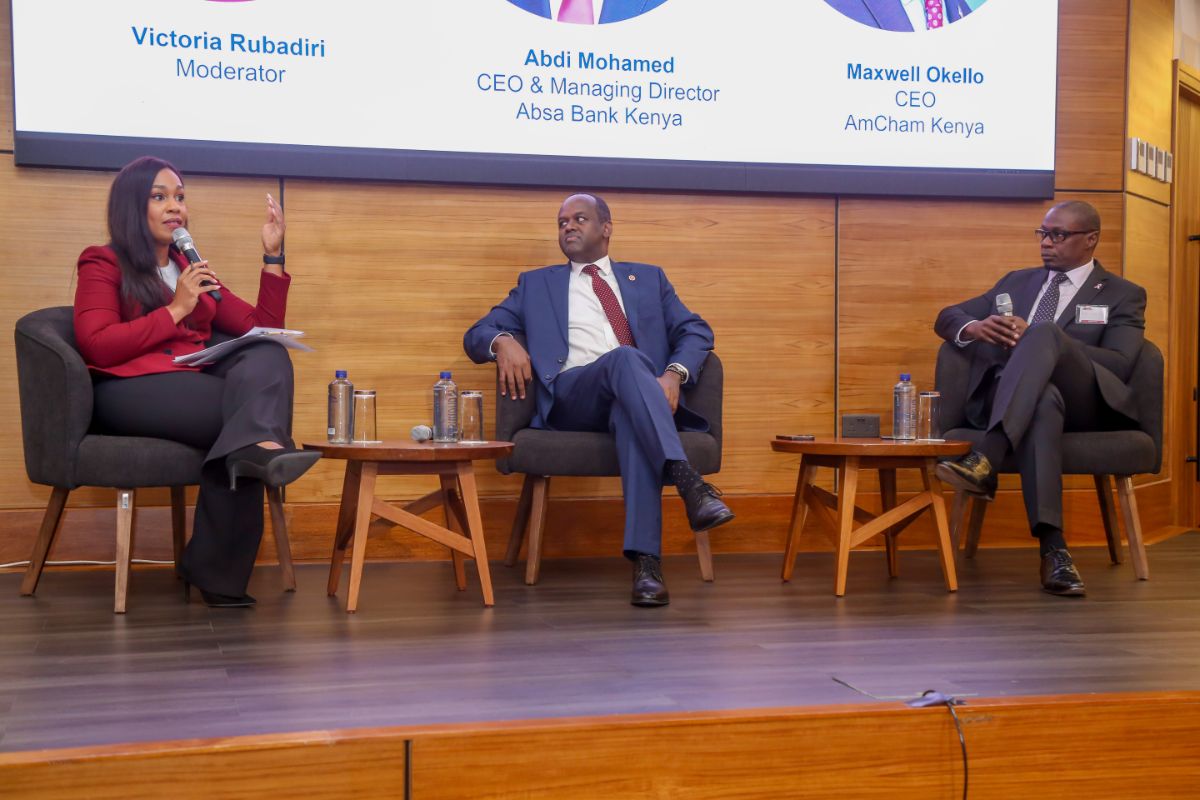
Abdi Mohamed has resigned as Absa Bank Kenya chief executive officer, ending a three-year tenure that coincided with one of the bank’s most significant periods of operational transformation. His departure comes as Absa Group seeks to increase its ownership in the Kenyan subsidiary through a Sh31 billion offer and as competition among regional lenders intensifies across East Africa.
Leadership transition is already underway, with long-serving chief financial officer Yusuf Omari expected to assume interim leadership, mirroring the arrangement adopted in 2022 when Jeremy Awori left the bank to become Ecobank Group chief executive.
Sources familiar with the matter say Mohamed is expected to take up a senior leadership position at another bank operating in Kenya, although his destination had not been officially confirmed at the time of publication.
Abdi Mohamed Steps Down After Three Years
Mohamed assumed leadership of Absa Bank Kenya on May 1, 2023, succeeding Jeremy Awori at a time when banks were adjusting to changing customer behaviour, tighter regulatory expectations and slowing growth in lending income.


His tenure became defined less by headline expansion and more by reshaping how the bank operated. Rather than relying primarily on interest income, Absa invested heavily in digital infrastructure, streamlined internal processes and broadened its non-funded revenue businesses.
Those priorities produced measurable operational improvements even as the wider banking sector faced pressure from lower interest rates and a difficult credit environment.
The bank’s cost-to-income ratio improved from about 41 percent in 2023 to 37 percent by the end of 2025, reflecting tighter cost control and greater operating efficiency. That performance was supported by sustained annual technology investment of between Sh2 billion and Sh3 billion, automation of back-office functions and a rapid migration of customer transactions to digital channels.
By 2025, about 94 percent of customer transactions were taking place outside physical branches, illustrating how deeply digital banking had become embedded in Absa’s operating model.
The Digital Transformation That Reshaped the Business
The investment in technology extended beyond improving customer convenience.
Automation allowed the bank to redesign internal workflows, reduce processing costs and redeploy employees into advisory and relationship management roles. Those operational efficiencies helped strengthen profitability while providing the platform for new business lines.
At the same time, Absa accelerated efforts to diversify revenue beyond traditional lending.
Businesses including bancassurance, asset management, custody services and brokerage expanded their contribution to earnings as the bank responded to pressure on net interest income. The relaunch of its custody business in 2025 and continued investment in wealth management reflected a strategy aimed at building multiple sources of fee income rather than relying predominantly on lending activity.
That approach also aligned with wider changes in Kenya’s financial sector, where competition has moved beyond loans and deposits towards payments, investments, insurance and broader financial services delivered through digital platforms.
A Challenging Start to 2026
Despite the longer-term transformation, Mohamed’s final months at the bank were marked by a softer financial performance.
Absa Bank Kenya reported a 13.9 percent decline in first-quarter profit after tax to Sh5.3 billion as lower interest rates weighed on earnings. Net interest income fell while non-interest income also moderated during the quarter.
The results nevertheless pointed to continued discipline in other parts of the business.
Customer deposits and total assets grew, while the bank improved asset quality by reducing its non-performing loan ratio. The performance suggested that management continued prioritising balance sheet resilience even as profitability came under pressure.
Absa Group Is Expanding Its Commitment to Kenya
Mohamed’s resignation also comes during a period when Absa Group is strengthening, rather than reducing, its commitment to Kenya.
The Johannesburg-headquartered lender is seeking to raise its shareholding in Absa Bank Kenya from 68.5 percent to 85 percent through a Sh31 billion offer to minority shareholders while maintaining the bank’s listing on the Nairobi Securities Exchange.
The proposed transaction reflects the strategic importance of the Kenyan business within Absa’s African operations.
Kenya has become one of the continent’s most competitive financial markets, supported by mature digital payments, a sophisticated banking industry and strong regional connectivity. For multinational lenders, the country offers access not only to domestic customers but also to commercial networks stretching across East and Central Africa.
The ownership increase also follows broader investments by South African financial institutions in Kenya, including Nedbank’s proposed acquisition of a controlling stake in NCBA Group. Together, the transactions point to sustained confidence in Kenya’s banking sector despite a more demanding operating environment.
Leadership Changes Continue Across Kenya’s Banking Sector
Mohamed’s exit adds to a series of executive changes across Kenya’s banking industry during 2026.
Family Bank, Ecobank Kenya, Commercial International Bank Kenya, Stanbic Bank Kenya, Standard Chartered Bank Kenya and Sidian Bank have all announced chief executive appointments or leadership transitions during the year.
The changes come as banks adapt to tighter capital requirements, digital competition, changing customer expectations and greater emphasis on operational efficiency.
For Absa, the immediate priority will be maintaining continuity while the board identifies Mohamed’s successor.
The strategic direction established during the past three years is unlikely to change significantly. The bank has already committed substantial investment towards digital infrastructure, expanded its retail and wealth management businesses and broadened its non-interest income base. Those initiatives remain central to Absa’s long-term plans in Kenya.
Mohamed therefore leaves a business that looks markedly different from the one he inherited. His tenure coincided with a period in which the bank simplified operations, strengthened efficiency, expanded digital capabilities and repositioned itself around a broader mix of financial services.
His successor will inherit an institution that is entering its next phase under a parent company that is simultaneously increasing its investment in one of Africa’s most strategically important banking markets.
I&M Picks an Experienced Banking Executive
Mohamed will now take over I&M Bank Kenya, pending regulatory approval, bringing more than three decades of banking experience across East and Southern Africa.
His appointment gives I&M an executive with experience leading market transformation programmes, digital banking initiatives and large retail and corporate banking businesses as competition among Kenya’s lenders continues to intensify.
For Absa, the immediate priority will be maintaining strategic continuity while the board identifies a permanent successor.
The direction established during Mohamed’s tenure is unlikely to change materially. The bank has already committed substantial investment towards digital infrastructure, expanded its retail, wealth management and non-interest income businesses, and strengthened operating efficiency.
Mohamed therefore leaves behind a markedly different institution from the one he inherited. His three years in charge coincided with a period that simplified operations, expanded digital capabilities and diversified the bank’s revenue base. His move to I&M Bank Kenya now becomes the latest chapter in a year that has reshaped leadership across Kenya’s banking industry.
Go to TECHTRENDSKE.co.ke for more tech and business news from the African continent and across the world.
Follow us on WhatsApp, Telegram, Twitter, and Facebook, or subscribe to our weekly newsletter to ensure you don’t miss out on any future updates. Send tips to editorial@techtrendsmedia.co.ke