

X Monetization Looked Like an Opportunity. Many Kenyan Creators Are Finding Its Limits
Screenshots showing millions of views and surprisingly small payouts are sparking debate over how X distributes creator revenue and what kinds of content the platform ultimately rewards.

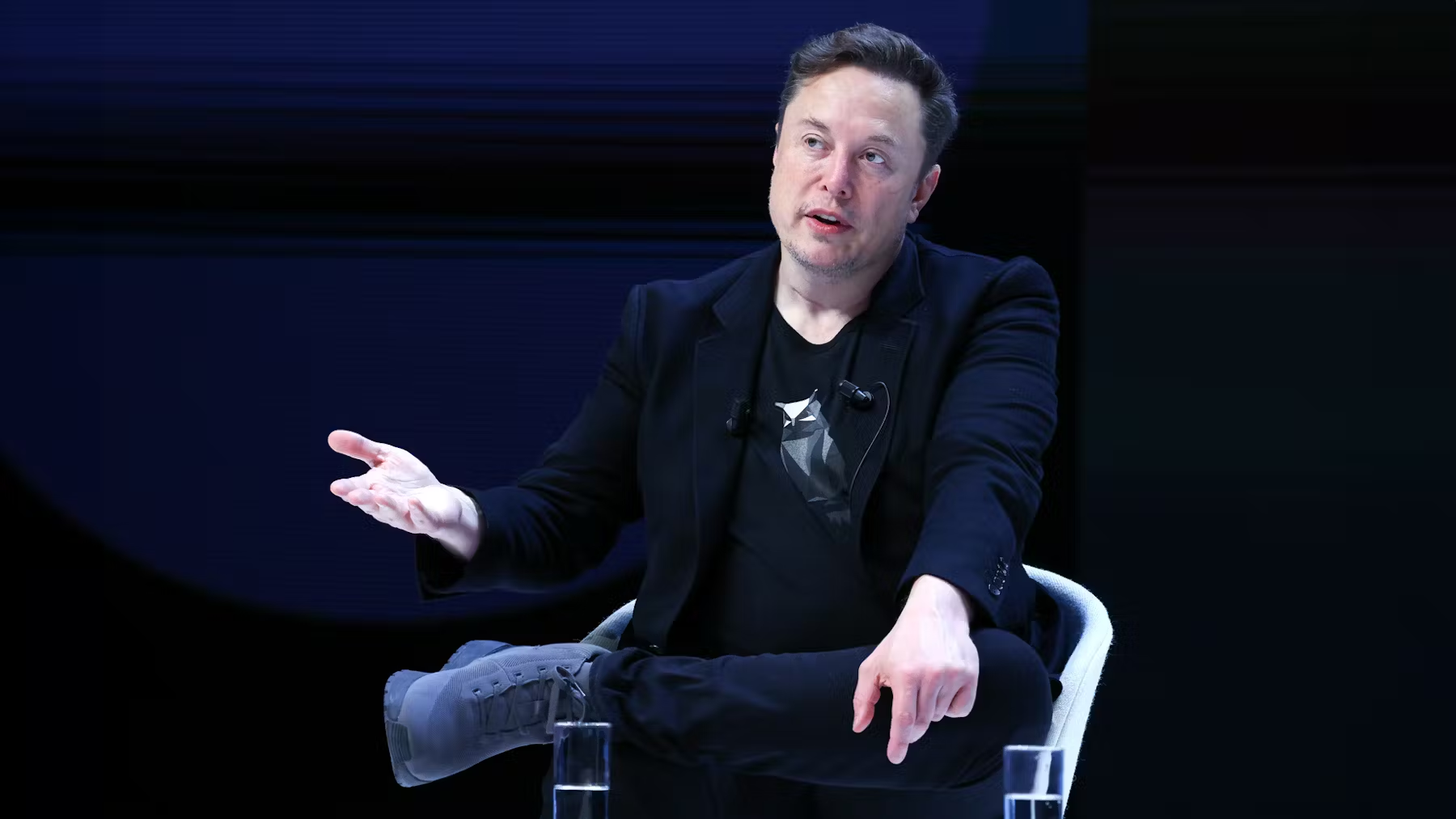
X promised creators a new way to earn directly from their audiences. In Kenya, the offer attracted users willing to pay for Premium subscriptions, build large followings and pursue the platform’s monetization thresholds. What many are discovering, however, is that qualifying for payouts and earning meaningful revenue are two very different things.
Despite posting millions of impressions, some creators report receiving earnings that fall well below expectations, prompting renewed scrutiny of how the platform distributes creator revenue.
The gap between visibility and revenue is emerging as one of the defining realities of X’s creator economy in Kenya and across parts of Africa.
The Promise of X Monetization
When X expanded its creator monetization programs, the platform presented a new opportunity for users to earn directly from their online audiences.

The requirements appeared attainable compared to other creator platforms. Users needed an active X Premium subscription, a minimum number of verified followers, and enough organic impressions to qualify for revenue sharing.
The model attracted a wide range of participants. Some were journalists, commentators, comedians and niche experts. Others saw monetization as a potential side income stream. In markets where dollar-denominated earnings can carry significant value, the opportunity drew considerable attention.
As a result, a growing number of creators began treating audience growth as a business activity rather than a purely social pursuit.
Millions of Impressions, Modest Earnings
Over the past year, screenshots shared by creators across Kenya and other African markets have revealed a recurring pattern.
Accounts reporting millions of impressions frequently describe receiving earnings that appear disconnected from the scale of their reach. Some report remaining below payout thresholds despite sustained activity and large audience numbers.
The discrepancy has generated confusion among creators who assumed that impressions alone would determine revenue.
That assumption is understandable. Impression counts are highly visible within the platform’s analytics tools and are often presented as a measure of success.
The monetization system, however, operates differently.
Why Impressions Do Not Equal Revenue
The most important distinction in X’s monetization model is that not all impressions carry equal value.
The company has increasingly emphasized the importance of engagement and exposure among Premium subscribers. Views from verified users are considered more valuable than general audience impressions.
Audience composition therefore matters as much as audience size.
A creator whose content reaches large numbers of non-paying users may generate less revenue than another account with a smaller but more monetizable audience.
Geography also influences outcomes. Advertiser demand, purchasing power and the distribution of Premium subscribers vary significantly across regions. These differences are visible across the broader digital advertising industry and affect creator earnings on multiple platforms.
The result is a system where qualification thresholds and revenue outcomes often move on separate tracks. Reaching millions of impressions may satisfy eligibility requirements, but it does not guarantee meaningful earnings.
The Rise of Engagement Farming
The pursuit of monetization has also reshaped posting behaviour.
Many creators discovered that simple prompts, opinion-driven posts and highly shareable questions generated significantly more interaction than specialist commentary or original analysis.
The platform became increasingly populated with posts designed to maximize replies and engagement. Questions asking users to share opinions, memories or personal experiences became common features of many timelines.
This behaviour is frequently described by users as engagement farming.
The practice is not unique to X. Similar patterns have emerged on Facebook, TikTok and YouTube whenever platform incentives reward attention and interaction.
The difference is that X’s monetization structure made the relationship between engagement and potential earnings especially visible.
X Is Becoming More Aggressive About Originality
At the same time that creators are chasing impressions, X is tightening its approach to originality and creator rewards.
In a series of public comments in June, X Head of Product Nikita Bier said the platform now uses multiple AI systems to determine which account originally published a piece of content. According to Bier, the systems use fuzzy matching technology capable of detecting videos that have been modified or slightly altered in an attempt to evade detection.
“We have three different AI systems to identify who posted the content first,” Bier wrote, adding that X allocates impressions to the original creator.
The comments offer one of the clearest public explanations yet of how the platform is attempting to combat content farming and repost-driven monetization.
In a separate exchange, Bier said accounts that “copy-paste content are not eligible for the creator program” and confirmed the demonetization of a user after what he described as an enforcement mistake.
The statements suggest that X’s monetization system is becoming increasingly selective about what qualifies for revenue generation. Large impression counts alone may not tell the full story if the platform determines that content is duplicated, recycled or insufficiently original.
For creators pursuing monetization, the implication is significant. The challenge is no longer simply generating reach. It is generating reach through content that X considers original and eligible for monetization.
What the Numbers Mean for African Creators
For creators across Africa, the lesson is becoming clearer.
The challenge is no longer simply reaching monetization thresholds.
The more difficult task is building an audience that consistently generates the types of engagement the platform values most while producing content that remains eligible under increasingly stringent monetization standards.
This requires more than viral posts or temporary spikes in attention. It demands sustained audience loyalty, original content and ongoing visibility among highly engaged users.
Many creators are discovering that monetization eligibility represents the beginning of the process rather than the destination.
The Reality Behind the Creator Economy Hype
The broader significance of the story extends beyond X itself.
The platform has effectively created a new category of digital labour across African markets. Users invest time, creativity and subscription fees in pursuit of platform revenue. Some succeed. Many earn modest amounts. Others discover that the economics are less attractive than expected.
The experience offers a useful reminder about modern creator economies.
Platforms often publish clear eligibility requirements. Earnings remain far more complex.
For many Kenyan creators, the most important discovery has not been how to qualify for monetization.
It has been learning that millions of impressions do not automatically translate into meaningful income.
The lesson extends beyond Kenya and beyond X. In the modern creator economy, attention remains valuable. Converting that attention into sustainable revenue is the harder challenge.
Go to TECHTRENDSKE.co.ke for more tech and business news from the African continent and across the world.
Follow us on WhatsApp, Telegram, Twitter, and Facebook, or subscribe to our weekly newsletter to ensure you don’t miss out on any future updates. Send tips to editorial@techtrendsmedia.co.ke


