
Mogo Loan Case Highlights Growing Scrutiny of Credit Costs
A Thika court reduced the lender's claim to Ksh100,631 after questioning how the debt was calculated and finding the effective borrowing cost excessive.

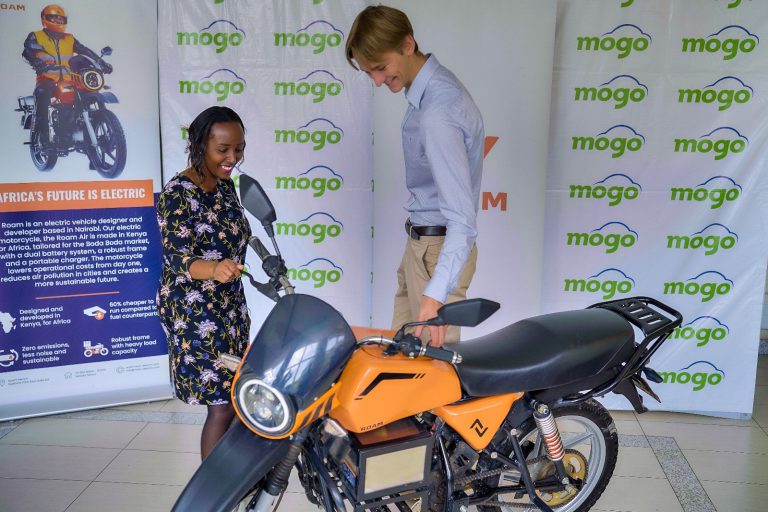
A Small Claims Court in Thika has substantially reduced the amount recoverable by Mogo Auto Limited in a dispute over a vehicle financing loan, ruling that the lender’s interest charges exceeded reasonable limits.
The decision leaves borrower Aziz Daniel Odoyo liable for Ksh100,631, a fraction of the Ksh677,381 that Mogo sought through court proceedings filed in October 2025.
At the centre of the case was a Ksh400,000 asset-financing facility advanced in June 2022. Court records show that Odoyo had already paid about Ksh299,369 before the disagreement over the outstanding balance reached litigation.
Mogo argued that the borrower had defaulted on repayments and that the financed asset, which served as security for the facility, could not be traced, preventing recovery through a sale of the collateral. The company subsequently moved to court seeking payment of the amount it said remained due under the agreement.


In a ruling delivered on June 2, Magistrate Jamlick Muriithi Mwenda questioned the lender’s computation of the debt and found the charges attached to the facility to be excessive. The court noted that the effective interest burden associated with the loan reached 86.4 percent before additional fees were taken into account.
The magistrate applied the in duplum principle, a legal doctrine that limits the accumulation of interest beyond certain thresholds relative to the principal debt. The court held that the lender’s recovery had to be assessed within those limits.

While rejecting much of the amount claimed, the court did not absolve the borrower of responsibility. The ruling acknowledged that a balance remained outstanding and entered judgment in favour of Mogo for Ksh100,631.
The award will attract court-rate interest from the date of the borrower’s last loan repayment until settlement.
The decision comes at a time when courts are increasingly being asked to weigh in on disputes involving non-bank lenders, asset-financing arrangements and the rights of borrowers after repayment obligations break down.
Days before the Thika ruling drew attention to the cost of credit, the High Court dismissed a separate appeal by Mogo in a dispute involving the repossession and sale of a financed tuk-tuk in Mombasa. In that case, the court found that the company should have obtained judicial approval before repossessing and disposing of the vehicle after the customer had already paid more than two-thirds of its purchase price.
The two matters involved different borrowers and distinct legal questions. One centred on interest calculations and debt recovery limits, while the other focused on repossession procedures and the application of Kenya’s Hire Purchase Act. Together, however, they place renewed attention on how courts are interpreting borrower protections within the country’s growing asset-finance market.
For lenders operating outside traditional banking channels, the rulings underline the importance of transparent loan structures, recoverable charges and compliance with statutory requirements governing financed assets. For borrowers, they illustrate the extent to which courts may examine both the cost of credit and the enforcement mechanisms used when loans fall into default.
Go to TECHTRENDSKE.co.ke for more tech and business news from the African continent and across the world.
Follow us on WhatsApp, Telegram, Twitter, and Facebook, or subscribe to our weekly newsletter to ensure you don’t miss out on any future updates. Send tips to editorial@techtrendsmedia.co.ke


