African Private Capital Funds Still Lean on Foreign Development Finance Institutions
The latest fundraising activity highlights how foreign development lenders continue to underpin African private markets despite years of calls for deeper domestic participation

The effort to finance Africa’s growth is increasingly becoming a debate about where capital comes from rather than whether capital exists. New investment data suggests that while policymakers are pushing for greater use of African financial resources, private investment funds across the continent continue to depend heavily on foreign development institutions for funding.
Research from Nigerian financial data platform Stears shows that development finance institutions were the most active investors in African private capital funds during the first quarter of 2026. European-backed lenders and multilateral institutions accounted for many of the largest disclosed commitments, reinforcing the role external capital continues to play in supporting private investment activity across the continent.
The findings arrive as governments, regulators and development institutions seek ways to mobilize more domestic capital. At the African Development Bank’s annual meetings in Brazzaville, officials argued that Africa’s challenge is not simply a shortage of money but the difficulty of channeling existing financial resources into productive investment. The Bank’s latest African Economic Outlook estimates that the continent faces a development financing gap exceeding $1.3 trillion annually to meet Sustainable Development Goals, while also identifying significant pools of capital that could potentially be unlocked through reforms.
Development lenders remain central to fundraising


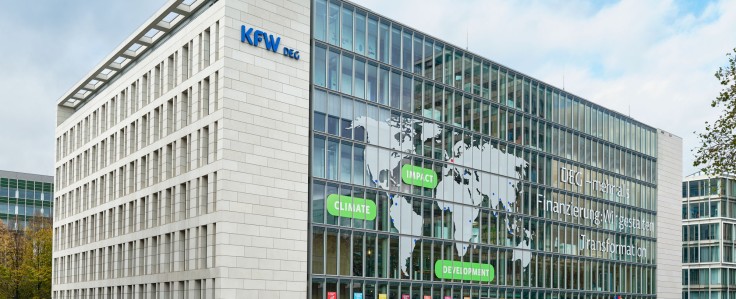
Among the most active limited partners during the quarter were Germany’s DEG, France’s Proparco, British International Investment, the International Finance Corporation and the European Investment Bank.
DEG recorded five disclosed commitments worth $118.6 million. Proparco and British International Investment each participated in five transactions, while the International Finance Corporation backed four investments. The European Investment Bank reported the largest disclosed commitment value, deploying $209.7 million across three deals.

The rankings highlight a continuing reality in African private markets. Development finance institutions remain among the most important sources of long-term capital for private equity, venture capital and other investment funds operating across the continent.
Their influence extends beyond funding alone. Commitments from established development lenders often help fund managers attract additional investors and complete fundraising rounds that might otherwise struggle to reach scale.
Domestic capital remains difficult to unlock
The prominence of development institutions stands in contrast to broader efforts to increase participation from African pension funds, insurance firms and other institutional investors.
The African Development Bank has argued that deeper capital markets, stronger financial integration and more efficient mobilization of domestic savings could unlock trillions of dollars already held within Africa’s financial system. Among the initiatives highlighted by the Bank is the proposed New African Financial Architecture for Development, which seeks to better connect existing financial assets to development and investment opportunities.
Yet private market fundraising data suggests those ambitions have not fully translated into investor participation.
Many domestic institutions remain cautious about allocating significant portions of their portfolios to private markets, where investment horizons can stretch for years and liquidity options remain limited. Regulatory restrictions, governance requirements and concerns around risk continue to shape investment decisions.
The exit question continues to shape investment decisions
For many investors, fundraising conditions are closely linked to the ability to recover capital.
African private markets have historically generated fewer exit opportunities than larger global investment destinations, making some investors reluctant to commit capital for extended periods. The challenge has long been viewed as one of the sector’s structural constraints.
Attention is therefore turning toward the development of secondary markets, where investors can sell fund interests before maturity. A more active secondary market could improve liquidity and offer investors greater flexibility, reducing one of the barriers that has historically slowed capital inflows.
Industry participants increasingly view these transactions as a necessary component of a more mature investment ecosystem rather than an occasional feature of the market.
A broader financing debate
The fundraising data also illustrates a wider tension running through discussions about Africa’s economic future.
Development institutions and policymakers broadly agree that public finances alone cannot support the scale of investment required across infrastructure, energy, healthcare, manufacturing and technology. The African Development Bank estimates that Africa’s stock exchanges collectively reached roughly $1.2 trillion in market capitalization in 2024, yet financial activity remains concentrated in a handful of markets and access to long-term capital remains uneven.
As a result, the challenge facing policymakers is not merely attracting additional foreign investment. It is creating conditions where African savings, pension assets and institutional capital play a larger role alongside international funding sources.
The latest rankings suggest that progress toward that goal remains gradual. Development finance institutions continue to provide much of the capital underpinning African private funds, even as governments and financial institutions pursue reforms designed to mobilize more investment from within the continent itself.
Go to TECHTRENDSKE.co.ke for more tech and business news from the African continent and across the world.
Follow us on WhatsApp, Telegram, Twitter, and Facebook, or subscribe to our weekly newsletter to ensure you don’t miss out on any future updates. Send tips to editorial@techtrendsmedia.co.ke