

Yadea's Arrival Raises the Stakes in Kenya's Electric Motorcycle Market
Kenya's electric motorcycle market is attracting global manufacturers, infrastructure investors and energy companies as competition shifts toward battery networks and rider ecosystems

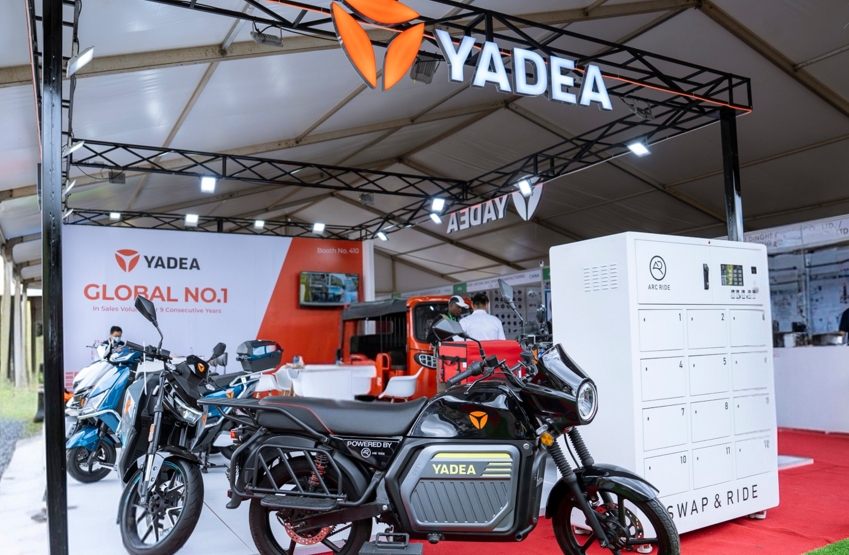
China’s Yadea has entered Kenya with a range of electric motorcycles, bringing the world’s largest electric two-wheeler manufacturer into a market where competition is increasingly centred on battery infrastructure, rider acquisition and long-term ecosystem control.
The company formally launched its Kenyan operations at Autoexpo Kenya 2026 in Nairobi, where it unveiled five electric motorcycle models aimed at boda boda operators, commuters and last-mile delivery businesses. The move makes Kenya Yadea’s second East African market after Ethiopia, where the company says it has sold more than 48,000 electric motorcycles during the past three years.
At the centre of the rollout is the KIFA electric motorcycle, a model developed for commercial transport and delivery operators. The motorcycle carries a payload of up to 250 kilograms and uses dual removable lithium iron phosphate batteries with a claimed range of up to 150 kilometres between battery swaps. The company says depleted batteries can be exchanged for charged units in roughly 30 seconds, a feature designed to maximise rider uptime.
Yadea’s arrival comes as Kenya’s electric mobility industry enters a period of rapid expansion. For much of the sector’s early development, companies focused on proving that electric motorcycles could operate reliably under local conditions while building the infrastructure needed to support riders. That conversation is giving way to a different one centred on scale, network coverage and market share.

Kibo Africa recently announced plans to deploy 10,000 electric motorcycles within the next 12 months and expand to roughly 30,000 units over three years. Established operators including Spiro, Roam Motors, Arc Ride and Ampersand continue growing their fleets and extending support services as competition for riders intensifies.
The most valuable assets in the market increasingly appear to be the systems surrounding the motorcycles rather than the motorcycles themselves.
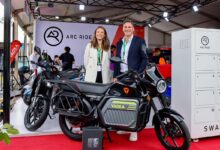
Yadea has partnered with Arc Ride to provide battery-swapping services for riders using its vehicles. Instead of relying on conventional charging, users can exchange depleted batteries for charged units at swap stations, reducing downtime and improving daily utilisation rates.
The approach mirrors a broader industry trend. Kibo is building its expansion plans alongside energy company Powerhive, while Autopax recently launched its locally assembled Cheche motorcycle together with a battery-swapping ecosystem developed with Kofa and TailG. That network currently includes 12 active swap stations and about 1,200 batteries supporting early fleet deployments around Nairobi.
Across the industry, operators are investing in infrastructure designed to keep motorcycles in continuous operation. For commercial riders whose income depends on daily trips completed, battery availability can be as important as vehicle ownership. Battery-swapping networks are increasingly emerging as the operational foundation of the sector, shaping where riders work, how quickly they can return to service and which platforms they choose to join.
Investors are increasingly backing that thesis.
Spiro recently secured $215 million in fresh equity financing to expand battery-swapping infrastructure, manufacturing capacity and energy technologies across Africa. The investment ranks among the largest funding rounds announced in the continent’s electric mobility sector and reflects growing confidence in business models that combine transport services with energy networks.
The company says its footprint now exceeds 100,000 electric motorcycles and more than 2,500 battery-swapping stations across seven African markets. Those numbers provide a sense of the scale that operators are pursuing as the sector matures.
The economic case remains central to adoption. Electric motorcycle operators continue to market lower operating costs as their primary advantage, particularly for boda boda riders facing fluctuating fuel expenses. Kibo estimates riders could save between Sh500 and Sh600 per day compared with petrol-powered motorcycles, reinforcing an argument that has become central to the sector’s growth.
The growth of electric transport is also beginning to influence Kenya’s power sector.
Kenya Power says it has generated Sh382 million in revenue from electric mobility customers since July 2023 and is moving more vehicle owners onto a dedicated EV tariff. Monthly electricity consumption associated with electric mobility has increased from 13,500 kilowatt-hours at the start of the programme to approximately 1.5 million kilowatt-hours, reflecting the sector’s expanding footprint.
As charging demand rises, electric motorcycles are becoming part of a larger ecosystem that includes utilities, energy developers, financiers and technology providers.
Yadea enters that ecosystem with substantial manufacturing scale. Founded in 2001, the company sold 16.3 million electric two-wheelers globally in 2025 and operates manufacturing facilities across China, Vietnam, Indonesia, Mexico, Brazil and Thailand. It serves customers in more than 100 countries and has ranked first globally by annual electric two-wheeler sales volume for eight consecutive years.
Yet the Kenyan market already contains operators that have spent years building local infrastructure and rider networks. Spiro alone has more than 20,000 electric motorcycles on Kenyan roads, while other players continue investing in local assembly, financing programmes and battery-swapping capacity.
According to the Africa E-Mobility Alliance, electric motorcycles accounted for 31,869 of Kenya’s 43,324 registered electric vehicles at the end of 2025, making two-wheelers the dominant segment of the country’s EV market.
The industry’s next phase will unfold amid policy uncertainty. Proposed changes in the Finance Bill 2026 would alter the VAT treatment of electric motorcycles, lithium-ion batteries and related technologies, potentially affecting the economics that have helped accelerate adoption in recent years.
For now, Kenya is attracting global manufacturers, infrastructure investors, battery operators and energy companies at the same time. Yadea’s entry adds another heavyweight competitor to a market that is becoming increasingly important within Africa’s wider mobility transition.
The central contest is no longer whether electric motorcycles can gain acceptance. The larger question is which companies will secure the infrastructure, energy networks and rider relationships that underpin the sector as it moves toward mass adoption.
Go to TECHTRENDSKE.co.ke for more tech and business news from the African continent and across the world.
Follow us on WhatsApp, Telegram, Twitter, and Facebook, or subscribe to our weekly newsletter to ensure you don’t miss out on any future updates. Send tips to editorial@techtrendsmedia.co.ke