
Stablecoins Are Finding Their Place Inside Africa’s Existing Payment Rails
Fintech operators at the Kenya Blockchain Conference said stablecoins are increasingly being used to reduce settlement delays and move money across borders faster

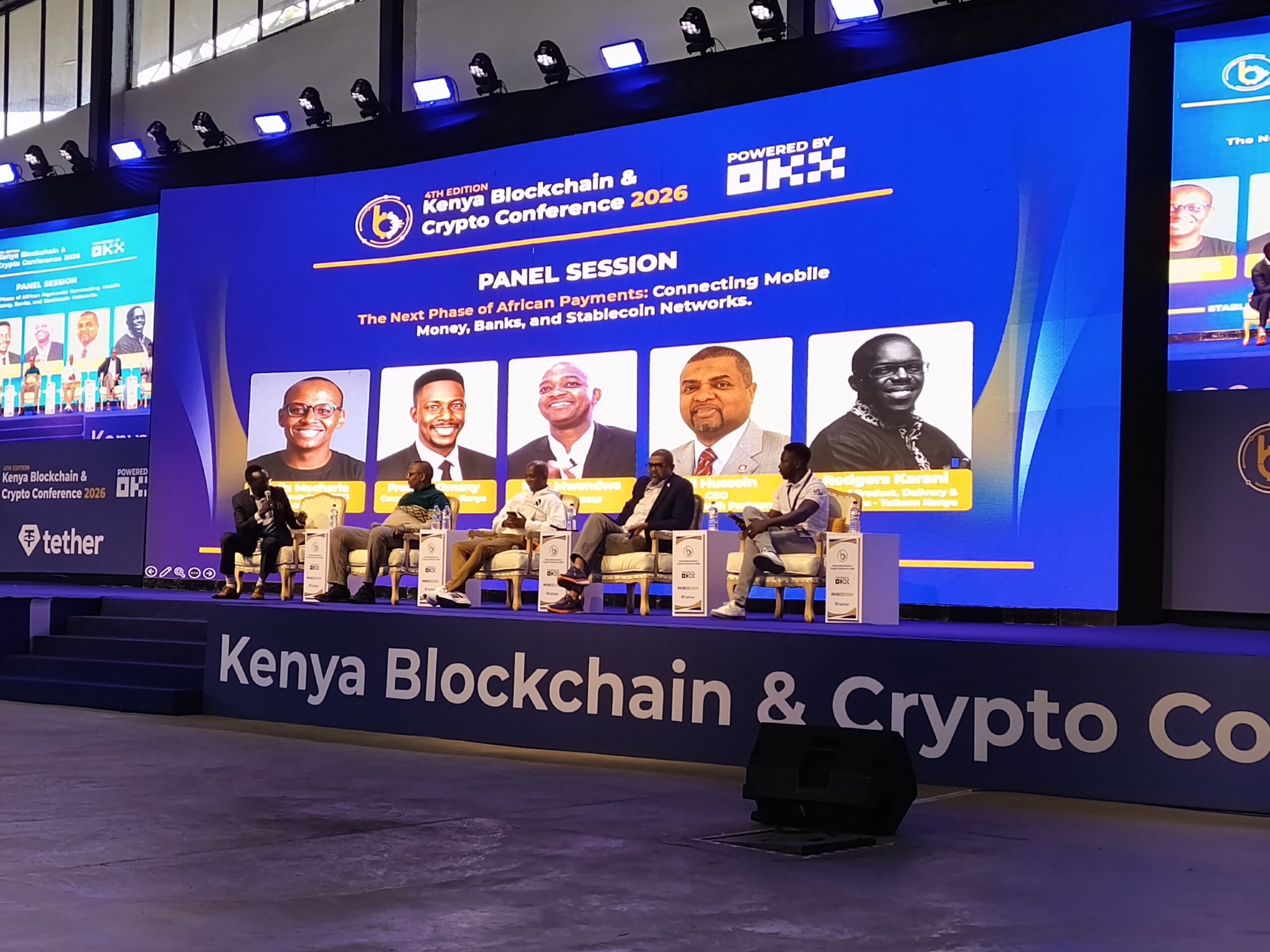
Settlement delays, foreign exchange bottlenecks and the rising cost of moving money across borders dominated discussions at the Kenya Blockchain & Crypto Conference 2026, where fintech operators, infrastructure providers and policy voices argued that stablecoins are increasingly becoming part of Africa’s financial plumbing rather than a parallel system.
Speakers on the panel said stablecoins are now being used to reduce settlement times, improve dollar access for businesses and support cross-border transfers that traditional banking infrastructure still processes slowly.
The session, titled The Next Phase of African Payments: Connecting Mobile Money, Banks, and Stablecoin Networks, brought together Pawapay Kenya Country Director Freddie Omany, Kotani Pay Co-Founder and CEO Felix Macharia, Ripple Bank Solutions founder Nick Mwendwa and AHK Growth Partners CEO Ali Hussein.
Much of the discussion focused on a structural problem inside African payments systems. Mobile money can move funds instantly between users, but settlement between institutions and merchants often takes days.


Omany said that disconnect has become one of the strongest use cases for stablecoin infrastructure.
“Most people assume the payment process ends when they receive a confirmation SMS,” he said. “But businesses still need access to those funds, and settlement has historically been slow in some markets.”

According to Omany, Pawapay previously experienced settlement delays of up to 4 days in some African markets before integrating stablecoin infrastructure into parts of its settlement process.
“We’ve reduced settlement timelines from multiple days to near-instant,” he said.
Pawapay currently operates across more than 20 African markets and processes millions of transactions daily through mobile money infrastructure.
While stablecoins often attract attention through cryptocurrency trading activity, Macharia argued that some of the earliest practical use cases emerged inside humanitarian cash transfer programs.
Kotani Pay initially worked with NGOs distributing aid into refugee camps and crisis regions where transfer costs significantly affected the amount beneficiaries ultimately received.
“In those environments, every dollar matters,” Macharia said. “You cannot have expensive cross-border transfer fees when you are processing microtransactions.”
He said broader commercial demand later emerged as businesses across parts of Africa struggled to access U.S. dollars through conventional banking systems.
“SMEs and importers could not consistently find dollars within the banking system during periods of currency stress,” he said. “Stablecoins became one of the alternative ways to access liquidity.”
That adoption pattern has since expanded into remittance providers and payment companies looking for faster treasury movement and lower foreign exchange friction.
Macharia argued that stablecoins are not replacing local payment systems such as M-Pesa, MTN Mobile Money, Visa or Mastercard. Instead, they are increasingly being used underneath existing financial rails.
“When it comes to domestic payments, mobile money still understands the market very well,” he said. “What stablecoins are improving today is cross-border movement, treasury operations and settlement speed.”
He also pointed toward a longer-term transition where more national currencies could eventually exist as tokenized assets on blockchain infrastructure.
“If currencies become tokenized, many foreign exchange intermediaries become less necessary,” Macharia said.
Mwendwa approached the discussion from the banking side, arguing that traditional compliance processes are colliding with expectations created by real-time digital finance.
He referenced payment systems where institutions still manually verify certain transfers before releasing funds to recipients.
“In decentralized finance, money moves instantly without those layers,” he said. “The challenge now is how to maintain compliance while keeping the same speed customers expect.”
According to Mwendwa, financial institutions can no longer treat digital assets as a fringe category.
“The technology is moving too quickly,” he said. “Banks, fintechs and regulators now have to adapt to systems that operate continuously.”
Ali Hussein framed the conversation less as a dispute between crypto and traditional finance and more as a competition around value creation.
“I am only your customer as long as you continue providing value to me,” Hussein told the audience.
He argued that payment fees themselves are becoming increasingly compressed, forcing financial institutions to rethink where future revenue will come from.
“We are moving toward zero-fee payments,” he said. “The question becomes where institutions position themselves once payments themselves become commoditized.”
Hussein described the financial ecosystem as evolving across several layers, beginning with infrastructure and distribution networks, then capital and risk management, followed by consumer-facing applications and finally intelligence systems driven by data and artificial intelligence.
He warned that many financial institutions are still operating around legacy assumptions despite the rise of always-on digital financial systems.
“It’s 2026 and some institutions are still thinking in terms of end-of-day processing,” he said. “Meanwhile customers are operating in real time.”
Questions from the audience later turned toward regulation and compliance, particularly around Financial Action Task Force requirements for cross-border transactions.
Hussein said the crypto sector can no longer operate outside mainstream regulatory systems.
“The adults have checked into the room,” he said. “There are no shortcuts anymore. The industry has to operate within regulatory frameworks.”
The discussion also touched on how banks could replace non-funded income if payment fees continue declining.
Macharia said banks still retain major advantages in customer distribution, liquidity management and treasury services.
He suggested that financial institutions could eventually generate new revenue through stablecoin partnerships, tokenized asset infrastructure, compliant settlement services and yield-related products connected to digital assets.
Several speakers returned repeatedly to one operational theme: reliability.
Omany said uptime and trust remain more important than novelty inside African payments systems.
“In high-volume environments, even a few minutes of downtime can translate into thousands of failed transactions,” he said.
He argued that new blockchain-based systems will only gain mainstream adoption if users trust them with the same confidence they currently place in mobile money platforms.
The panel reflected a broader change underway across African fintech, where stablecoins are increasingly being discussed less as speculative assets and more as infrastructure tools for settlement, treasury movement and cross-border liquidity.
For payment operators, the debate is no longer centered on whether blockchain-based financial systems will interact with traditional finance. The focus has shifted toward how quickly institutions can adapt operationally, commercially and regulatorily to systems that already move money continuously across borders.
Go to TECHTRENDSKE.co.ke for more tech and business news from the African continent and across the world.
Follow us on WhatsApp, Telegram, Twitter, and Facebook, or subscribe to our weekly newsletter to ensure you don’t miss out on any future updates. Send tips to editorial@techtrendsmedia.co.ke


