
Kenya’s Crypto Industry Is Making Its Case to Banks, Regulators and Global Capital
Kenya’s mobile money history is becoming part of the argument for stablecoin adoption and institutional Web3 growth

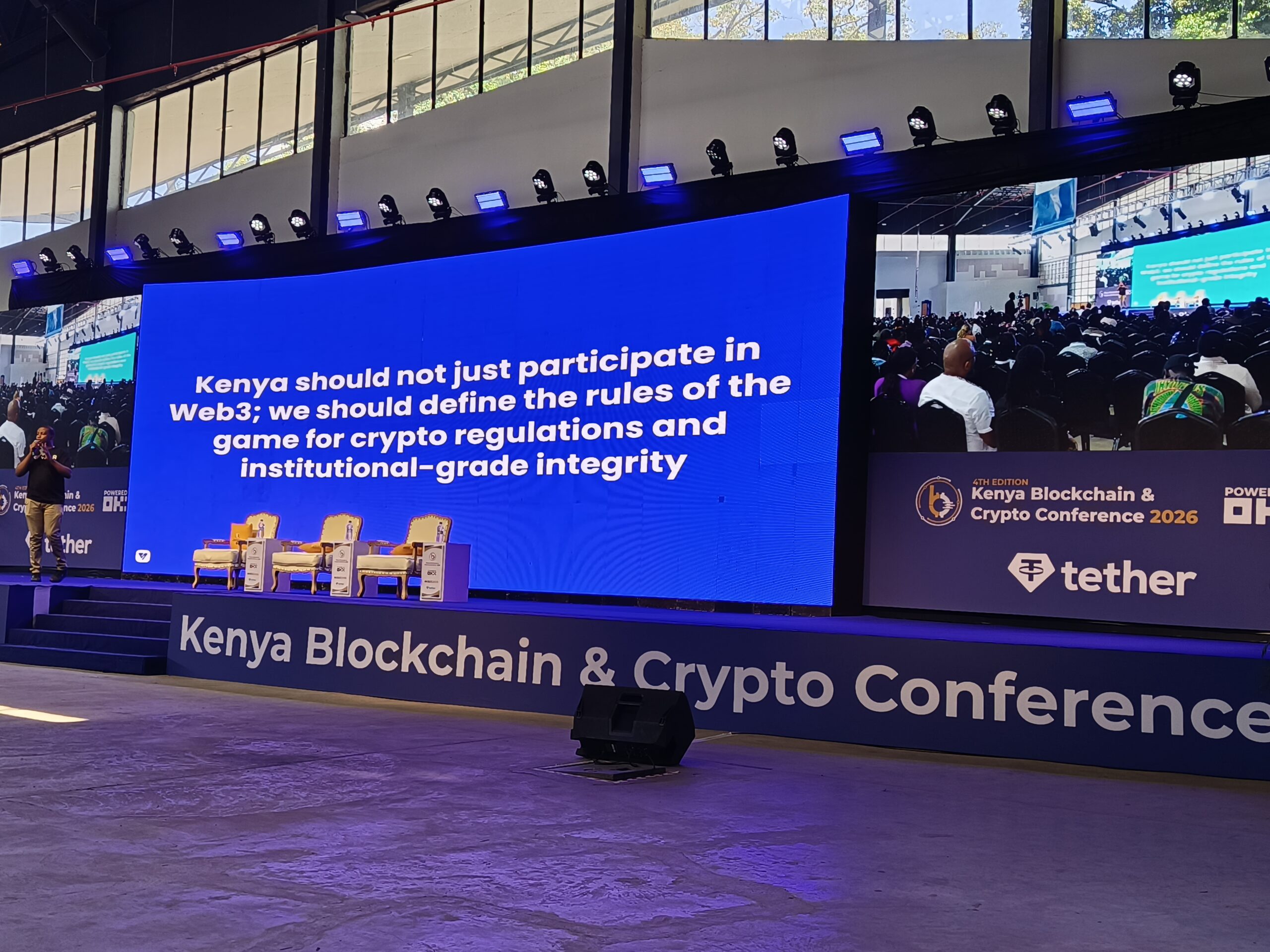
Kenya’s next fintech contest is no longer about mobile money adoption. It is about whether the country can build enough regulatory trust to attract institutional crypto firms, stablecoin payment infrastructure and cross-border capital flows before rival African markets consolidate their lead.
That was the argument advanced by Peter Mwangi during a keynote session at the Kenya Blockchain & Crypto Conference 2026, where the VALR executive framed Kenya’s mobile money history as a foundation for the next phase of digital finance.
Rather than presenting cryptocurrency as a speculative retail market, Mwangi positioned stablecoins and blockchain payment rails as infrastructure for trade settlement, treasury operations and foreign exchange management. The presentation focused heavily on regulation, banking integration and institutional access.
“Kenya should not just participate in Web3,” Mwangi told attendees. “We should define the rules of the game for crypto regulations and institutional-grade integrity.”


The pitch is moving beyond retail crypto trading
Much of the crypto conversation in Kenya over the past decade has centred on retail speculation, fraud warnings and peer-to-peer trading activity. The tone at the conference was markedly different.
Mwangi repeatedly tied adoption to operational use cases already emerging inside businesses. He described manufacturers and importers using stablecoins to settle supplier payments in markets such as India and China, bypassing delays associated with conventional correspondent banking systems.

The argument reflects a broader change taking place across African fintech markets. Stablecoins are increasingly being discussed less as crypto assets and more as payment instruments for dollar access, liquidity movement and cross-border settlement.
In Kenya, those conversations are becoming more relevant as businesses continue to manage currency volatility and foreign exchange pressure. Mwangi referenced the dollar shortages and shilling depreciation seen around 2020 and 2021 as an early catalyst for local stablecoin adoption among importers and digitally native workers.
His framing leaned heavily on practical economics rather than ideology. The central claim was that blockchain infrastructure reduces transaction friction in regions where foreign exchange access, settlement timelines and payment interoperability remain inconsistent.
Kenya’s regulatory window may be narrowing
One of the strongest themes in the keynote was timing.
Mwangi argued that Kenya still has an opportunity to shape itself into a preferred jurisdiction for virtual asset firms, but acknowledged that other African markets have already moved faster on licensing and regulatory frameworks.
South Africa was repeatedly referenced as an example of an African market that has already advanced institutional crypto integration, particularly within banking systems. Nigeria was also cited as a market that moved earlier on digital asset adoption.
The implication was less about competition for retail users and more about competition for infrastructure capital, compliance credibility and regional headquarters.
Mwangi said discussions between industry players and Kenyan regulators have evolved significantly over the past few years. According to his account, early engagements were largely educational, focused on explaining foundational concepts such as Bitcoin and stablecoins. More recent meetings, he said, have shifted toward implementation and operational oversight.
A major focus of his remarks involved VASP licensing standards and how those rules could influence Kenya’s global positioning.
“When a VASP is licensed in Kenya, it should carry a seal of quality recognised by global liquidity providers,” he said.
That framing points to a larger institutional objective. If licensing standards become internationally credible, locally regulated firms may find it easier to access banking relationships, liquidity networks and expansion opportunities across other markets.
Banks are no longer standing outside the industry
The keynote also highlighted a visible change in the relationship between banks and crypto firms.
Mwangi described earlier resistance from Kenyan banks, including difficulties opening corporate accounts for crypto-related businesses. He contrasted that with current engagement levels, saying financial institutions are now actively exploring blockchain integrations and stablecoin infrastructure.
That trend is not unique to Kenya. Across several jurisdictions, banks that previously avoided digital asset exposure are now studying tokenized settlement systems, custodial services and stablecoin-based payment rails as transaction volumes grow globally.
In the Kenyan context, integration with existing mobile banking ecosystems could become one of the sector’s most important adoption channels.
Mwangi suggested future banking applications may eventually support direct access to stablecoins and Bitcoin through conventional digital banking interfaces. While no rollout timelines were announced, the comments reflected how rapidly institutional positioning has changed.
The deeper issue is strategic rather than technological.
Kenya already built one of the continent’s strongest consumer payment cultures through mobile money. The next contest may depend on whether those same habits can support programmable financial infrastructure tied to global liquidity markets.
Stablecoins are being framed as financial access tools
Another notable aspect of the presentation was the effort to reposition stablecoins as defensive financial tools rather than speculative instruments.
Mwangi described using dollar-linked digital assets to manage exposure to currency depreciation. He also pointed to remote workers and freelancers receiving payments through blockchain networks rather than traditional remittance systems.
That narrative aligns with a growing segment of African crypto adoption that revolves around preservation of value, faster settlements and international access rather than token trading.
The conference discussion also touched on broader financial access themes, including participation in global equities markets and future blockchain-based sovereign debt issuance.
Those ideas remain largely aspirational in Kenya’s policy environment. Still, they reflect how blockchain firms increasingly frame their role inside financial systems: not as alternatives to banks, but as infrastructure layers connected to payments, settlement and capital distribution.
Kenya’s mobile money history still shapes the narrative
The keynote repeatedly returned to Kenya’s mobile money experience as both precedent and political argument.
Mwangi linked the adoption of Safaricom’s M-PESA to periods of national disruption, including the 2007 post-election violence and the behavioural changes triggered by the COVID-19 pandemic in 2020.
His broader point was that Kenya tends to adopt new payment systems during moments when traditional financial movement becomes constrained or inefficient.
That historical framing matters because it gives blockchain advocates a locally familiar adoption story. Instead of presenting crypto infrastructure as foreign technology, the industry is increasingly tying it to patterns already visible in Kenyan commerce.
Whether that argument succeeds will depend less on conference enthusiasm and more on policy execution.
Kenya’s regulators now face pressure from multiple directions: encouraging innovation, preventing fraud, satisfying global compliance standards and maintaining financial stability while digital asset activity expands.
The outcome could determine whether Nairobi becomes a regional operating base for institutional crypto firms or remains primarily a retail trading market shaped by offshore platforms.
Go to TECHTRENDSKE.co.ke for more tech and business news from the African continent and across the world.
Follow us on WhatsApp, Telegram, Twitter, and Facebook, or subscribe to our weekly newsletter to ensure you don’t miss out on any future updates. Send tips to editorial@techtrendsmedia.co.ke


