
Safaricom Tightens Its Grip on Ethiopia Business After Fresh Funding Round
Safaricom spent another Sh21.3 billion on the Ethiopia operation during a year marked by customer growth and lower losses

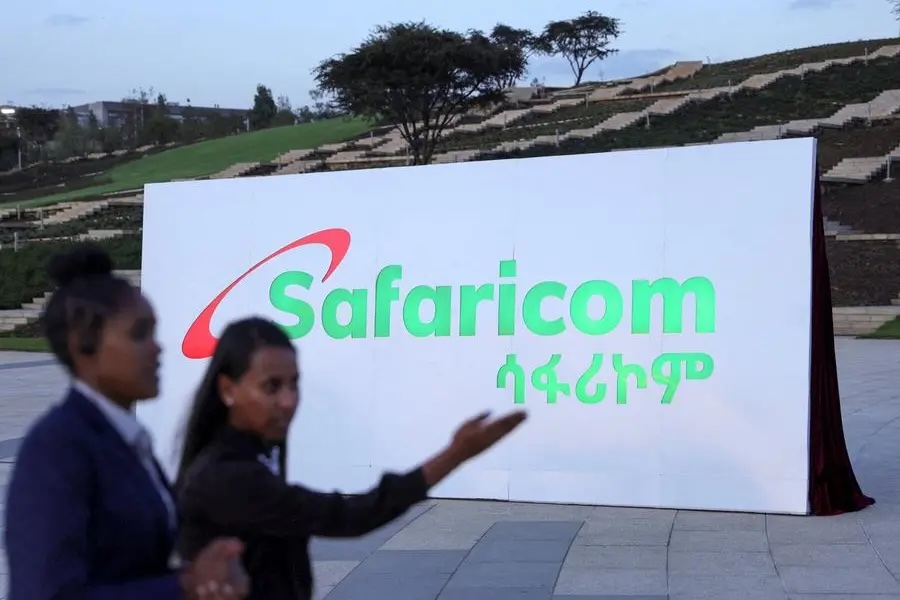
Safaricom has increased its shareholding in the Ethiopian telecom venture to 54.1 percent after committing additional capital to the operation during the year ended March 2026, reinforcing its position as the largest backer of the business.
The rise in ownership followed a funding round led by Safaricom and Vodacom Group Limited. Their participation diluted holdings held by other investors, among them Sumitomo Corporation, British International Investment and International Finance Corporation.
Safaricom’s stake had stood at 51.67 percent a year earlier.
The Nairobi-listed operator directed Sh21.3 billion, or roughly $165 million, into the Ethiopian business over the past financial year. Combined shareholder funding in the unit climbed to Sh341.7 billion ($2.64 billion).

Its own cumulative contribution reached Sh158 billion ($1.22 billion), underscoring how heavily the company is financing expansion in a market still consuming large amounts of capital before turning profitable.
Management said part of the recent funding was allocated to clearing obligations linked to infrastructure suppliers and equipment deployment.
Chief finance officer Dilip Pal said the Ethiopian unit reduced deferred vendor liabilities by $121 million during the period. The subsidiary also expanded a previously secured financing facility from $100 million to $134 million.
The company has increasingly blended shareholder funding with local borrowing in Ethiopia as it tries to ease pressure on equity financing while continuing network rollout and commercial expansion.
Vodacom’s ownership in the business edged higher to 6.02 percent from 5.74 percent. Meanwhile, Sumitomo’s shareholding fell to 23.5 percent, while British International Investment dropped to 9.5 percent. IFC’s holding declined to 6.81 percent.
The Ethiopian operation still reported losses, although the deficit narrowed considerably. Annual losses fell to Sh21.2 billion from Sh36 billion a year earlier.
Safaricom continues to project that the unit will reach breakeven by March 2027.
Board chairman Adil Khawaja said the business is moving beyond the early network build-out phase and is now concentrating on expanding usage and revenue generation.
“Ethiopia is gradually transitioning from roll-out to scale,” he said, adding that the market still requires investment despite its long-term potential.
Revenue generated by the subsidiary reached Sh14 billion during the year. Mobile data produced the largest share at Sh9.5 billion, while voice services brought in Sh3 billion. M-Pesa revenue stood at Sh169.4 million.
Monthly active customers grew to 10.75 million, supported partly by revised pricing introduced in December 2025 and improving economic conditions in Ethiopia.
Safaricom executives say the tariff adjustments have started feeding through into customer activity and commercial performance.
Go to TECHTRENDSKE.co.ke for more tech and business news from the African continent and across the world.
Follow us on WhatsApp, Telegram, Twitter, and Facebook, or subscribe to our weekly newsletter to ensure you don’t miss out on any future updates. Send tips to editorial@techtrendsmedia.co.ke


