
African Crypto Exchanges Shift Toward Payments, Compliance and Stablecoin Utility
Stablecoins are pushing African exchanges deeper into payments, treasury flows and business infrastructure

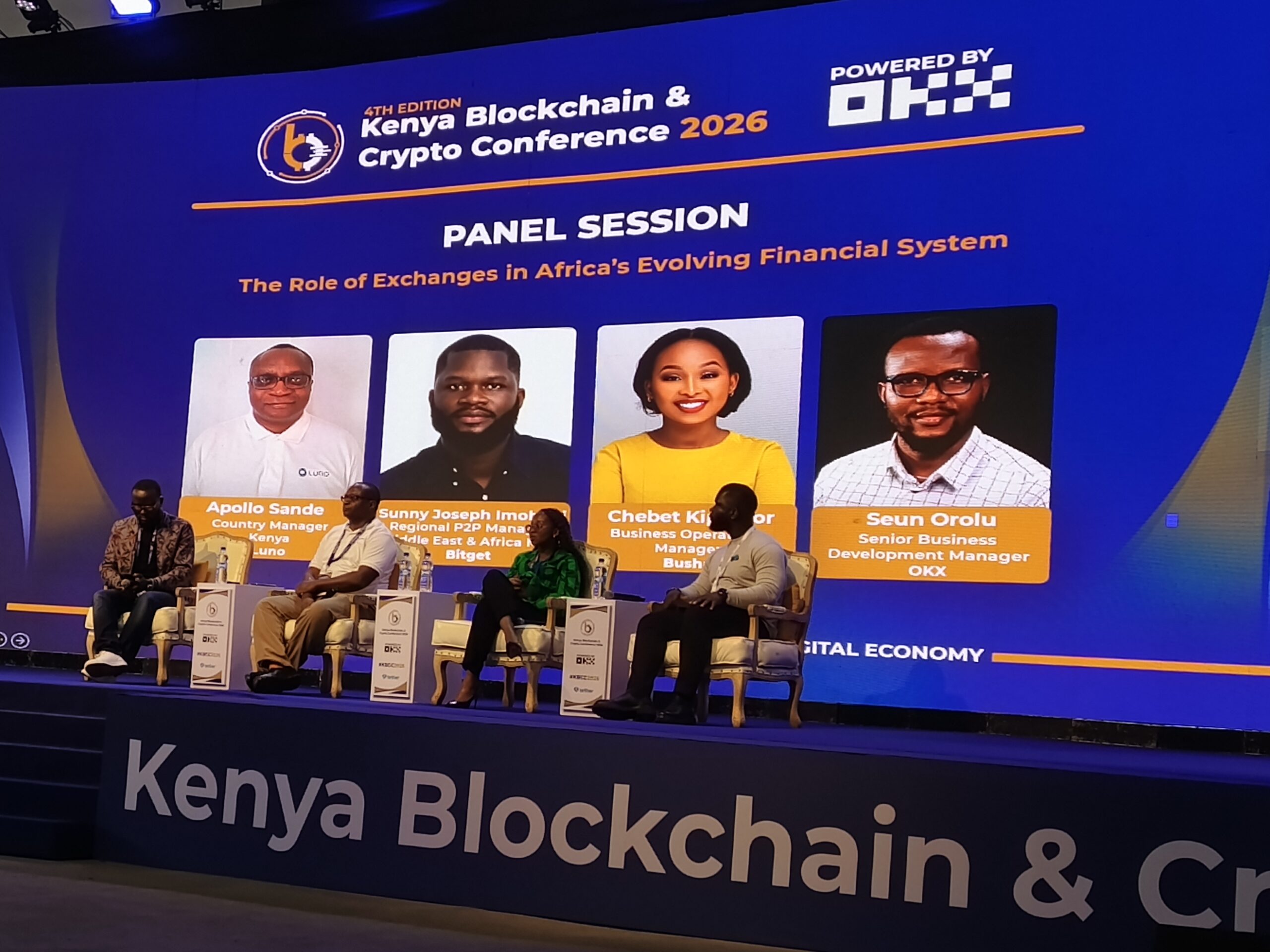
At the Kenya Blockchain & Crypto Conference 2026, one theme cut across the panel on exchanges and Africa’s evolving financial system: crypto platforms are steadily moving beyond speculative trading and into the mechanics of payments, treasury management, compliance, and cross-border business operations.
The discussion brought together Apollo Sande, Country Manager Kenya at Luno; Sunny Joseph Imohimi, Regional P2P Manager for the Middle East and Africa at Bitget; Chebet Kipingor, Business Operations Manager at Busha; and moderator Seun Orolu, Senior Business Development Manager for Africa at OKX.
The panel sat within a broader conference theme focused on stablecoins, payments, and the next phase of Africa’s digital economy.
One of the clearest signals from the session was that exchanges increasingly see compliance as part of their market positioning rather than a regulatory burden. Apollo Sande said Luno adopted a compliance-first structure from its early years, arguing that stronger due diligence has attracted users seeking safer transaction environments amid rising scrutiny around illicit flows on peer-to-peer platforms.


He described a growing preference among some Kenyan traders for centralized exchanges that absorb more of the compliance risk internally instead of exposing users directly to counterparties in loosely monitored P2P transactions.
The operational shift toward business infrastructure also featured heavily in the conversation.

Chebet Kipingor said Busha has spent the past year rebuilding its platform around practical business use cases. The company’s focus now includes enabling manufacturers, startups, importers, and exporters to move funds across borders using stablecoins with fewer delays and lower costs.
The discussion moved beyond trading volumes and into treasury management. Kipingor noted that businesses holding dollar balances increasingly want yield-generating options tied to stablecoin reserves instead of leaving capital idle.
Retail utility was another recurring theme. Panelists pointed to a gradual expansion of crypto usage into everyday transactions, including school fees, medical bills, and merchant payments. The argument from exchanges is that stablecoins are becoming more relevant because they compress settlement times and reduce friction in countries dealing with currency volatility and payment fragmentation.
Bitget framed user onboarding and retention as a parallel challenge. Sunny Joseph Imohimi said exchanges operating in African markets are trying to reduce entry barriers while still tightening KYC and platform safety standards. He argued that adoption now depends as much on trust and usability as it does on liquidity.
The panel also acknowledged that speculative trading still drives a large portion of stablecoin activity across exchanges. Apollo Sande estimated that utility-driven use cases such as remittances, treasury operations, and cross-border settlements remain relatively underpenetrated compared to their long-term potential.
That distinction matters because it reflects where exchanges believe future growth will come from. The discussion repeatedly returned to remittances, merchant settlement, and enterprise payments as the next expansion layer for stablecoin adoption in Africa.
By the close of the session, the language around exchanges had shifted noticeably away from trading platforms alone. Panelists described them as infrastructure providers sitting at the intersection of custody, liquidity, payments, compliance, and digital financial services.
Chebet Kipingor argued that regulation could gradually remove some of the distrust historically associated with crypto businesses by formalizing consumer protections and operational standards. Sunny Joseph Imohimi added that exchanges capable of meeting higher scrutiny from regulators and liquidity providers are likely to define the next stage of the industry.
Apollo Sande summarized the direction more bluntly: exchanges are positioning themselves as key infrastructure in the digital asset economy.
The panel suggested that Africa’s crypto market is entering a more operational phase. The conversation is increasingly centered on settlement rails, business payments, compliance systems, and financial coordination across borders rather than retail speculation alone.
Go to TECHTRENDSKE.co.ke for more tech and business news from the African continent and across the world.
Follow us on WhatsApp, Telegram, Twitter, and Facebook, or subscribe to our weekly newsletter to ensure you don’t miss out on any future updates. Send tips to editorial@techtrendsmedia.co.ke


