
Nairobi’s Tech Summit Season Is Becoming a Magnet for African Investment
Nairobi’s growing lineup of technology and investment summits is strengthening its position in Africa’s digital economy networks

Nairobi’s growing role in African technology is no longer being defined only by startup growth or mobile money adoption. It is increasingly tied to a different function: acting as a meeting point where investors, governments and technology operators negotiate the next phase of African digital expansion.
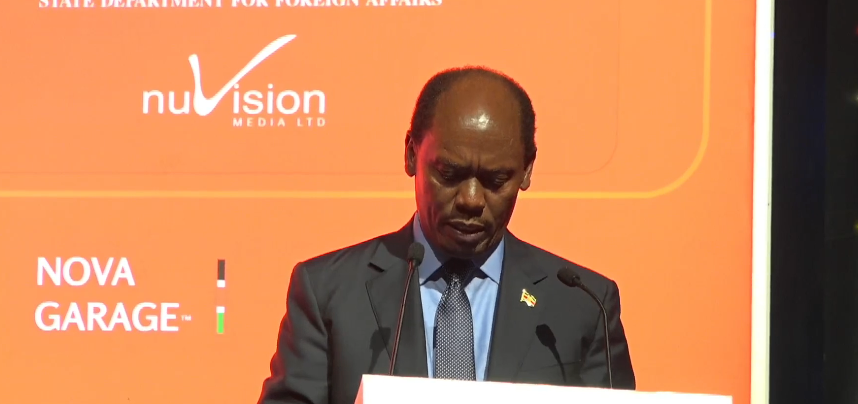
That broader ambition is visible in the ongoing Africa Forward Summit 2026 in Nairobi, where the newly launched Nova Garage platform has brought selected African founders into direct engagement with investors, multinational firms and policymakers.
The initiative, backed by the French-African Foundation alongside Concerto and Nuvision under the patronage of President William Ruto, reflects a broader transition in how African technology ecosystems are being positioned within global investment and policy networks.
The official language around the platform focuses on entrepreneurship and innovation. The more consequential development is the type of ecosystem being assembled around it.

African startup founders are increasingly being positioned inside diplomatic and capital networks that were previously dominated by governments, development institutions and multinational corporations.
That evolution reflects how technology ecosystems are now being treated as economic infrastructure rather than peripheral private-sector activity.

A decade ago, many international forums involving African economies centered on debt financing, aid partnerships and extractive industries. Current conversations increasingly revolve around digital infrastructure, artificial intelligence capacity, cross-border payments, logistics technology and energy systems tied to startup-led businesses.
Nairobi has emerged as one of the primary venues for those discussions.
The launch of Nova Garage also adds to a growing concentration of technology and digital economy forums increasingly centered in the Kenyan capital. Recent months have seen Nairobi host Africa Tech Summit 2026 and Connected Africa Summit 2026, both of which drew investors, telecom operators, policymakers and infrastructure firms into discussions around financing, connectivity and digital transformation across African markets.
Adjacent sectors are also expanding their regional presence in the city. The iGaming AFRIKA Summit 2026, held separately from Africa Forward Summit earlier in the same month, brought together gaming operators, fintech firms and regulatory stakeholders, reinforcing Nairobi’s growing role as a coordination point for multiple layers of the continent’s digital economy.
That accumulation matters because ecosystem density tends to attract additional capital, policy engagement and corporate activity. International investors increasingly prefer environments where founders, regulators, infrastructure providers and financial networks can be accessed within the same regional hub.
Nova Garage fits into that wider pattern.
Rather than functioning purely as a startup competition, the initiative appears structured as a curated access channel between African founders and international capital networks. The programme features 15 entrepreneurs under the age of 35 working across sectors including agriculture, mobility, finance and energy, with participants presenting operational products and defined commercial models rather than early-stage concepts.
That distinction matters because investor appetite across African technology has become more selective following the pullback in global venture funding over the past two years. Capital deployment has slowed, valuations have tightened and investors have increasingly shifted toward businesses with clearer operational fundamentals.
At the same time, governments are trying to maintain momentum around digital industrial policy.
Kenya has become particularly active in presenting itself as a regional coordination point for those ambitions, especially in areas linked to artificial intelligence infrastructure, data systems and digital trade integration.
The language used by Principal Secretary for Foreign Affairs Dr. Korir Sing’Oei offered a glimpse into that repositioning.
“We have spent decades speaking for Africa’s future. Perhaps it is time we made room for those who are actually building it.”
The significance of the statement lies less in its rhetoric than in the institutional posture behind it. African founders are increasingly being framed as strategic economic actors rather than beneficiaries of development ecosystems.
That framing aligns with a broader trend across global investment diplomacy.
International summits are no longer operating only as policy forums. They are increasingly being used as venture sourcing environments where governments, investors and corporations identify companies capable of shaping future infrastructure markets.
Artificial intelligence has accelerated that dynamic. Competition around compute infrastructure, cloud expansion, digital identity systems and sovereign data governance has intensified interest in African technology ecosystems, particularly in markets viewed as politically stable regional anchors.
France has also been expanding its technology engagement across Africa through startup partnerships, digital investment initiatives and academic exchange programmes as European governments attempt to strengthen economic influence amid growing competition from Chinese and American technology interests.
For Kenya, the opportunity extends beyond conference visibility.
Positioning Nairobi as a continental coordination hub creates secondary economic advantages tied to capital flows, regional headquarters activity, policy influence and infrastructure investment. The long-term objective is not merely to host events. It is to embed the country deeper into the operational architecture of African technology finance.
Whether that strategy produces durable outcomes will depend on factors beyond summit diplomacy alone.
African founders continue to face constrained late-stage funding access, fragmented regulatory systems and uneven infrastructure costs. Many startups that attract international attention still struggle to scale sustainably across multiple African markets.
Even so, the increasing overlap between state diplomacy, venture financing and digital infrastructure policy points to a structural change in how African technology ecosystems are being treated.
The summit itself may pass quickly. The more important development is the growing recognition among governments and investors that startup networks now occupy a strategic position inside broader economic competition across the continent.
Go to TECHTRENDSKE.co.ke for more tech and business news from the African continent and across the world.
Follow us on WhatsApp, Telegram, Twitter, and Facebook, or subscribe to our weekly newsletter to ensure you don’t miss out on any future updates. Send tips to editorial@techtrendsmedia.co.ke


