
Tim Cook to Step Down Later This Year as Apple Names John Ternus CEO
The Apple CEO transition places longtime hardware chief John Ternus in charge as Tim Cook prepares to exit

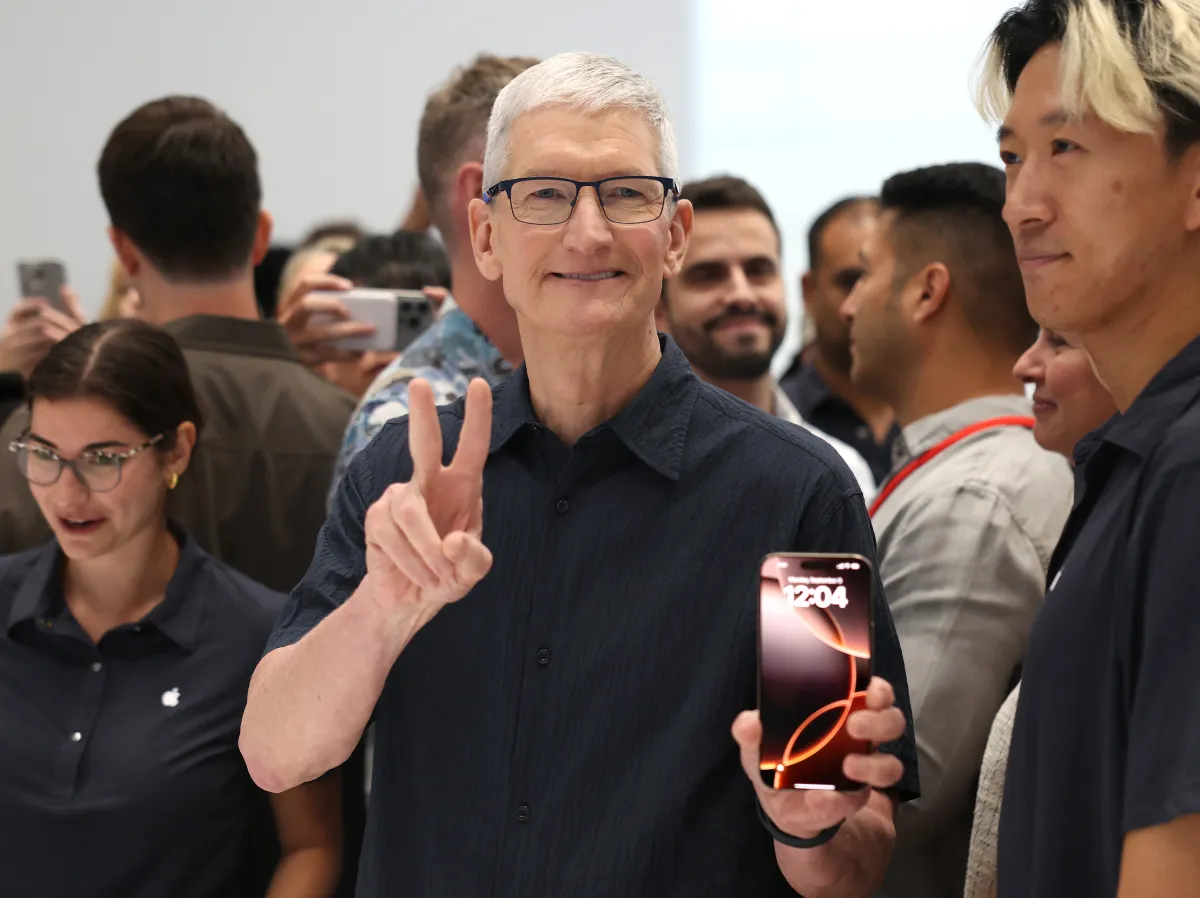
Apple has confirmed that Tim Cook will step down as chief executive on September 1, 2026, ending a 15-year run that began after Steve Jobs. He will be succeeded by John Ternus, the company’s senior vice president of hardware engineering, who will also join the board.
Cook will remain in the company as executive chairman, a role that keeps him involved in strategy and external affairs while handing day-to-day leadership to Ternus.
A transition rooted in hardware leadership
Ternus has spent more than 20 years inside Apple, rising through product design and hardware engineering. His appointment places product development at the center of the company’s next phase.
Apple paired the CEO announcement with a structural adjustment. Johny Srouji has been elevated to chief hardware officer with expanded control across engineering. That move consolidates hardware decision-making under a single leadership line reporting into the new CEO.
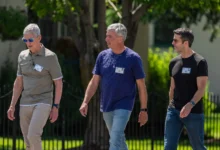
Inside Apple, this reads as continuity. Ternus has been closely tied to major product cycles across iPhone, Mac, and wearables, positioning him as an internal operator rather than an external reset.
How Cook’s tenure will be judged
Cook’s time as CEO combined operational discipline with sustained expansion across hardware and services. When he took over in 2011, Apple’s market value stood at roughly $350 billion. It is now above $4 trillion, with more than 2.5 billion active devices in use worldwide.

Under his leadership, Apple introduced products such as Apple Watch and AirPods while scaling its services business into a major revenue stream, now accounting for a significant share of total sales.
That record is likely to define how his tenure is assessed. The company grew in size, reach, and predictability, even as some newer product bets delivered mixed results or struggled to gain traction.
Cook reinforced a different emphasis in a letter to users published alongside the announcement, focusing on individual experience rather than scale.
“This is not goodbye… I wanted to take the opportunity to say thank you.”
What Apple may look like under Ternus
The incoming structure brings Ternus and Srouji into closer alignment over hardware strategy and execution. That pairing places engineering decisions at the center of Apple’s leadership model at a time when product cycles are maturing and new categories remain difficult to define.
This transition arrives under different conditions than in 2011. Apple is now a mature company with established product lines and predictable revenue streams, which reduces the immediate uncertainty around leadership change.
The choice of Ternus also reflects a preference for continuity in how Apple operates. His background in hardware and long tenure inside the company point to an approach that builds on existing product cycles rather than redirecting them.
At the same time, the transition comes as external pressures evolve. Apple continues to manage supply chain exposure tied to China while navigating increased competition in artificial intelligence, areas that are expected to shape the company’s direction over the coming years.
“I still plan to be very hands-on.”
Internal succession, not external reset
Apple’s choice avoids an external search and reinforces a long-standing pattern. Leadership transitions tend to come from within, prioritizing institutional knowledge and product continuity.
Cook will remain CEO through the summer of 2026 to oversee the transition, before moving into his new role as executive chairman.
Go to TECHTRENDSKE.co.ke for more tech and business news from the African continent and across the world.
Follow us on WhatsApp, Telegram, Twitter, and Facebook, or subscribe to our weekly newsletter to ensure you don’t miss out on any future updates. Send tips to editorial@techtrendsmedia.co.ke


