
AI Skills Development in Kenya Comes Into Focus at Safaricom Decode 4.0
The idea of AI as an equaliser in Kenya holds, but only if skills development keeps pace with how fast the tools are evolving

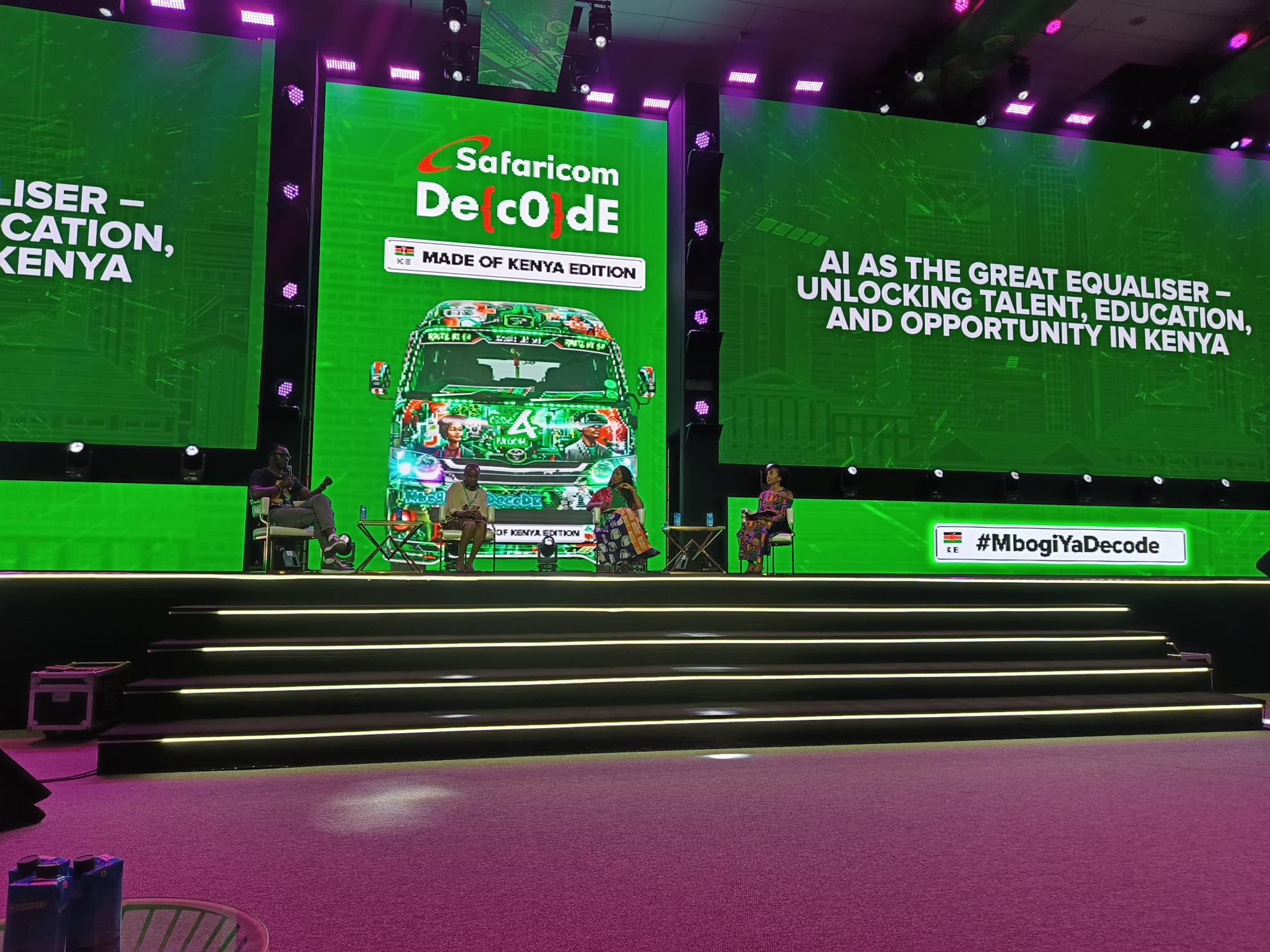
Safaricom hosted the fourth edition of its annual technology summit, Decode 4.0 today, centering on the practical application of artificial intelligence to drive economic inclusion.
The session, titled “AI as the Great Equaliser,” brought together industry leaders from Microsoft and Strathmore University to address the critical need for localized technical training. Panelists emphasized that while the technology acts as a leveling tool for global information access, the primary challenge for the local ecosystem remains the transition from being consumers of foreign platforms to creators of indigenous solutions.
The summit identified a persistent gap between theoretical university education and the immediate needs of the technology sector. Dr. Esther Hakata, a Research Director at Strathmore University, noted that academic institutions are now restructuring curricula to integrate industry-based use cases as early as the third year of study. This shift aims to ensure that graduates possess demonstrable projects on platforms like GitHub rather than relying solely on degree certificates to prove competency to employers.
Winnie Karanu, AI Director at Microsoft, characterized AI as a tool that provides Kenyan youth with the same information access as their counterparts in developed markets. She highlighted that the private sector currently offers free access to the AI Skills Navigator and certification vouchers to lower the barrier to entry for high-end technical roles. However, the panel noted that for AI to truly empower the local workforce, developers must optimize models for the Kenyan environment, such as accounting for low-end device cameras and local linguistic nuances.

Addressing concerns about automation and potential job losses, the panel urged workers to focus on human-centric skills that algorithms cannot easily replicate. Tonee Ndungu, founder of Kytabu, argued that the future of work demands versatility, the ability to move fluidly between coding, entrepreneurship, and specialised services. He also pointed to a massive untapped market closer to home, estimating that local businesses such as the 250 stores in Nairobi’s Sarit Centre represent significant opportunity for developers who can build simple, data-driven customer tracking tools.
On funding, Dr. Hakata called for investment that goes beyond the Ksh.2,000,000 esearch grants commonly seen in government calls, arguing that high-impact AI solutions in healthcare demand far more robust financial backing.

The Safaricom Decode 4.0 summit day one concluded with a reminder that building solutions for the African context effectively prepares developers to compete on a global scale.
Mark your calendars! The GreenShift Sustainability Forum is back in Nairobi this August. Join innovators, policymakers & sustainability leaders for a breakfast forum as we explore sustainable solutions shaping the continent’s future. Limited slots – Get your early bird tickets now – here. Email info@techtrendsmedia.co.ke for partnership requests.
Go to TECHTRENDSKE.co.ke for more tech and business news from the African continent and across the world.
Follow us on WhatsApp, Telegram, Twitter, and Facebook, or subscribe to our weekly newsletter to ensure you don’t miss out on any future updates. Send tips to editorial@techtrendsmedia.co.ke


