
Public Health Is Becoming One of AI's Earliest Real-World Uses in Africa
As governments face tighter health budgets and recurring outbreaks, AI is beginning to take on tasks that once required larger teams and longer response times

African governments are facing a difficult arithmetic problem.
Disease surveillance remains expensive. Public health staffing is under pressure. International development funding is becoming less predictable. Yet outbreaks continue to demand rapid responses across borders, transport corridors and densely populated urban centres.
That environment is creating fresh interest in AI in African health systems, particularly in areas that depend on large volumes of information moving between agencies, laboratories, emergency operations centres and frontline health workers.
The question is no longer whether AI can generate text. Public health authorities are testing whether it can help governments make faster decisions when disease threats emerge.


A new generation of health intelligence systems is taking shape
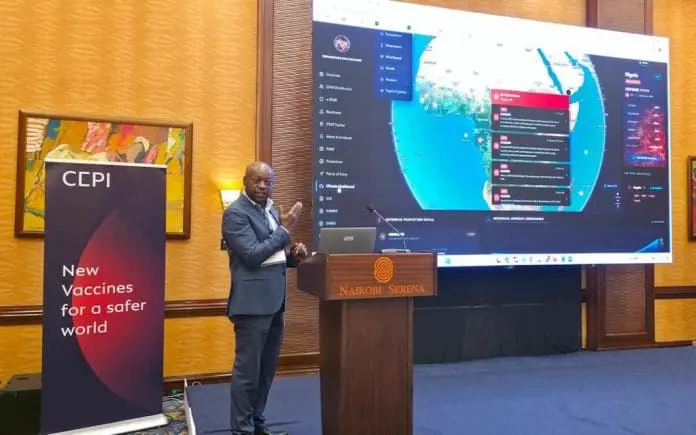
Earlier this year, the World Health Organization’s Africa office launched the Preparedness Data Exchange (PDX), an AI-enabled intelligence platform designed to help countries identify health risks before they become emergencies.
The system brings together information that traditionally sits in separate silos. Climate intelligence, laboratory trends, workforce capacity, emergency operations data, preparedness indicators and disease surveillance signals are analysed within a single operational environment.

Rather than forcing officials to piece together fragments from multiple systems, the platform generates a consolidated picture of evolving risks.
One of its most notable features is an embedded AI assistant that allows health officials to query preparedness data using plain language. Instead of navigating multiple databases, users can ask questions directly and receive source-backed responses linked to validated datasets.
The platform is intended to support existing public-health institutions rather than replace them. Epidemiologists and surveillance officers remain responsible for interpretation and decision-making, while AI handles some of the burden of organising and analysing information.
That distinction is becoming increasingly important as governments attempt to move from reacting to outbreaks toward identifying vulnerabilities earlier.
Disease outbreaks are becoming a test bed for multiple technologies
The latest Ebola outbreak in the Democratic Republic of the Congo illustrates how rapidly the technology landscape surrounding public health is evolving.
Scientists are currently working on four Ebola vaccine candidates, with two expected to reach clinical trial stages within months. At the same time, AI tools are being used to analyse outbreak data, compare current transmission patterns with previous epidemics and assess how emerging risks intersect with local conditions.
The country has experienced 17 Ebola outbreaks since the virus was first identified in 1976. What is changing is the range of digital tools available to support response efforts.
Outbreak management increasingly relies on more than medical interventions alone. Vaccine development, surveillance systems, data platforms and predictive analytics are becoming part of the same operational ecosystem.
Why the economics are changing
Technology adoption inside public health has often been constrained by budgets.
That calculation may be changing.
Many health systems across Africa are assessing how to maintain preparedness and response capabilities as international funding becomes less certain. Governments are under pressure to manage overlapping challenges that include epidemic threats, climate-related emergencies and humanitarian crises, often with uneven analytical capacity.
In that environment, AI is attracting attention because it can extend analytical capabilities without requiring comparable increases in staffing levels.
Preparedness itself is becoming a more continuous activity. Health authorities increasingly want systems capable of monitoring changing conditions rather than activating only when emergencies have already escalated.
The appeal of integrated intelligence platforms lies partly in their ability to connect warning signs that might otherwise remain isolated. A laboratory signal, a climate alert and a local disease report may each appear insignificant on their own. Viewed together, they can reveal emerging risks much earlier.
The technology still faces important limits
Public health officials are approaching deployment carefully.
Generative AI systems can produce inaccurate outputs, a risk that carries different consequences in healthcare than in consumer applications. Errors involving disease surveillance, outbreak forecasting or resource deployment could affect critical decisions.
Questions surrounding governance are equally significant.
Health systems handle some of the most sensitive information collected by governments. As AI becomes more deeply embedded in preparedness systems, policymakers will face increasing scrutiny over data access, accountability and the use of personal health information.
Technology may improve visibility. It does not remove responsibility.
Africa’s health systems are entering a new phase of digital preparedness
Many of the tools now entering public-health operations remain in an early stage of deployment. Their effectiveness will only become clear through repeated use across different emergencies and healthcare environments.
What is already visible is a broader transformation in how preparedness is being organised.
For years, disease surveillance, laboratory monitoring, workforce planning and emergency response often operated through separate channels. AI-enabled platforms are beginning to connect those functions into a more unified system.
For African governments, the challenge is practical rather than technological. They need faster ways to interpret growing volumes of information, direct limited resources and respond to threats before they accelerate.
Whether AI ultimately becomes a permanent layer of health infrastructure will depend less on the sophistication of the software than on accuracy, trust and the quality of the decisions it helps people make.
Go to TECHTRENDSKE.co.ke for more tech and business news from the African continent and across the world.
Follow us on WhatsApp, Telegram, Twitter, and Facebook, or subscribe to our weekly newsletter to ensure you don’t miss out on any future updates. Send tips to editorial@techtrendsmedia.co.ke


