Samsung’s Galaxy Z Fold 7 Grows Into Its Role as the Phone That Takes Security Seriously
You can sense a shift in Samsung’s tone, a company less eager to impress and more intent on getting security right

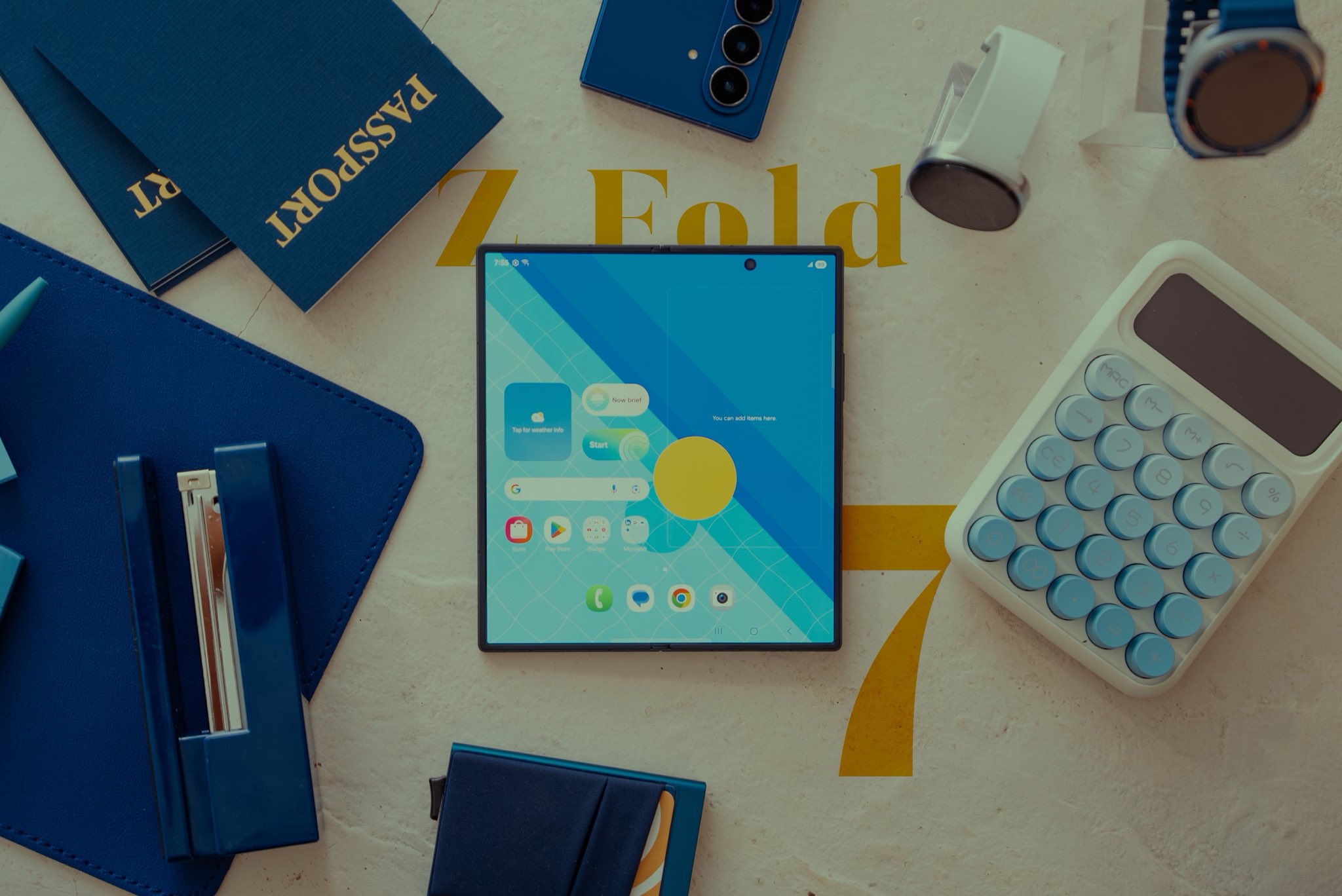
In Google’s latest Android security report, one name surfaced alongside the Pixel 10 Pro and iPhone 17: the Galaxy Z Fold 7. Its inclusion wasn’t about design or specs but about protection. The Fold 7 appeared as part of a comparative analysis by Leviathan Security Group, which found that Android devices, led by Pixel, provided the most comprehensive scam defenses of any platform.
For Google, the Fold 7 was proof that Android’s security intelligence scales across different brands. For Samsung, it was a quiet endorsement—confirmation that its flagship foldable doesn’t just look futuristic but operates inside Android’s most fortified ecosystem yet.
The timing was striking. Only a day earlier, Samsung had made headlines for something more theatrical: unveiling a tri-fold phone prototype at the APEC Summit in South Korea, a concept that folds twice to reveal a 10-inch display. The juxtaposition—one foldable symbolizing maturity, another signaling what’s next—captures where Samsung now stands.
Galaxy Z Fold 7: From foldable reliability to platform trust
The Fold 7 sits at the convergence of two evolutions: the stabilization of foldable hardware and the rise of AI-driven device protection. The Leviathan study, cited in Google’s blog, positioned the Fold 7 among the safest Android phones for scam defense. Google’s post detailed how on-device AI now detects fraudulent calls, filters suspicious texts, and blocks high-risk actions in real time—features that function uniformly whether the phone is a Pixel or a Samsung flagship.
For Fold 7 owners, that translates to more than software reassurance. It means that the phone’s dual-screen multitasking, live chats, and productivity apps are guarded by neural detection systems built into the operating system itself.
That seamless protection matters because the Fold 7 caters to heavy communicators—people most likely to encounter sophisticated phishing or impersonation scams through business messages, payment requests, or customer interactions.

A glimpse of Samsung’s next move
At the APEC Summit, the company displayed a twin-hinged, tri-fold device capable of expanding from a compact 6.5-inch form into a tablet-like 10-inch screen.
The prototype marks the first consumer-ready triple-display foldable after years of concept teasing at CES. Korean outlet Dailian reported a likely November or December 2025 release window, suggesting Samsung intends to commercialize the design before year’s end.
Industry watchers noted the symbolism: the tri-fold’s “G-shaped” layout folds inward twice, unlike Huawei’s accordion-style Mate XT. If realized, Samsung’s model could surpass Huawei’s 2024 lead in multi-hinge innovation and keep the company at the forefront of foldable experimentation—all while Apple’s first foldable remains a 2026 rumor.
The Fold 7’s role in that transition
In this new landscape, the Fold 7 looks less like the end of a product line and more like the pivot point. It’s the proof of maturity Samsung needed before scaling to riskier designs. Slimmer than any prior model, more structurally refined, and backed by Android’s full AI defense stack, the Fold 7 is effectively the “trust layer” for Samsung’s next form factor.
Its mention in Google’s post was therefore not incidental. It signaled that Samsung’s top foldable had graduated into Android’s broader identity—a security-reliable platform, not just a design experiment.
At the same time, the tri-fold prototype previewed where Samsung intends to go once reliability is no longer a concern. The Fold 7 secures the present; the tri-fold tests the horizon.
A tale of two devices, one direction
The sequence of these two announcements—Google validating Samsung’s role in Android’s AI-based protection, Samsung showcasing the tri-fold’s next-gen ambition—reveals the dual nature of the company’s strategy. On one side, consolidation: tightening integration with Android’s system intelligence. On the other, expansion: redefining the very geometry of smartphones.
If 2025’s Fold 7 marked the year foldables earned user trust, 2026 could mark the year they challenge the limits of practicality itself. But the foundation remains the same: a device that not only unfolds but also understands—anticipating scams, adapting to intent, and reinforcing that in the Android era, form and safety evolve together.
Go to TECHTRENDSKE.co.ke for more tech and business news from the African continent.
Follow us on WhatsApp, Telegram, Twitter, and Facebook, or subscribe to our weekly newsletter to ensure you don’t miss out on any future updates. Send tips to editorial@techtrendsmedia.co.ke