
IEBC's 2027 election preparations expose funding gaps, procurement delays and unresolved transparency questions

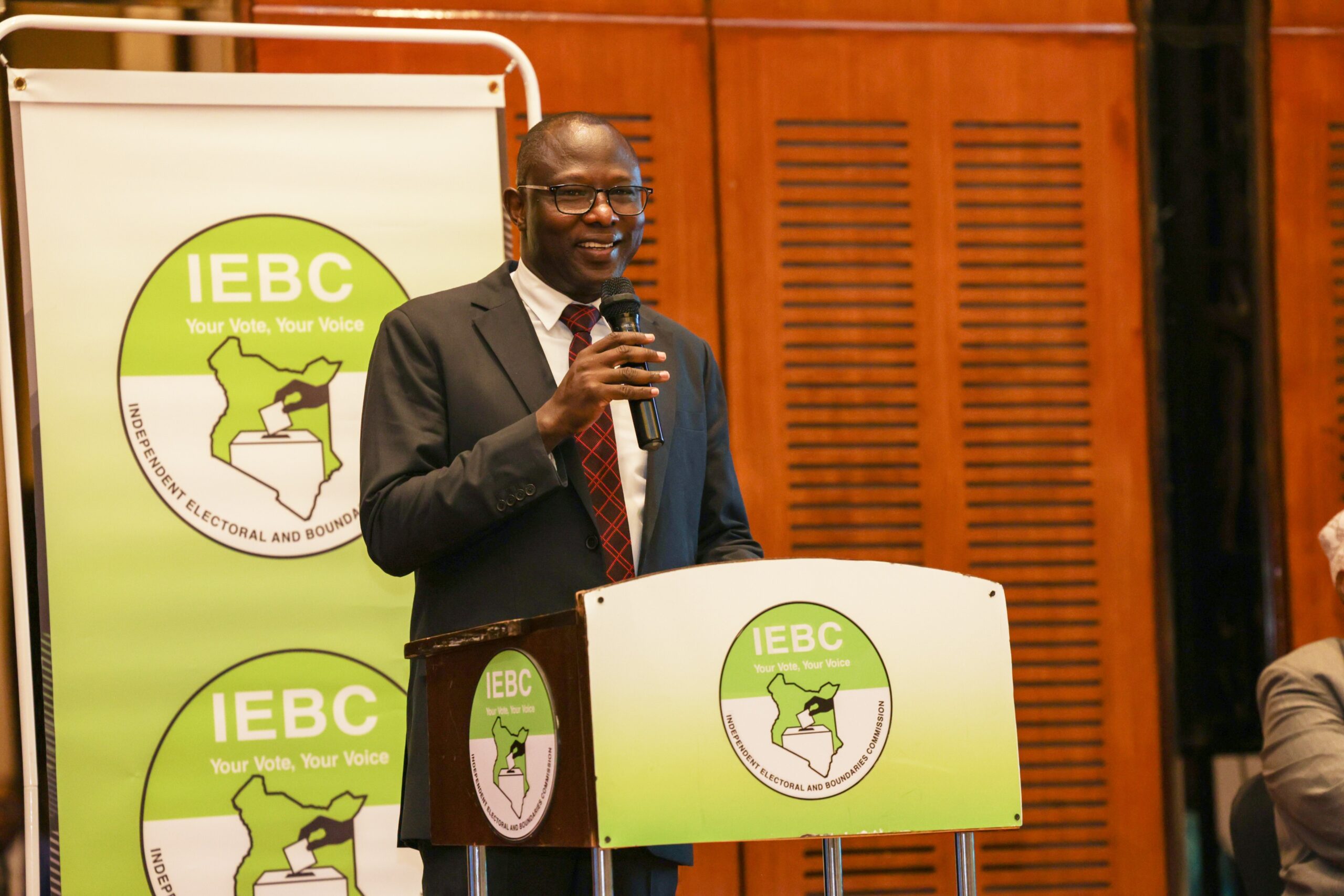
Kenya’s preparations for the August 2027 General Election involve more than getting election materials and technology ready. The Independent Electoral and Boundaries Commission (IEBC) must also complete voter registration, secure adequate funding, address procurement challenges, clarify its approach to transparency and manage outstanding electoral reforms.
Those demands featured prominently in a panel discussion involving elected representatives, political party officials and the commission. The exchanges covered the commission’s operational plans, the resources available to deliver them, the legal framework governing election management and the political environment in which the election will take place.
IEBC Deputy Director for Electoral Operations and Electoral Management Peter Resa outlined the commission’s preparations, including its voter registration targets, procurement processes and results transmission arrangements. Other participants questioned the pace of implementation, the availability of funds, the recruitment of senior officials and the commission’s interpretation of its transparency obligations.
The discussion also extended to boundary review, youth participation, party nominations, electoral violence and the growing influence of digital platforms on political communication.

Election funding remains a major constraint
The resources available to IEBC emerged as one of the central concerns, with figures presented during the discussion indicating substantial gaps in funding for essential election activities.
Funding for polling officials was reported at 26% of the required amount, leaving a shortfall of approximately KSh9 billion. Ballot-paper procurement had received 21% of its funding requirement, with an outstanding gap of about KSh4.66 billion.
These shortfalls affect activities that must be completed before polling day. The commission needs to recruit and pay election officials, procure and distribute ballot papers, deploy technology and prepare polling stations across the country. Delayed funding could narrow the time available to complete those tasks.
Kesses MP Hon. CPA Julius Kipletting Rutto, of UDA, also raised the difference between the KSh74 billion requested for election preparations and the KSh25 billion allocation discussed during the panel. His intervention highlighted the challenge of matching the commission’s operational requirements with the resources made available by government.
The funding question also places responsibility beyond IEBC. The commission can prepare budgets and procurement schedules, but it depends on government allocations to deliver many of its obligations. Parliament and the executive therefore have a direct role in ensuring that resources are released in time.
The figures raised during the discussion leave a practical question for the months ahead: whether the outstanding funding will be provided early enough to prevent delays in the commission’s preparations.
IEBC sets out voter registration and audit plans
Voter registration was another major part of the discussion, particularly the commission’s target of approximately 28 million registered voters.
Resa said enhanced continuous voter registration was scheduled to begin on January 11, 2027, and would run for 30 days. He reported that more than 2.7 million new voters had already been registered.
The commission had completed mapping activities in 34 counties, with the remaining work expected to take another two weeks, according to Resa. IEBC had also issued a tender for an audit of the voter register.
The sequence matters. The commission must expand the register, verify its accuracy and address any discrepancies before the election. The audit will be important in determining whether the register is reliable and whether eligible voters have been properly captured.
Nominated Senator Sen. Hezena Malmal Lemaletian, representing ODM, placed particular emphasis on youth participation. She raised concerns about the number of young people who register to vote and the political consequences of low participation among this group.
Her contribution connected registration targets to the wider question of representation. Young voters constitute an important part of the electorate, but their influence depends partly on whether they register and participate. Lemaletian also raised the need for new election equipment and concerns surrounding ODM’s nomination arrangements.
The discussion therefore covered two related but distinct questions: whether IEBC can register the number of voters it is targeting, and whether political parties and candidates can encourage broader participation in the election.
KIEMS procurement and ballot-paper contracts face scrutiny
Procurement emerged as another area of disagreement between the commission and political representatives.
The Kenya Integrated Election Management System (KIEMS) is central to voter identification and election management. Its procurement and deployment must be completed in time for the commission to prepare equipment, train personnel and resolve technical issues before polling.
Resa said litigation relating to the KIEMS procurement had been dismissed, allowing the process to proceed. He also disclosed that IEBC had held a virtual pre-bid conference with ballot-paper suppliers on the day of the discussion.
Ol Kalou MP Hon. Sammy Douglas Waweru Kamau, of DCP, raised concerns about the pace and consistency of the preparations, including procurement. Philip Omollo, Deputy Executive Director of the Mwananchi Party, also questioned the commission’s procurement decisions.
The concerns are significant because the procurement timetable is tied to other operational deadlines. Delays in acquiring technology or printing materials can affect testing, deployment and training, leaving the commission with less time to address problems before the election.
The commission’s explanation that litigation had been resolved provides an update on the KIEMS process, but the remaining procurement milestones will determine whether the equipment and materials are ready when required.
Delayed CEO recruitment adds to institutional questions
The recruitment of a substantive chief executive officer was also raised during the discussion.
Omollo questioned the commission’s progress in filling the position. Resa said the recruitment process had been referred to KPMG but was delayed by a court case.
The position is important to the commission’s administration and coordination of election preparations. With multiple procurement, registration and operational processes running concurrently, questions about senior management arrangements form part of the wider assessment of institutional readiness.
Omollo also questioned IEBC’s engagement with political parties and its response to correspondence from stakeholders. Resa said a memorandum submitted by opposition representatives two days earlier would be considered at the commission’s next plenary meeting.
The exchange reflected a broader concern about how the commission communicates decisions and responds to political stakeholders. Consultation does not remove the need for IEBC to exercise its independence, but timely engagement can help clarify disputes before they develop into larger disagreements.
Nairobi County Woman Representative Hon. Esther Muthoni Passaris, of ODM, also emphasised the institutional structures and stakeholder engagement involved in preparing for an election. Her contribution highlighted the role of actors beyond IEBC in supporting the process and ensuring that the commission can carry out its responsibilities.
Livestreaming debate exposes different interpretations of transparency
The question of whether polling-station proceedings would be livestreamed produced one of the clearest exchanges of the discussion.
A recorded statement by IEBC Chairperson Erastus Ethekon suggesting that livestreaming would not be allowed was subsequently clarified by Resa who shared the commission’s position, saying livestreaming would be permitted but would not form part of the official mechanism for tallying and declaring election results.
He said media organisations could livestream proceedings and that IEBC would provide application programming interfaces (APIs) to facilitate access to relevant information.
However, Resa questioned the practicality of installing and operating cameras at every polling station. With approximately 55,000 polling stations nationally, he said the cost of providing and maintaining the equipment would be a significant consideration.
His explanation distinguished between making polling-station proceedings visible to the public and using livestream footage as the official basis for determining election results. The formal results process, he said, would continue through the prescribed electronic and physical transmission channels.
Omollo challenged the commission’s interpretation of its legal obligations. He argued that livestreaming remained a requirement and referred to an unsuccessful attempt to amend the law to limit the use of livestreamed material in tallying.
Resa referred to litigation involving Katiba Institute and said the relevant provision had been declared unconstitutional. The exchange left the legal interpretation contested, with the panel presenting different positions on what the law requires.
The distinction between livestreaming and results transmission is important. Livestreaming can allow journalists and members of the public to observe polling-station proceedings, but it does not automatically replace the formal processes used to transmit, verify and tally results.
Resa also outlined the commission’s approach to transmitting results through electronic and physical channels. For the presidential election, he referred to the constitutional requirement that the winning candidate secure more than 50% of the valid votes cast and at least 25% of the votes in 24 counties.
The debate demonstrated that transparency involves more than providing access to live footage. It also depends on clear procedures for results transmission, access to relevant information and public understanding of how the final results are established.
Boundary review and electoral reforms remain on the agenda
The panel also raised concerns about reforms that extend beyond the commission’s immediate operational calendar.
Kamau questioned the progress of boundary review, an issue that has implications for the representation of voters and the wider electoral framework. His contribution connected the commission’s preparations to questions that cannot be resolved through procurement or voter registration alone.
The discussion also touched on the effect of litigation on electoral processes and the need to address outstanding institutional questions before the election.
These matters are relevant because the credibility of an election depends partly on the rules and institutional arrangements governing it. Where reforms remain unresolved, political disagreements can become more difficult to manage as polling day approaches.
Passaris’s emphasis on institutional structures and consultation offered a different perspective on the commission’s work, while Omollo’s interventions focused on accountability and the need for political stakeholders to receive clear responses from IEBC.
The discussion reflected the competing expectations placed on the commission: it must remain independent while engaging stakeholders, comply with the law while managing litigation and deliver its operational programme within a fixed period.
Electoral violence and political conduct
The security environment surrounding the election also featured in the discussion.
Lemaletian called for a dedicated conversation on electoral violence, arguing that the issue deserved attention as part of preparations for the 2027 contest. Another participant cited a Kofi Annan Foundation report and referred to an estimate of an 80%-plus likelihood of electoral violence.
That figure was raised during the discussion and should be treated as the participant’s account of the report, rather than an independently established forecast.
Rutto, meanwhile, directed attention to the conduct of politicians themselves. He cautioned that political actors appeared to have entered “panic mode” too early, even before the country had reached the election.
His observation added a political dimension to the security discussion. The conduct and rhetoric of candidates and party representatives can influence public confidence and the atmosphere surrounding an election. Concerns about violence cannot be separated entirely from how political leaders communicate, mobilise supporters and respond to disagreements.
Rutto’s point was not a substitute for questions about IEBC’s preparedness. It was a reminder that the commission is not the only institution or group whose conduct will affect the election environment.
Digital platforms complicate the information environment
The growing role of digital platforms in political communication adds another consideration to election management.
AI-generated political content and coordinated online activity can make it difficult for voters to distinguish genuine public opinion from material designed to create an artificial impression of support. Social platforms also allow political messages and allegations to circulate rapidly, sometimes before they can be verified.
A September 2026 report by Anthropic examined the use of AI-generated political social media posts designed to appear organic. In October 2026, TechTrendsKE reported on government engagement with online influencers and a proposed annual budget of KSh100 million for the activity.
These developments provide wider context for the panel’s concerns about political conduct, public confidence and the quality of information available to voters.
The challenge extends beyond the commission’s election technology. Voters will also make decisions in an information environment shaped by political campaigns, influencers, online networks and AI-generated material. Clear communication from IEBC will be important in helping the public distinguish official election information from claims circulated by political actors and other online sources.
The work ahead of the 2027 election
The discussion exposed several connected demands on IEBC. It must expand and audit the voter register, secure the funding required for election operations, conclude procurement, prepare its technology and personnel, and explain how transparency and results transmission will work.
Some of the concerns raised by the panel relate directly to the commission’s administration. Others depend on government funding, parliamentary action, political party processes and the conduct of candidates and their supporters.
Resa’s account outlined work already underway, but the funding gaps and questions about procurement and institutional capacity show why progress will be judged against delivery rather than plans alone.
The months ahead will reveal whether the commission can complete the necessary work within its timetable. The credibility of the 2027 General Election will also depend on whether the legal framework is respected, stakeholders receive clear information, young voters participate and political leaders avoid actions that undermine public confidence.
The panel’s discussion made clear that election readiness is not a single procurement exercise or a registration target. It is a combination of administrative capacity, adequate financing, transparent procedures, political participation and institutional accountability.
Visit TECHTRENDSKE.co.ke for more tech and business news from across Africa and the world.
Follow us on WhatsApp, Telegram, Twitter, and Facebook, or subscribe to our weekly newsletter so you don’t miss future updates. Send tips to info@techtrendsmedia.co.ke

