
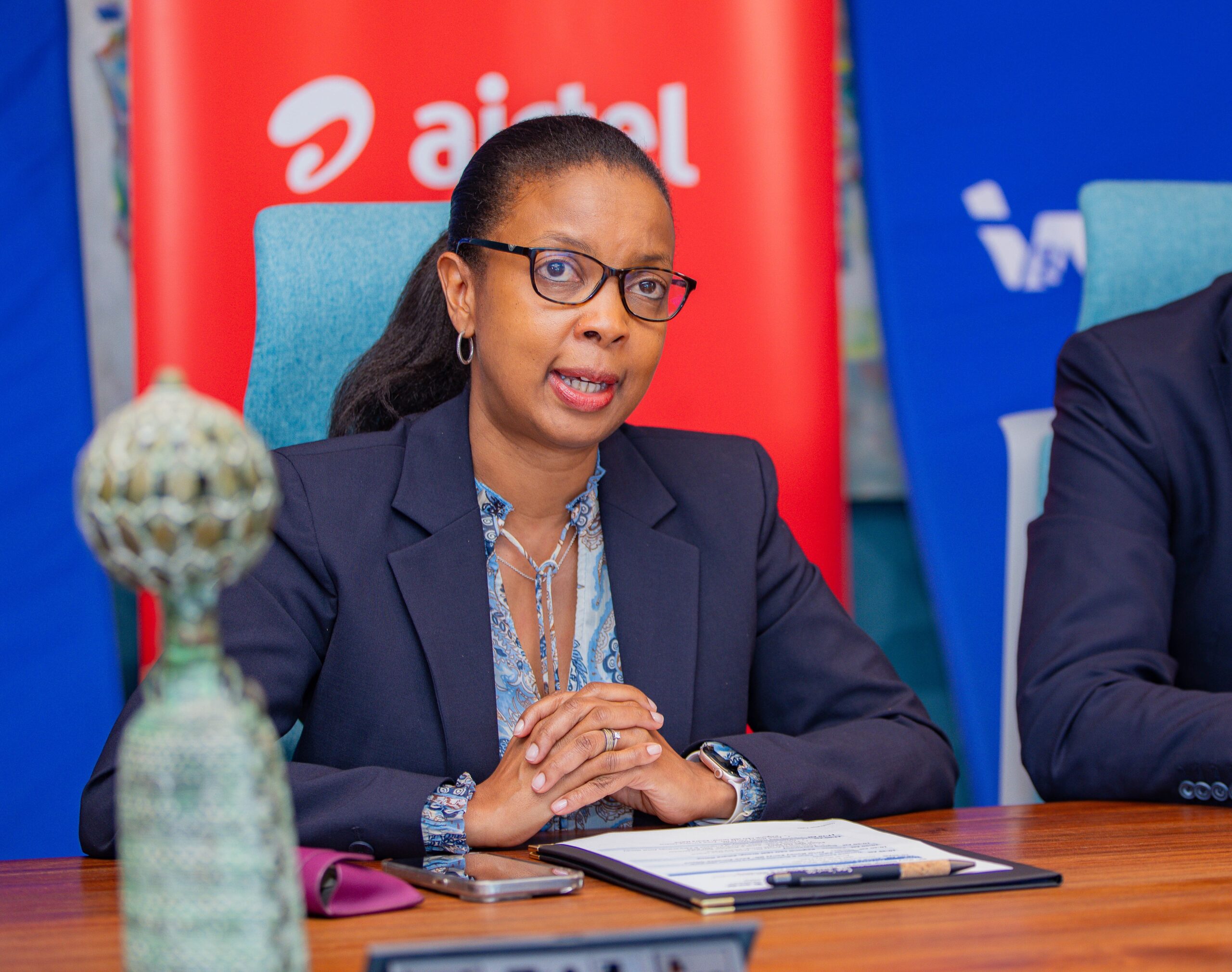
Anne Kinuthia Otieno is leaving Airtel Money after nearly five years, closing a chapter that helped strengthen the company’s position in Kenya’s fiercely competitive mobile money market.
She exits at a pivotal moment for both Airtel Money and Africa’s wider digital finance industry. The business is reporting record growth across the continent, preparing for a planned London listing and expanding partnerships designed to deepen financial inclusion. At the same time, mobile money itself is evolving beyond payments into broader financial ecosystems spanning merchant services, savings, lending and insurance.
In a farewell message shared on LinkedIn, Kinuthia Otieno reflected on the people, milestones and purpose that defined her tenure.
“Together with an incredible team, we strengthened Airtel Money’s position in the market, delivered one of the business’s most significant core platform transformations, significantly expanded our merchant and agent ecosystem, forged strategic partnerships and continued to widen access to affordable and inclusive digital financial services,” she wrote.


Her departure closes a leadership chapter that coincided with some of Airtel Money Kenya’s most ambitious efforts to expand its reach, modernise its operations and strengthen its role within Kenya’s fast-changing digital financial services market.
When Kinuthia Otieno joined Airtel Money, the company faced the challenge of growing its presence in a market long dominated by Safaricom’s M-PESA.

Rather than competing solely on person-to-person transfers, Airtel increasingly focused on expanding access to digital financial services through partnerships, interoperability and a broader merchant and agent ecosystem.
One of the company’s most significant recent milestones came in June, when Airtel Money partnered with KCB Bank to allow customers to deposit and withdraw cash through more than 22,000 KCB agents nationwide. The partnership substantially expanded Airtel Money’s physical cash access network while supporting Kenya’s broader move toward interoperable financial services.
The company also invested heavily in customer access, opening new customer service centres across Nairobi before extending the rollout to Mombasa as part of a wider plan to double its retail footprint.
Kinuthia Otieno credited those achievements to colleagues across Airtel Kenya and Airtel Africa, together with regulators, banking partners, merchants and agents who helped grow the ecosystem.
“I am equally proud that our collective efforts were recognised beyond our organisation, including being honoured with the Best Innovation in Mobile Money award,” she said.
Her departure comes during one of Airtel Africa’s strongest financial periods.
For the financial year ended June 2026, Airtel Africa reported revenue growth of 31 percent to $1.853 billion, while mobile money revenue increased 25.8 percent. Airtel Money’s customer base expanded to 56.5 million, with annualised transaction values exceeding $245 billion.
The momentum extends beyond financial performance. Airtel Africa is also preparing a standalone London listing for Airtel Money that could value the fintech business at approximately $10 billion, highlighting how central digital financial services have become to the group’s long-term strategy.
The broader Bharti Airtel group now serves more than 650 million customers globally, with Airtel Africa contributing more than 179 million subscribers across 14 countries, underscoring the scale of the platform Kinuthia Otieno helped strengthen.
Her departure also comes as Kenya’s mobile money market enters a new stage of development.
With mobile money subscriptions surpassing 53 million and penetration exceeding 100 percent of the country’s estimated population, operators are increasingly competing on the breadth of financial services they offer rather than simply adding new users.
Across the industry, mobile money platforms have expanded beyond payments into broader financial ecosystems that include merchant services, savings, investments, insurance, digital credit and capital markets products. Success is increasingly measured by customer engagement and the range of services available within each platform rather than customer acquisition alone.
That shift has elevated the importance of executives capable of building large digital financial ecosystems through partnerships, product development and customer adoption.
Kinuthia Otieno’s departure also comes during a period of notable leadership movement across Africa’s banking and fintech sectors.
Earlier this year, former M-Pesa Africa Managing Director Sitoyo Lopokoiyit joined Absa Group to lead its Personal and Private Banking business. More recently, former Safaricom Chief Business Development and Strategy Officer Michael Mutiga was appointed Chief Executive of Stanbic Bank Kenya after helping shape Safaricom’s financial services strategy.
Those appointments point to a broader trend emerging across the continent.
Banks are increasingly recruiting leaders with experience running large digital financial platforms, reflecting how banking itself is becoming more closely integrated with payments, digital ecosystems and embedded financial services.
While each appointment reflects different organisational priorities, together they illustrate growing demand for executives who understand how customers move seamlessly between payments, savings, lending, investments and insurance through digital platforms.
Kinuthia Otieno has not announced her next role, saying only that she will soon begin a new chapter.
“I do so with such deep appreciation for everything this experience has taught me. I’m truly thankful to God for what has been one of the defining chapters of my professional journey,” she wrote.
For Airtel Money, the leadership transition comes at a defining moment. The business is expanding its financial services platform, deepening strategic partnerships and preparing for one of Africa’s most closely watched fintech listings.
Whoever succeeds Kinuthia Otieno will inherit a business with stronger market momentum than when she arrived. The next challenge will be sustaining that growth as competition increasingly shifts from acquiring mobile money users to becoming a larger part of how customers save, invest, pay, borrow and manage their financial lives across an increasingly connected digital economy.
Download the free Kaspersky SMB Cybersecurity Guide here to learn how businesses can move beyond traditional antivirus and build a more resilient approach to cybersecurity.
Go to TECHTRENDSKE.co.ke for more tech and business news from the African continent and across the world.
Follow us on WhatsApp, Telegram, Twitter, and Facebook, or subscribe to our weekly newsletter to ensure you don’t miss out on any future updates. Send tips to editorial@techtrendsmedia.co.ke