Standard Chartered Kenya puts affluent customers and cross-border finance at the centre of its growth plans

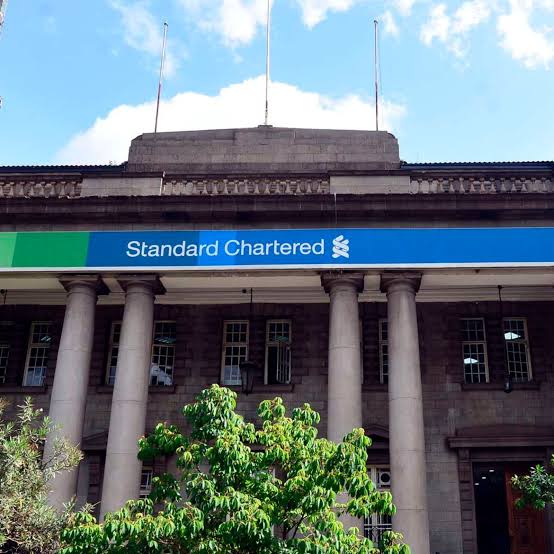
Standard Chartered Kenya is concentrating on wealth management, international banking and trade finance as it defines its position in a changing banking market. Chief executive Birju Sanghrajka says the bank intends to build on its relationships with affluent customers and businesses operating across borders, rather than pursue growth primarily through branch numbers, retail accounts or loan volumes.
The strategy draws on the wider group’s network across Asia, Africa, the Middle East, Europe and the Americas. Speaking six months after taking over as CEO, Sanghrajka described international connectivity as a central part of the bank’s value to Kenyan customers, businesses and other financial institutions.
His comments come as Kenyan banks face changing capital requirements, competition from regional lenders and customers who increasingly expect to manage their finances through digital channels. Standard Chartered Kenya has also moved from the large-bank category to the medium-bank category in the Central Bank of Kenya’s banking supervision report, prompting questions about how the lender measures its position in the market.
Standard Chartered Kenya puts wealth management at the centre
Sanghrajka identified wealth management as a major source of growth for the bank. Its target customers include affluent individuals seeking investment opportunities, international diversification, succession planning and advice on transferring wealth between generations.


He cited KSh302 billion in assets under management at the end of 2025 and said the business continued to grow in 2026. The offering ranges from investment funds to more specialised products for customers with larger portfolios and financial interests across different markets.
The focus reflects a deliberate choice about where the bank wants to compete. Sanghrajka said Standard Chartered does not measure success primarily by the number of branches, current accounts or loan accounts it holds. Instead, the bank aims to deepen relationships with customers whose personal finances, investments and businesses may extend beyond Kenya.

Building that business requires more staff able to advise clients on investment decisions. Sanghrajka said the bank had 55 certified wealth relationship managers in Kenya, with plans to increase the number to 65 in 2027 and 70 by the end of 2028.
That expansion will support customers seeking advice on both Kenyan and international investment opportunities. It also places greater weight on specialist services and long-term customer relationships in a market where other lenders pursue growth through retail banking, corporate lending and regional expansion.
Why the bank’s international network matters
Sanghrajka acknowledged Standard Chartered’s reclassification from a large bank to a medium bank under the CBK’s supervisory framework. He said the classification measures the size of the local operation, while arguing that the bank’s international network gives it a wider role in financial services.
He pointed to the group’s Fitch investment-grade rating and its presence across major financial markets. The network allows the Kenyan business to support customers dealing in multiple currencies, including the US dollar, euro, renminbi and Japanese yen, and to arrange banking and trade services across jurisdictions.
Sanghrajka also said more than half of Kenya’s banks are Standard Chartered clients. The bank provides services connecting local financial institutions to international clearing centres and supports transactions involving currencies such as the US dollar, Indian rupee, Japanese yen and euro.
These relationships give Standard Chartered a different source of reach from lenders whose main advantages lie in the size of their domestic deposit and lending businesses. For companies and banks handling cross-border payments, imports, exports and treasury operations, access to international banking infrastructure can be an important part of choosing a financial partner.
The group also finances transactions in African markets where it no longer operates a local bank. Sanghrajka said Standard Chartered is present in 10 African markets and has financing activities in another 20. He cited infrastructure financing in Angola and a road project in Cameroon, as well as the group’s involvement in the Democratic Republic of Congo’s inaugural Eurobond.
He said Standard Chartered remained committed to Kenya and would continue investing in areas where customers need its international capabilities. The local strategy therefore rests on connecting Kenyan customers to the group’s wider network rather than matching competitors branch for branch.
Trade finance supports cross-border business
Trade finance remains a core part of Standard Chartered’s business. Sanghrajka said the bank’s history in the sector stretches back 170 years, while the needs of businesses have expanded beyond conventional instruments such as letters of credit, guarantees and bonds.
He cited a US$100 million risk-sharing facility with British International Investment, which he said was expected to support US$450 million in trade finance. He also pointed to a US$300 million facility with the International Finance Corporation that he said would catalyse US$1.9 billion in trade finance across Africa.
Risk-sharing arrangements allow banks to support more transactions without carrying the entire exposure on their own balance sheets. By working with development finance institutions and other partners, lenders can distribute risk and extend financing to businesses that need capital to move goods across borders.
Sanghrajka also described the scale of financing associated with government-to-government oil flows, which he said can range from US$400 million to US$600 million a month depending on oil prices and the products involved. Transactions of this size require substantial financing capacity and coordination among the institutions involved.
Across Africa, businesses continue to face obstacles when trading across national borders, including fragmented payment arrangements and geopolitical disruption. Sanghrajka pointed to the African Continental Free Trade Area as part of the wider effort to deepen trade, while noting the need for more efficient cross-border transactions.
For Kenyan businesses, trade finance and international payment services can affect their ability to import inputs, fulfil contracts and enter new markets. Standard Chartered’s role in this market depends on its capacity to provide funding, foreign-currency services and banking connections across multiple jurisdictions.
Digital assets and open finance enter the picture
Sanghrajka identified tokenisation, stablecoin payments and digital-asset custody as areas Standard Chartered is preparing to serve. He said the group issues stablecoins in Hong Kong and has engaged with Kenyan regulators, industry peers and potential partners as the local market develops.
He described the bank’s approach as following customer demand. Rather than adopting technology for its own sake, Standard Chartered intends to respond where customers need digital-asset services and where the bank can apply capabilities developed elsewhere in the group.
The opportunity depends in part on Kenya’s regulatory framework for digital assets and payments. Rules governing virtual-asset service providers and changes to the National Payment System framework will influence how banks and third-party providers can offer services, handle customer information and facilitate transactions.
Sanghrajka also discussed open finance in connection with proposed changes to the payments framework. Greater access to customer data and payment functions could change how financial institutions and third-party providers compete to serve individuals and businesses.
For corporate customers, the value of a payment can extend beyond the transfer itself. Reconciliation information and transaction data can help businesses track payments, manage accounts and coordinate operations across markets. Sanghrajka said these services would remain important as payment methods evolve.
Standard Chartered’s interest in digital assets sits alongside its existing international banking business. The bank is preparing to serve customers through established financial services while assessing new forms of payment and digital-asset infrastructure.
Credit quality and Kenya’s economic risks ahead of 2027
Sanghrajka put Standard Chartered Kenya’s non-performing loan ratio at approximately 5.5% and said it was declining. He attributed the bank’s credit approach to its focus on corporate and institutional customers, lending secured against client assets in its wealth business, and relationship managers who spend time understanding borrowers and their operations.
He said the bank prioritises long-term relationships rather than treating loans as isolated transactions. That approach allows it to understand clients’ business plans and assess their ability to operate across markets.
Sanghrajka also stressed the importance of looking at the absolute stock of non-performing loans alongside the ratio. The ratio can fall as a loan book expands, so changes in the underlying amount of bad debt provide additional information about credit quality.
Looking towards 2027, he said the bank was monitoring the effects of successive shocks, including the COVID-19 pandemic, the Russia-Ukraine war and conflict in the Middle East. He said Standard Chartered conducts portfolio stress assessments that include climate risks and the potential effects of El Niño rainfall on borrowers.
Kenya’s public finances are another concern. Sanghrajka said the country had made progress in extending debt maturities but continued to face a large stock of local-currency debt requiring repayment or refinancing. He described limited fiscal space as a factor the bank would monitor as businesses prepared for the election year.
He also emphasised the importance of well-capitalised banks in supporting investment. Proposed changes to capital requirements for systemically important institutions form part of a wider discussion about the financial system’s capacity to absorb losses and fund economic activity.
For Standard Chartered, capital strength matters both to its ability to finance customers and to the confidence international businesses place in Kenya as a base for regional operations. Sanghrajka argued that a strong banking sector is necessary if the country is to attract investment and support companies expanding across East Africa and the wider continent.
Digital banking and the continued role of personal advice
Sanghrajka said customers were showing greater interest in digital banking, including mobile access to routine transactions and investment products. He said Standard Chartered had continued adding features to its banking application in response to customer feedback.
However, he said digital channels do not remove the need for personal advice. Customers making investment decisions involving family wealth, businesses and international assets may still want direct guidance from relationship managers, which helps explain the bank’s plans to expand its certified wealth team.
He also identified artificial intelligence, technology investment and cybersecurity resilience as priorities for banking. As more financial activity moves to digital channels, the security and reliability of the systems behind those services remain essential to customer confidence.
Standard Chartered Kenya’s direction combines wealth management, international banking and trade finance with investment in digital services. The bank is relying on its global network and specialist customer relationships to compete in Kenya while preparing for changes in payments, digital assets and banking regulation.
Go to TECHTRENDSKE.co.ke for more tech and business news from the African continent and across the world.
Follow us on WhatsApp, Telegram, Twitter, and Facebook, or subscribe to our weekly newsletter to ensure you don’t miss out on any future updates. Send tips to editorial@techtrendsmedia.co.ke


