
Nancy Njau Inherits a Different Challenge After Family Bank's NSE Listing
She spent more than two decades rising through Family Bank's ranks. Now, as chief executive of a listed lender, her decisions face a different audience: public investors.

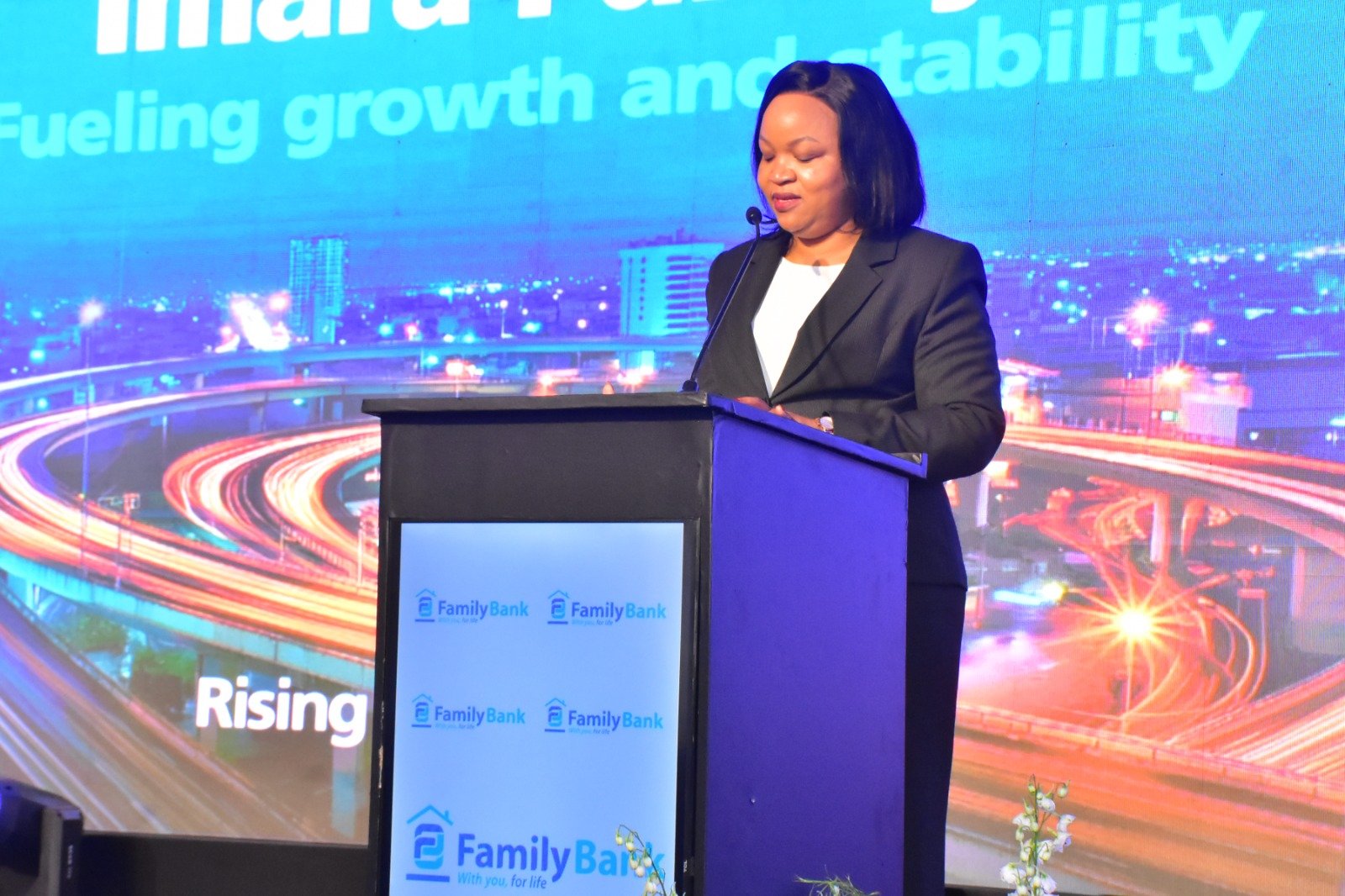
When Family Bank rang the bell at the Nairobi Securities Exchange in June, the milestone marked more than the bank’s arrival on the public market. It also marked the beginning of Nancy Njau’s first public-market test as Family Bank CEO, placing a career banker who rose through the institution under a level of scrutiny that privately held lenders rarely experience.
Njau assumed the role of Managing Director and Chief Executive Officer in January 2024 after more than twenty years at the bank. Her appointment represented one of the few internal CEO successions among Kenya’s mid-sized lenders and came at a pivotal moment. Family Bank was strengthening its capital base, preparing for a stock market listing and seeking to deliver stronger earnings in a challenging operating environment.
Today, those objectives are no longer measured solely by regulators and the board. They are also judged by public shareholders.
Njau joined Family Bank while it was still transitioning from a building society into a commercial bank. Her career followed the bank’s own evolution.


She began in branch operations before moving into management positions across retail banking, regional operations and strategic partnerships. Later assignments included leading public sector banking and serving briefly as Chief Commercial Officer before being appointed CEO.
That progression gave her experience across nearly every major business line inside the lender, from customer-facing operations to institutional banking and commercial strategy.

Unlike many banking chief executives who arrive through external recruitment, Njau inherited an institution whose systems, customers and operating culture she already knew firsthand.
Family Bank entered public trading with stronger financial metrics than when Njau assumed leadership.
Total assets expanded from KSh142.4 billion at the end of 2023 to KSh230.3 billion by the first quarter of 2026.
Customer deposits increased from KSh102.6 billion to KSh151.9 billion over the same period, while shareholders’ funds more than doubled to KSh34.8 billion following stronger earnings and the bank’s KSh8 billion private placement ahead of listing.
Profitability also strengthened. Net profit rose from KSh2.5 billion in 2023 to KSh3.5 billion in 2024 before reaching KSh5.4 billion in 2025. Quarterly earnings crossed the KSh1 billion mark during her tenure, reaching KSh1.6 billion in the first quarter of 2026.
The stronger capital position helped prepare the lender for its admission to the NSE through a listing by introduction rather than an initial public offering.
The figures also show how Family Bank has positioned its assets. While net loans increased in absolute value to KSh108.4 billion by the first quarter of 2026, lending accounted for a smaller proportion of total assets than it did two years earlier.
During the same period, the bank substantially increased its investment in government securities, with holdings rising from KSh34.8 billion in 2023 to KSh74 billion by the end of 2025.
That allocation generated additional interest income while providing relatively lower-risk returns as the bank prepared for public listing.
The approach reflects a measured balance between expanding lending and preserving capital, although it also means investors will continue watching whether loan growth accelerates as economic conditions improve.
Listing on the NSE changed more than the way Family Bank’s shares trade.
The bank now operates under continuous market scrutiny, with investors able to assess earnings, capital allocation, governance and management decisions alongside regulators.
Performance expectations have also evolved. Shareholders will be looking for consistent profitability, sustainable dividend growth and disciplined capital management as Family Bank adjusts to life as a listed company.
Management must also navigate ownership changes linked to regulatory limits on shareholding while maintaining growth across retail, SME and corporate banking.
Strong earnings alone are unlikely to define Family Bank’s next phase. Gross non-performing loans increased from KSh14 billion at the end of 2023 to KSh17.2 billion by the first quarter of 2026, reflecting broader economic pressures affecting households and businesses.
For investors, the trend places greater emphasis on credit quality alongside earnings growth. Maintaining profitability while containing loan defaults will become one of the bank’s key operational challenges as it expands lending and deploys the additional capital raised before listing.
Family Bank spent years preparing for admission to the Nairobi Securities Exchange. That objective has now been achieved. The focus has shifted to execution.
Njau enters that phase with stronger earnings, a larger balance sheet and a better-capitalised institution than the one she inherited at the beginning of 2024. The next measure of success will depend on how effectively Family Bank balances growth, asset quality, governance and shareholder expectations now that its performance is evaluated in the public market every trading day.
Download the free Kaspersky SMB Cybersecurity Guide here to learn how businesses can move beyond traditional antivirus and build a more resilient approach to cybersecurity.


