How Airtel's Nxtra Project Fits Into Kenya's AI Infrastructure Push

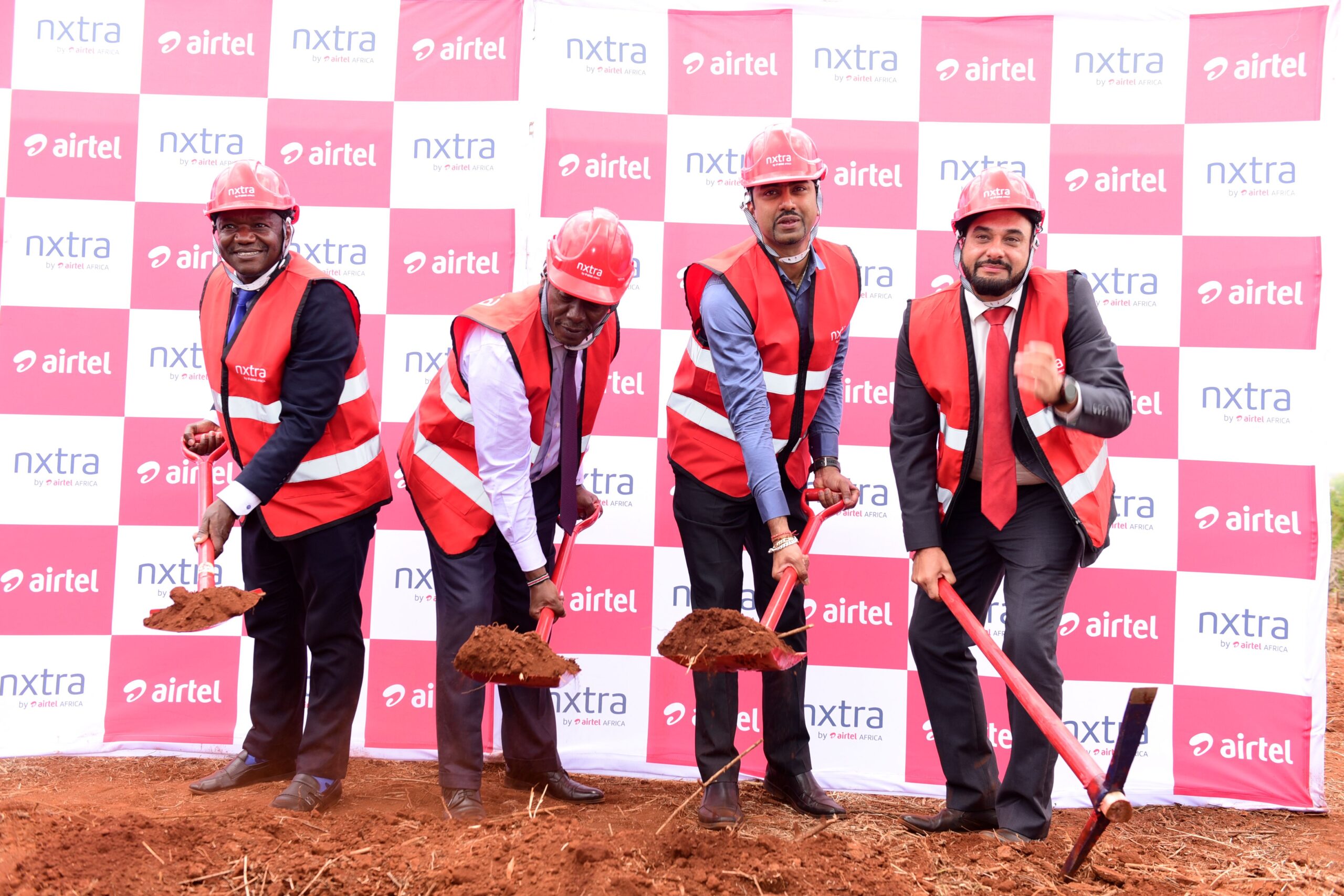
When Airtel Kenya broke ground on its US$150 million Nxtra data centre in Tatu City last September, the announcement stood out for one reason: scale. A planned 44-megawatt campus promised to become East Africa’s largest data centre, purpose-built for artificial intelligence, cloud computing and enterprise workloads.
Ten months later, the project tells a much bigger story.
Since construction began, Kenya’s digital infrastructure has continued to mature. Fixed broadband subscriptions have grown, international internet bandwidth has expanded, new submarine cable investments have progressed, and businesses are accelerating cloud adoption. At the same time, artificial intelligence has moved from experimentation to deployment across industries, creating demand for computing capacity that traditional enterprise data centres were never designed to handle.
Viewed against those developments, Nxtra is no longer just another large construction project. It reflects the direction Kenya’s digital economy is taking and raises a broader question: can the country evolve from East Africa’s primary internet gateway into the region’s leading destination for hyperscale computing?


The headlines in September 2025 focused on the numbers. A US$150 million investment. A 44MW planned capacity delivered in two 22MW phases. GPU-ready racks, a design power usage effectiveness (PUE) below 1.4 and a target availability of 99.999%.
Those specifications remain impressive, but they make more sense today than they did at the groundbreaking ceremony.

Artificial intelligence has become one of the biggest drivers of data centre investment globally. Modern AI models require thousands of graphics processing units operating simultaneously, consuming far more electricity than conventional enterprise servers while generating significantly higher cooling demands.
That is why the project’s GPU-ready architecture deserves as much attention as its installed capacity. Airtel is building for the next generation of digital workloads rather than simply expanding conventional hosting space.
If completed on schedule during the first quarter of 2027, the campus will surpass iXAfrica’s 22.5MW Nairobi facility to become East Africa’s largest publicly announced data centre by installed power capacity.
Large data centres do not create digital economies on their own. They respond to demand that has already begun to build.
The Communications Authority’s latest Sector Statistics Report illustrates that trend. Fixed broadband subscriptions continued to rise, reflecting greater demand for high-capacity internet services among households and businesses. International internet bandwidth also expanded, giving Kenya more capacity to move growing volumes of digital traffic across global networks.
Those figures help explain why projects of this scale are appearing now.
Every business migrating applications to the cloud, every fintech processing digital transactions, every university adopting AI research tools and every streaming platform serving local audiences adds to the demand for resilient computing infrastructure.
Instead of relying on overseas facilities, organisations are placing greater value on hosting services closer to users. Lower latency, improved regulatory compliance and stronger operational resilience have become commercial advantages rather than technical preferences.
Nxtra is being built into that environment.
Kenya’s digital infrastructure story is no longer defined by a single asset or company. It is the product of several developments reinforcing one another.
Broadband adoption expands the number of connected users and businesses. International bandwidth ensures those connections can access global platforms efficiently. Carrier-neutral facilities create interconnection points for operators and cloud providers. Large data centres supply the computing power needed to process and store that growing volume of digital activity.
Each layer supports the next.
That helps explain why multiple operators continue to invest in Kenya despite growing competition. Demand is broadening across financial services, manufacturing, healthcare, education, government and digital commerce, creating opportunities for infrastructure providers with different business models.
For decades, Mombasa has been Kenya’s gateway to the global internet.
Submarine cable systems landing along the coast connect the country to Europe, the Middle East and Asia, while carrier-neutral facilities operated by Digital Realty through iColo provide critical interconnection infrastructure close to those cable landings.
Nairobi is developing a complementary role.
Rather than serving primarily as a connectivity hub, the capital is becoming the location where data is processed, analysed and stored. Facilities such as iXAfrica’s campus and Airtel’s Nxtra project provide the computing capacity needed to support cloud platforms, enterprise applications and AI workloads.
Together, they form a more complete digital ecosystem. International traffic enters through coastal cable infrastructure before moving inland to high-capacity computing facilities, allowing Kenya to support both regional connectivity and advanced digital services.
Power has become one of the biggest constraints facing data centre expansion around the world.
Nxtra’s location inside Tatu City’s Special Economic Zone addresses that challenge through access to a dedicated 135MVA substation, a power supply that is largely renewable and additional on-site solar generation.
That combination offers more than environmental benefits.
Global cloud providers are paying closer attention to the carbon intensity of their infrastructure as they pursue climate commitments and manage long-term operating costs. Kenya’s electricity mix, anchored by geothermal, hydro and wind generation, provides a foundation that relatively few emerging markets can match at scale.
Reliable renewable energy is becoming part of the country’s value proposition for attracting digital infrastructure investment.
Competition in Kenya’s technology sector is no longer centred solely on mobile subscribers or network coverage.
Infrastructure has become a defining battleground.
Airtel is investing in hyperscale-ready capacity through Nxtra. iXAfrica has established one of the region’s largest carrier-neutral campuses. Digital Realty’s iColo facilities strengthen Kenya’s position as a regional connectivity gateway, while Safaricom continues to expand its enterprise business through data centres and cloud partnerships.
Rather than competing over a single market segment, these companies are building different pieces of the infrastructure required to support East Africa’s digital economy.
That ecosystem is likely to prove more attractive to multinational cloud providers and enterprise customers than any standalone facility could achieve on its own.
Completing East Africa’s largest data centre will be a milestone, but it will not be the final measure of success.
The greater test is whether Kenya can attract the hyperscale cloud providers, AI companies, financial institutions and multinational enterprises capable of filling that capacity.
The ingredients are coming together. Broadband adoption continues to expand. International connectivity is strengthening. Renewable energy provides a competitive advantage. Carrier-neutral infrastructure is maturing, while new hyperscale campuses add computing capacity at a scale the region has not previously seen.
Ten months after construction began, Airtel’s Nxtra project has become more than a landmark investment. It offers a window into how Kenya is assembling the infrastructure needed to support the next phase of cloud computing, artificial intelligence and enterprise technology across East Africa.
Download the free Kaspersky SMB Cybersecurity Guide here to learn how businesses can move beyond traditional antivirus and build a more resilient approach to cybersecurity.