
Germany Links Digital Growth, Energy and Skills in New Kenya Package
The agreement combines development financing with investment, workforce development and infrastructure priorities that shape how technology businesses and industries expand.

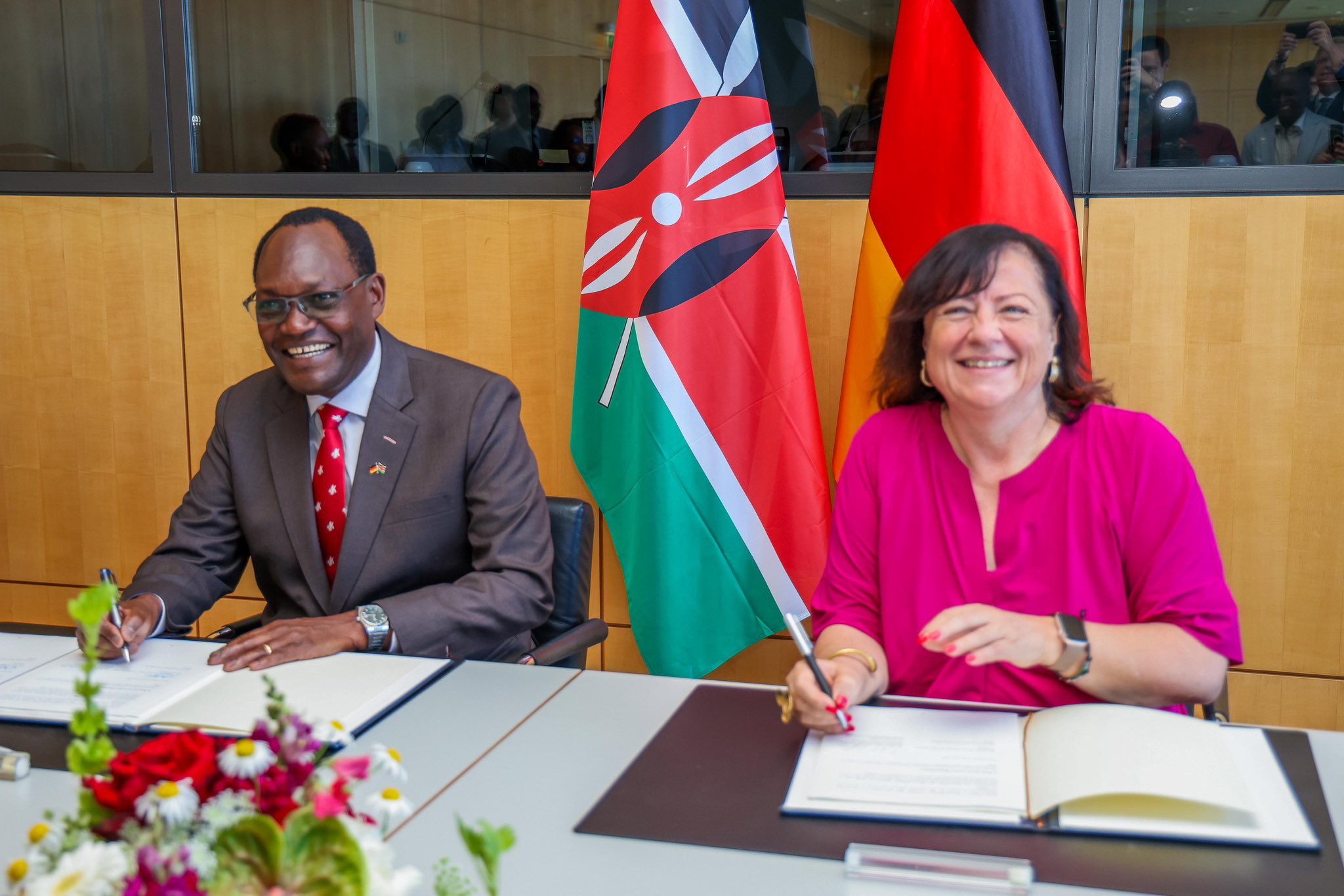
Germany’s Sh7.8 billion commitment to Kenya extends beyond development assistance. The three-year cooperation package brings together digital transformation, renewable energy, technical education, labour mobility and private sector development, reflecting an approach that treats technology, infrastructure and investment as connected parts of economic growth rather than standalone priorities.
The package, agreed during bilateral negotiations in Berlin, will support programmes between 2026 and 2028. Germany is also considering an additional Sh4 billion for Kenya’s energy sector,
a move that would expand support for infrastructure tied to the country’s digital and industrial ambitions.
Germany’s Funding Targets the Foundations of a Digital Economy
Digital transformation is one of the most prominent themes in the agreement.


The cooperation package includes digitalisation, digital innovation, fintech, digital skills, Business Process Outsourcing (BPO) and investment promotion. Those areas form the infrastructure that allows digital businesses to grow, governments to modernise services and enterprises to adopt new technologies.
For Kenya, the value of the package extends beyond individual projects. Digital economies depend on reliable infrastructure, skilled workers, supportive regulation and access to investment. The agreement brings those elements together under a single cooperation framework.
It also complements Kenya’s ambition to expand digital public services, strengthen its startup ecosystem and attract technology companies serving East Africa.
Clean Energy and Digital Infrastructure Go Together
The agreement places renewable energy alongside digital transformation because the two are closely connected.
Technology businesses rely on stable electricity to operate data centres, cloud platforms, telecommunications networks and software infrastructure. Manufacturers adopting automation and digital production systems also depend on reliable power.
Germany’s support for renewable energy, energy storage and e-mobility therefore strengthens the environment in which digital businesses operate. The proposed additional financing for Kenya’s energy sector would reinforce that objective if approved.
For technology investors, electricity is not only an energy issue. It is part of the infrastructure that shapes operating costs, service reliability and business expansion.
Skills and Labour Mobility Form Part of the Technology Strategy
Technical and Vocational Education and Training (TVET) features prominently in the agreement alongside labour mobility and expanded language training.
These programmes support workforce development at a time when demand for digital and technical skills continues to grow across multiple industries.
Software companies, telecommunications firms, manufacturers and business process outsourcing providers all depend on a steady pipeline of trained professionals.
The emphasis on technical skills and language training also reflects practical pathways for skilled workers seeking opportunities in international markets while strengthening Kenya’s domestic talent base.
Business Investment Depends on More Than Capital
Development financing creates opportunities, but investment also depends on the business environment.
Beyond funding, Kenya and Germany identified opportunities in digital innovation, fintech, BPO, renewable energy, manufacturing, agribusiness and investment. The discussions also covered tendering opportunities, opening potential avenues for Kenyan businesses to participate in projects linked to the cooperation programme.
Kenya has also committed to addressing barriers that affect market access, regulation and logistics. Those reforms are significant because infrastructure funding alone does not determine whether businesses can expand, attract investment or compete in regional markets.
More than 120 German companies already operate in Kenya, with many using Nairobi as their regional base for Sub-Saharan Africa. The latest agreements provide another framework for expanding commercial partnerships between Kenyan and German businesses.
Why the Partnership Matters Beyond Kenya
Kenya occupies a strategic position in Africa’s technology landscape. The country has an established fintech sector, a growing BPO industry, expanding renewable energy capacity and a mature startup ecosystem.
That combination makes it an attractive destination for partnerships that connect development finance with commercial investment.
The latest agreement brings together digital transformation, clean energy, workforce development, regulatory improvement and private enterprise because each depends on the others. Technology businesses require dependable infrastructure, skilled workers, efficient regulation and access to capital before they can scale.
Viewed through that lens, Germany’s Sh7.8 billion package is not simply another development announcement. It is a coordinated effort to strengthen the conditions that support digital economic growth, with potential implications for businesses, technology firms and investors across East Africa.
Go to TECHTRENDSKE.co.ke for more tech and business news from the African continent and across the world.
Follow us on WhatsApp, Telegram, Twitter, and Facebook, or subscribe to our weekly newsletter to ensure you don’t miss out on any future updates. Send tips to editorial@techtrendsmedia.co.ke


