

Apple's Next Mac Chips Could Reflect AI's Growing Hold on Hardware
The reported roadmap suggests artificial intelligence is beginning to shape not only future Mac capabilities but also the cadence of Apple's silicon development.

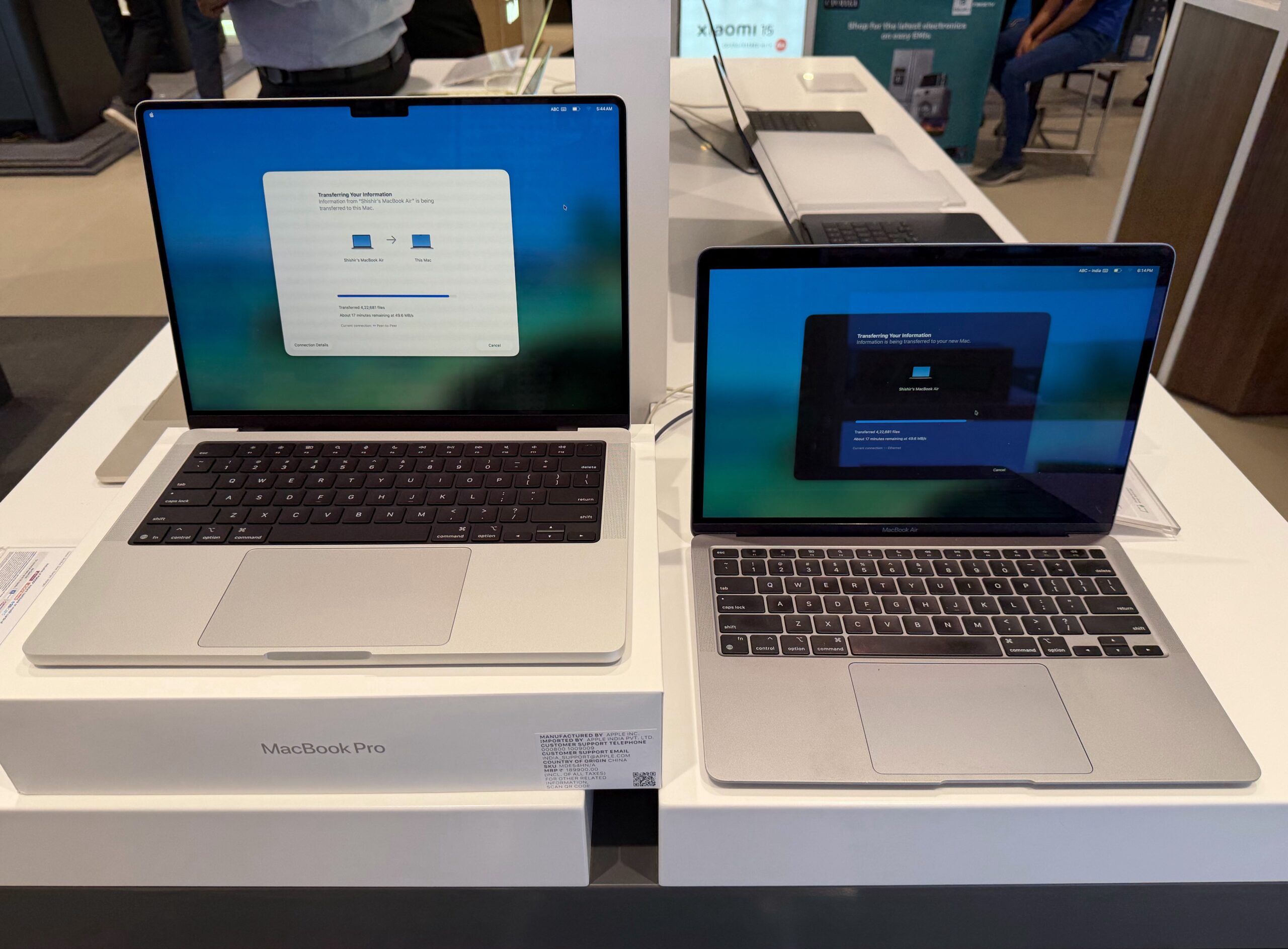
Apple’s reported decision to skip high-end M6 processors in favor of a new generation of AI-focused M7 chips suggests the company is making a far larger strategic adjustment than a routine product refresh. According to Bloomberg, Apple plans to introduce a standard M6 chip for entry-level Macs while reserving its next major leap for premium systems built around the M7 architecture. If the plans hold, the move would mark the first significant break in Apple’s established Apple silicon release pattern.
Since the launch of the original M1 in 2020, Apple’s chip roadmap has followed a predictable progression. Each generation has expanded from a base processor into Pro, Max and, in some cases, Ultra variants that powered increasingly capable MacBook Pro, Mac Studio and Mac Pro models.
Bloomberg reports that the M6 generation will depart from that formula. Rather than releasing M6 Pro and M6 Max chips, Apple is reportedly preparing to move its highest-end Macs directly to the M7 family, with a stronger emphasis on artificial intelligence capabilities.
The report also suggests Apple is already planning beyond its immediate hardware cycle. Bloomberg says the company’s first touchscreen MacBook models are expected to launch with existing M5 Pro and M5 Max processors, while a follow-up generation is being designed around the future M7 platform. That sequencing indicates Apple may be treating its next silicon architecture as a standalone milestone rather than bundling it with every major hardware redesign.


The change would represent one of the biggest strategic shifts Apple has made since replacing Intel processors with its own silicon.
Apple’s silicon roadmap may be about to change
On the surface, skipping a generation of premium processors might appear unusual. Apple has spent years building confidence around a consistent annual cadence for its Mac chips, allowing customers and developers to anticipate hardware upgrades with relative certainty.
The reported roadmap suggests Apple now believes incremental improvements are no longer enough for its professional Macs.
Instead, the company appears to be positioning the M7 generation as a larger architectural transition rather than another annual performance update.
Why Apple could bypass the M6 Pro generation
Artificial intelligence provides the most obvious explanation.
Modern AI workloads increasingly depend on more than traditional CPU and GPU performance. Running large language models and advanced on-device features requires faster Neural Engines, greater memory bandwidth and substantially larger unified memory pools.
Apple Intelligence already places new demands on hardware. Many of the platform’s most advanced capabilities are limited to recent devices because older systems lack sufficient memory and processing resources.
An M7 architecture designed around those requirements could deliver a more meaningful leap than simply extending the M6 family with Pro and Max variants.
AI is changing both hardware design and hardware economics
Recent developments across Apple’s business strengthen that interpretation.
Last week, Chief Executive Tim Cook acknowledged that soaring memory prices had made hardware price increases unavoidable. Days later, Apple raised prices across several MacBook and iPad models, citing an unprecedented increase in the cost of memory and storage components after demand from AI infrastructure tightened supplies across the industry.
The pressure extends beyond Apple.
Memory suppliers have shifted significant manufacturing capacity toward high-bandwidth memory used in AI servers, leaving consumer electronics manufacturers competing for tighter supplies of conventional DRAM and NAND flash memory. The same supply constraints are boosting profitability for memory makers while forcing device manufacturers to absorb higher component costs or pass them on to customers.
The result is a feedback loop that is beginning to reshape the industry.
AI is driving demand for more capable hardware while simultaneously increasing the cost of building it.
That means Apple’s silicon roadmap is increasingly influenced by infrastructure economics as much as processor engineering.
What the shift could mean for future Macs
If Bloomberg’s report proves accurate, Apple’s consumer Macs could continue receiving standard M6 processors while premium systems wait for the M7 generation.
That would leave products such as the MacBook Air, entry-level MacBook Pro and Mac mini on one development cycle, while professional machines including higher-end MacBook Pro models, Mac Studio and Mac Pro transition directly to AI-focused silicon.
The reported touchscreen MacBook roadmap points in the same direction. Rather than introducing a new form factor alongside a new chip architecture, Apple appears willing to ship a flagship hardware design on mature M5 Pro and M5 Max processors before bringing the M7 platform to a later generation. The approach suggests the company is separating hardware innovation from silicon transitions instead of treating them as a single launch event.
The strategy carries risks.
Professional users have come to expect regular hardware updates, and delaying premium chips could lengthen upgrade cycles for developers, creative professionals and enterprise customers.
Apple will therefore need the M7 generation to deliver improvements substantial enough to justify breaking with its established release pattern.
Why this matters beyond Apple
The significance of the report extends beyond one company’s product roadmap.
For decades, semiconductor roadmaps have largely been defined by manufacturing advances and transistor scaling. The AI era is introducing a different set of constraints.
Memory has become a strategic resource rather than a commodity component. AI accelerators now compete with consumer electronics for manufacturing capacity. Chipmakers are increasingly designing processors around machine learning workloads rather than conventional computing benchmarks alone.
Apple’s reported M7 strategy reflects those broader industry forces.
Whether or not the company ultimately skips the M6 Pro generation, the underlying direction appears increasingly clear. Future Mac processors are likely to be defined less by annual CPU gains and more by how effectively they support increasingly sophisticated AI experiences.
If Bloomberg’s reporting proves accurate, Apple’s next premium chips will represent more than another silicon upgrade. They will signal that the AI boom is reshaping not only what computers can do, but also how companies decide to build them.
Go to TECHTRENDSKE.co.ke for more tech and business news from the African continent and across the world.
Follow us on WhatsApp, Telegram, Twitter, and Facebook, or subscribe to our weekly newsletter to ensure you don’t miss out on any future updates. Send tips to editorial@techtrendsmedia.co.ke