

Apple’s Leadership Transition Is Already Taking Shape
As John Ternus prepares to succeed Tim Cook, Apple's developer conference offered an early look at how AI, software and product leadership are being reorganized for the company's next chapter.

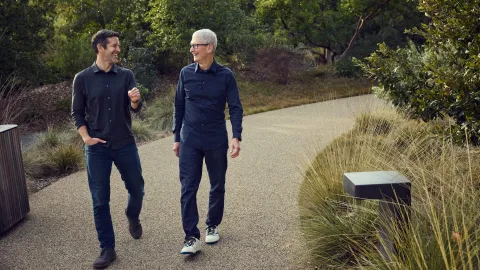
WWDC 2026 was supposed to be about software. Apple unveiled a redesigned operating system, expanded Apple Intelligence and presented the next version of Siri. Yet the conference also answered a different question: what does Apple’s leadership transition mean for the company after Tim Cook?
The clearest takeaway from the event was not a new feature. It was the executives who occupied center stage and the responsibilities they appeared to represent.
As John Ternus prepares to become Apple’s next chief executive, Apple is navigating one of the most significant organizational transitions in its modern history. Artificial intelligence is part of that story. So is software. So is product development. Together they point toward a company redistributing influence after more than a decade under a leadership model largely defined by operational excellence and scale.
The result is a transition that extends well beyond AI.
WWDC Offered a Glimpse of Apple’s Emerging Power Structure
Apple’s developer conference has always served as a preview of future products. This year’s event also functioned as a preview of future leadership.
Mike Rockwell emerged as one of the most visible figures behind Siri and Apple Intelligence. Craig Federighi remained the public face of Apple’s software organization. Their prominence reflected more than keynote presentation duties. Both executives increasingly sit at the center of strategic initiatives that will shape Apple’s next generation of products.
Rockwell built his reputation leading Vision Pro, one of Apple’s most ambitious attempts to combine hardware, software and custom silicon into a single experience. Federighi oversees the operating systems that connect Apple’s ecosystem.
Together they represent a philosophy that appeared repeatedly throughout WWDC.
Apple is not treating artificial intelligence as a standalone destination. It is embedding intelligence throughout the operating system, applications and services that customers already use every day.
That approach has implications beyond product design. It influences how the company organizes itself.
The Structure That Defined Apple Changed Long Before WWDC
For much of Apple’s history, design occupied an unusually powerful position inside the company.
The era shaped by Steve Jobs and Jony Ive placed product design at the center of decision-making. Design leaders helped define products, influence engineering priorities and shape Apple’s broader direction.
Over time, that structure evolved.
As Apple grew into one of the world’s largest companies, operational efficiency, supply-chain execution and organizational scale became increasingly important. The company continued releasing successful products, but decision-making became distributed differently than it had been during Apple’s earlier years.
The shift reflected the realities of managing a global technology giant. It also changed where influence resided.
Today, Apple faces a different challenge. Artificial intelligence is transforming how software is built and how products interact with users. At the same time, entirely new categories of devices are emerging across the industry.
Those developments place renewed importance on the ability to integrate design, software, hardware and services into a coherent experience.
AI Became Part of a Larger Reorganization
Much of the discussion surrounding Apple over the past two years has focused on whether the company is moving quickly enough in artificial intelligence.
WWDC suggested Apple may be approaching the problem differently than many competitors.
Instead of positioning AI as a separate product category, Apple presented intelligence as infrastructure. Siri appeared throughout the operating system. Search, automation and contextual awareness increasingly shared common foundations. Developers received broader access to AI capabilities through frameworks integrated into existing tools.
The company repeatedly emphasized how intelligence could operate across devices, applications and workflows.
That focus mirrors a larger organizational pattern.
Responsibility for AI increasingly appears connected to the teams responsible for shipping products rather than isolated inside a separate function. The goal is not simply building models. It is ensuring those models become useful features that work across hundreds of millions of devices.
That distinction helps explain why executives with backgrounds in software platforms and product development are becoming more visible.
John Ternus Inherits a Different Apple
When Ternus assumes leadership, he will inherit a company facing a very different set of questions than those confronting Apple a decade ago.
The company is simultaneously advancing artificial intelligence, preparing new hardware categories and managing one of the largest technology ecosystems in the world. Future products are expected to span smartphones, wearables, smart glasses and new forms of computing experiences.
The challenge is not a lack of ambition.
It is maintaining the ability to connect increasingly complex technologies into products that feel simple to use.
That requirement has long been one of Apple’s defining strengths.
Ternus arrives from the product engineering side of the business, bringing a perspective rooted in how products are conceived and built. His rise comes as software leaders, product executives and engineering teams appear to be assuming greater influence across several of Apple’s most important initiatives.
The shift does not represent a rejection of the Cook era. Apple’s operational discipline remains one of its greatest advantages.
It does suggest the company may be recalibrating around a different set of priorities as it enters a new chapter.
Apple Still Believes Integration Is Its Competitive Advantage
One theme connected nearly every major announcement at WWDC.
Integration.
Apple Intelligence was woven into existing products rather than presented as a separate destination. Siri operated across applications and devices. Developer tools gained new AI capabilities through familiar workflows. Features appeared designed to strengthen connections between products rather than create entirely new ecosystems.
The strategy reflects a belief that has guided Apple for decades.
The company’s success has often come from combining technologies into a unified experience rather than winning individual feature comparisons. Hardware, software, services and developer platforms reinforce one another.
WWDC suggested Apple intends to apply that same philosophy to artificial intelligence.
The company is not simply building AI products. It is attempting to make intelligence part of the infrastructure that connects its ecosystem together.
The Real Story After WWDC
The headlines following WWDC focused on Siri, Apple Intelligence and software redesigns.
The more consequential story may be what the conference revealed about Apple’s future leadership and organizational direction.
The executives gaining visibility represent product engineering, software integration and platform development. Artificial intelligence is increasingly being presented as part of those disciplines rather than as a separate initiative.
Viewed together, the changes suggest Apple is entering a period of institutional transition alongside its technological one.
WWDC 2026 offered an early look at how that future may operate.
The question facing Apple is no longer simply whether it can compete in artificial intelligence. The larger challenge is whether it can adapt its internal structure for an era where AI, software, hardware and design are becoming inseparable.
That process is already underway.
Go to TECHTRENDSKE.co.ke for more tech and business news from the African continent and across the world.
Follow us on WhatsApp, Telegram, Twitter, and Facebook, or subscribe to our weekly newsletter to ensure you don’t miss out on any future updates. Send tips to editorial@techtrendsmedia.co.ke


