
Finance Bill 2026 Clears Parliament After Lawmakers Rework Key Measures
After weeks of committee scrutiny and amendments, MPs approved the Finance Bill 2026 and sent it to President William Ruto, with lawmakers seeking to balance revenue collection against taxpayer protections and transparency concerns.

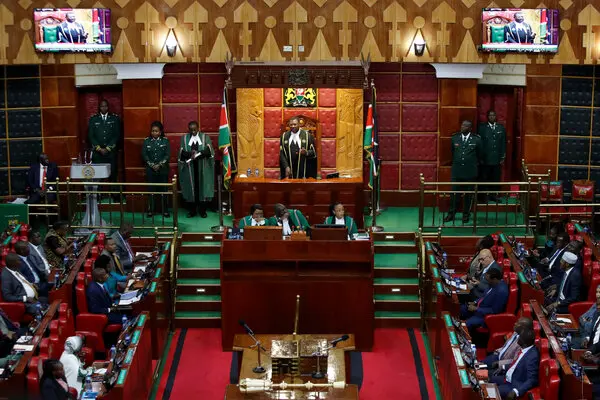
The Finance Bill 2026 has cleared Parliament after lawmakers voted to approve the amended legislation, sending one of the government’s most important fiscal measures of the year to President William Ruto for assent.
Members of the National Assembly passed the Bill on Thursday evening through an electronic division vote, with 122 MPs supporting the legislation and 40 opposing it. No member abstained.
The vote concludes months of scrutiny, committee reviews and negotiations over proposed tax and revenue measures that will shape government finances in the 2026/27 financial year.
A Final Parliamentary Hurdle Cleared
The legislation reached its final stage after lawmakers adopted amendments proposed by the Finance and National Planning Committee before proceeding to the Third Reading vote.


Parliament had initially approved the Bill by acclamation. However, several legislators demanded a formal division, prompting Speaker Moses Wetang’ula to direct the House to conduct an electronic vote in line with parliamentary procedures.
The recorded vote provided a clear account of where MPs stood on the legislation and created a formal parliamentary record of support and opposition.

With approval now secured in the National Assembly, the Bill moves to President Ruto for assent before becoming law.
Why The Electronic Vote Mattered
While the outcome was not ultimately in doubt, the decision to conduct an electronic vote carried political significance.
Finance Bills are among the most closely watched pieces of legislation because they directly affect taxation, government revenue and public spending. A recorded vote ensures individual lawmakers can be held accountable for their positions on measures that affect businesses, workers and consumers.
The 122-40 result also demonstrated that the government retained sufficient parliamentary backing to push through a key component of its fiscal agenda.
More significantly, the vote came after lawmakers had already adopted all amendments proposed by the Finance and National Planning Committee. By the time MPs entered the division lobby, many of the most contentious issues had already been negotiated and resolved during the committee stage.
How Amendments Changed The Bill
One of the defining features of the Finance Bill 2026 process was the number of changes made before the final vote.
Lawmakers adopted amendments aimed at addressing concerns raised during public participation and committee reviews. Some contentious proposals were revised or removed entirely, while selected tax reliefs on essential goods were preserved.
The committee’s recommendations also revealed a broader concern with taxpayer protections and due process. MPs rejected several proposals that would have expanded Kenya Revenue Authority enforcement powers during active tax disputes, arguing that some measures risked undermining access to justice and fair administrative action.
Among the concerns raised were proposals that critics said could increase compliance costs, shorten timelines for challenging tax decisions or expose taxpayers to enforcement action before disputes had been fully resolved.
At the same time, lawmakers backed measures intended to improve transparency within tax administration. One proposal would require the KRA Commissioner General to disclose the information sources and calculations used when issuing tax assessments, giving taxpayers greater visibility into how liabilities are determined and improving their ability to challenge assessments they believe are inaccurate.
The Bill proposes amendments across several major tax laws, including the Income Tax Act, Value Added Tax Act, Excise Duty Act, Tax Procedures Act, Miscellaneous Fees and Levies Act and the Stamp Duty Act.
Government officials have argued that the changes are intended to improve tax compliance, broaden the tax base and strengthen revenue collection.
A Different Political Approach To Tax Changes
The passage of the Bill reflects a more cautious approach to tax legislation than Kenya has seen in recent years.
Rather than taking a rigid position on every proposal, lawmakers and the Treasury spent weeks reviewing submissions and adjusting provisions that attracted criticism from the public, businesses and other stakeholders.
That process appears to have reduced political resistance before the legislation reached its final vote, allowing Parliament to focus on an amended package that had already undergone extensive review.
The committee stage also highlighted a growing recognition that revenue collection cannot be considered in isolation. Lawmakers repeatedly raised concerns about policy predictability, investor confidence, affordability and the operational impact of tax administration measures on businesses.
Opposition figures nonetheless maintained their objections. Democracy for Citizens Party leader Rigathi Gachagua publicly urged affiliated MPs to reject the Bill, arguing that some measures would increase pressure on taxpayers.
Government allies, including Majority Leader Kimani Ichung’wah, defended the legislation as necessary to support public spending commitments and improve revenue mobilisation.
Revenue Pressure Behind The Bill
The Finance Bill debate unfolded against mounting pressure on government finances and ambitious revenue targets for the coming financial year.
Treasury has consistently argued that stronger domestic revenue mobilisation is necessary to reduce reliance on borrowing and support spending commitments. At the same time, KRA faces the challenge of significantly increasing collections in an environment where policymakers are reluctant to introduce politically costly tax increases.
That tension helps explain why enforcement measures featured so prominently in the original proposals and why lawmakers ultimately sought a compromise between stronger compliance tools and taxpayer safeguards.
The outcome leaves government with many of the revenue measures it sought, but without some of the expanded enforcement powers that Treasury had hoped to secure.
What Happens After Presidential Assent
Attention now shifts from Parliament to implementation.
Once assented to by President Ruto, the Finance Bill 2026 will become law and begin reshaping the country’s tax framework for the new financial year.
The practical impact will depend on the final provisions that take effect, how businesses respond to the changes and whether the measures generate the additional revenue projected by the National Treasury.
For the government, the Bill represents an attempt to balance revenue collection with political realities. For Parliament, it reflects an effort to draw limits around how far tax enforcement powers should extend.
The legislation’s passage suggests lawmakers accepted the need for stronger revenue mobilisation, but sought to ensure that compliance, transparency and taxpayer rights remained part of the equation. The success of that balance will become clearer once the new measures move from the statute books into the wider economy.
Go to TECHTRENDSKE.co.ke for more tech and business news from the African continent and across the world.
Follow us on WhatsApp, Telegram, Twitter, and Facebook, or subscribe to our weekly newsletter to ensure you don’t miss out on any future updates. Send tips to editorial@techtrendsmedia.co.ke


