
Google Turns Search Into an AI Workspace With Persistent Agents
Gemini-powered agents can now monitor the web continuously instead of waiting for users to search again

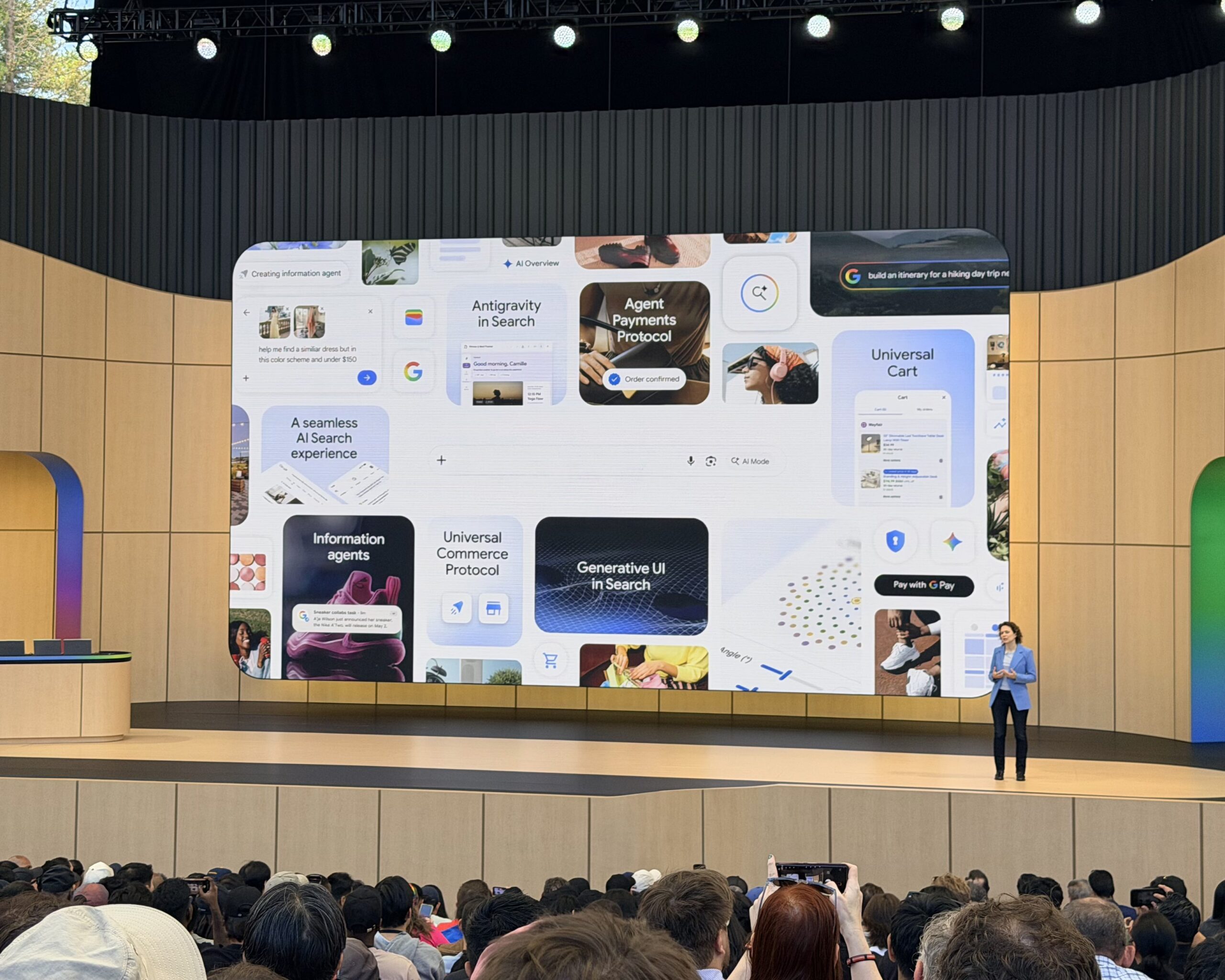
Google is restructuring Search around artificial intelligence, replacing the familiar pattern of keyword queries and ranked links with persistent AI agents, conversational responses, and interactive tools that continue working long after a user leaves the search page.
The changes, announced during Google I/O 2026, mark the company’s biggest overhaul of Search in more than 25 years. Google is repositioning Search as an ongoing AI service that can monitor information, organize tasks, summarize developments, and carry context across sessions instead of functioning as a one-time retrieval engine.
At the center of the redesign is Gemini 3.5 Flash, the model now powering AI Mode globally. Google said the system improves coding, reasoning, multimodal processing, and agentic behavior while operating at substantially lower cost than larger frontier-scale systems. The company also said the model delivers output speeds up to 4 times faster than comparable high-end AI models, making broader deployment economically viable across Search products.
The redesign changes the mechanics of searching itself. Instead of compressing requests into short keyword strings, users can now enter conversational prompts through a dynamically expanding search field built to accommodate more detailed requests. Search also accepts images, videos, files, and live Chrome tabs as inputs.

Google’s new AI-powered suggestion system attempts to anticipate intent before a query is completed, helping users refine searches contextually rather than relying on traditional autocomplete.
A larger change sits behind those interface updates. Google is introducing persistent “information agents” that continue scanning the web in the background after a query has been submitted. The agents monitor blogs, news sites, financial data, shopping listings, sports updates, and other live sources continuously, then return synthesized summaries when relevant changes occur.
Someone tracking housing listings, airline fares, earnings reports, concert tickets, or product releases could assign conditions to an agent instead of repeatedly revisiting websites throughout the day.
Liz Reid, Google’s Vice President and Head of Search, said the company wants Search to move beyond static retrieval by combining live monitoring with synthesized updates and direct actions.
The approach expands on ideas Google introduced with Alerts in the early 2000s, but the newer AI systems are designed to interpret and prioritize information instead of simply notifying users when matching links appear online.
Search agents will also maintain ongoing histories tied to tracked topics, allowing users to refine monitoring instructions over time and return to active AI-managed projects later. That changes Search from a session-based tool into something closer to persistent infrastructure running continuously in the background.
Google is also extending Search into transactions and workflow management. The company plans to introduce AI-generated dashboards and customizable mini applications inside Search that can organize recurring tasks using natural-language prompts.
The strategy reaches beyond Search itself. Google is increasingly linking its AI systems across Gmail, Workspace apps, Wallet, shopping services, Photos, and eventually Calendar data so responses can reflect a user’s personal context and active routines.
Its Gemini Spark assistant is being positioned as a persistent personal agent capable of handling tasks across Google products and third-party services. Google is also preparing Android Halo, a system designed to display live progress updates from active AI agents across device interfaces.
The company is simultaneously changing how AI access is monetized. Google said the Gemini app will move away from fixed prompt limits toward a compute-based system that measures usage according to task complexity, including coding workloads, video generation, and autonomous actions.
The broader shift could further weaken the role of traditional web navigation. Google’s AI Overviews already summarize information directly inside Search results, reducing the need for users to visit external websites. Persistent agents push that model further by continuously gathering and interpreting information on behalf of users before they actively search again.
For publishers already facing declining referral traffic from AI-generated summaries, the new system introduces another layer of pressure. Search is evolving into a closed environment where information is increasingly synthesized, organized, and acted upon inside Google’s own interfaces.
Google said AI Overviews now reach more than 2.5 billion monthly users globally, while AI Mode has surpassed 1 billion monthly users. Many of the new agentic tools will first launch for Google AI Pro and Ultra subscribers in the United States before expanding more broadly.
“We want to bring it to as many people as possible,” Sundar Pichai, Chief Executive Officer of Google and Alphabet Inc., said ahead of the conference, pointing to lower-cost AI infrastructure as essential for broad deployment.
Go to TECHTRENDSKE.co.ke for more tech and business news from the African continent and across the world.
Follow us on WhatsApp, Telegram, Twitter, and Facebook, or subscribe to our weekly newsletter to ensure you don’t miss out on any future updates. Send tips to editorial@techtrendsmedia.co.ke