
Kenya’s Planned Reactor in Siaya Could Reshape How Power Moves Across the Country
The proposed reactor in Siaya would add generation capacity on a scale Kenya’s electricity system has never handled before

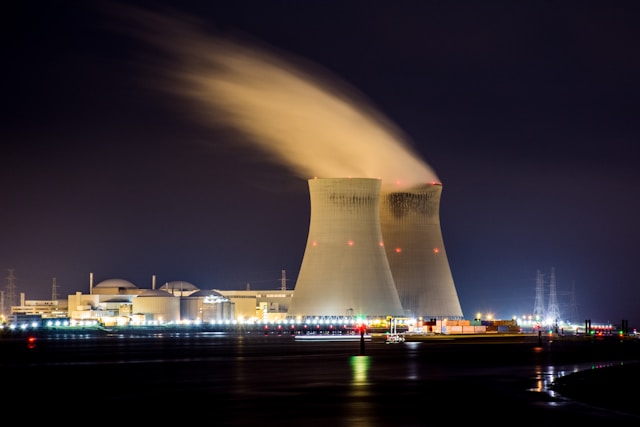
For years, Kenya’s development agenda has been defined by infrastructure built to move people and goods faster across the country: highways, rail corridors, ports and logistics links designed to support trade and urban growth. The government’s nuclear push in Siaya is increasingly being framed as something different. This time, the argument is about building the energy base required to power a far more electricity-intensive economy.
Budget estimates before Parliament show the State has allocated Sh80 million in the 2026/27 financial year for detailed siting work tied to the proposed nuclear power station in Siaya County. The funding will support engineering studies and technical screening as authorities narrow down possible locations ahead of a targeted construction phase beginning in 2027.
The scale alone would place the project among the largest infrastructure undertakings Kenya has attempted in decades.
At the upper end of projections, the proposed reactor could generate 3,000 MW. Kenya’s current installed electricity capacity stands at roughly 3,272 MW, while recent peak demand has reached about 2,443 MW. A fully developed nuclear facility in western Kenya could therefore approach the size of the country’s existing grid capacity on its own.
Nuclear Power and Energy Agency has completed broader regional analysis and is now evaluating shortlisted locations within the county. Technical teams are examining geology, water access, environmental sensitivity, transmission requirements and population patterns before identifying both a preferred site and an alternative location.
Access to Lake Victoria remains one of the central considerations because reactors require large and stable cooling water supplies during operation.

But the debate surrounding the project has expanded far beyond engineering.
Inside government, nuclear power is increasingly being presented as part of a longer-term industrial strategy tied to manufacturing, electric mobility and future electricity demand growth. Officials backing the programme argue that Kenya’s existing renewable mix, while among the cleanest in Africa, may not by itself sustain the kind of uninterrupted industrial load associated with large-scale production economies.
That position rests partly on how different power systems behave across the day.
Solar generation declines sharply after sunset. Hydropower output fluctuates during drought periods. Wind supply varies seasonally. Nuclear plants, like geothermal facilities, are designed to operate continuously for long periods with minimal interruption.
Energy planners say that distinction is becoming more important as Kenya’s electric mobility sector expands.
The country’s EV fleet surpassed 24,000 units by the end of 2025 following rapid growth in electric motorcycles, buses and commercial fleets. Much of that charging demand happens overnight, particularly among transport operators relying on off-peak tariffs. Policymakers increasingly view stable overnight electricity supply as critical if electric mobility moves beyond early adoption into wider commercial use.
The government also sees larger baseload supply as central to future industrial competitiveness.
Officials supporting the reactor project believe more stable long-term generation could eventually support industries that currently struggle with comparatively high electricity costs, including steel processing, battery assembly, cold storage, glass manufacturing and industrial-scale agriculture.
The project would also alter how electricity moves around the country.
Kenya’s existing generation system is spread across geothermal fields, hydroelectric dams, wind farms and smaller solar installations located in different regions. A single 3,000 MW reactor would concentrate a substantial share of national generation capacity in one location, requiring major transmission upgrades connecting western Kenya to Nairobi and other industrial demand centres.
Treasury projections show spending on the programme rising sharply after the current siting phase. Allocations tied to site preparation are expected to increase to Sh493 million in 2027/28 before climbing to Sh2.88 billion in 2028/29 as land acquisition and engineering preparation intensify.
The total project cost remains estimated at roughly $5 billion, or about Sh646 billion.
Yet the politics surrounding the reactor may prove as complex as the engineering.
The focus on Siaya follows earlier resistance in Kilifi County, where residents in Uyombo opposed plans linked to a potential coastal reactor site and accused authorities of inadequate public consultation. That backlash helped shift attention inland and exposed a broader tension that continues to follow the programme: whether communities expected to host major infrastructure projects believe they are genuinely involved in the decision-making process.
In Siaya, environmental organisations, fishing communities and renewable energy advocates are now raising many of the same questions.
Critics argue Kenya already possesses substantial untapped geothermal reserves and should prioritise expanding existing renewable systems rather than pursuing one of the world’s most expensive energy technologies. Others have questioned whether future electricity prices would actually fall once financing costs, transmission upgrades and long-term debt obligations are factored into the project.
Lake Victoria has also emerged as a central environmental concern.
Civil society groups warn that heated cooling water discharged into the lake ecosystem could affect fisheries and surrounding livelihoods if not properly managed. Because the lake is shared with Uganda and Tanzania, any environmental risks linked to the reactor would carry regional implications beyond Kenya itself.
Questions around regulation, waste management, liability structures and long-term financing also remain unresolved. Nuclear projects globally are frequently vulnerable to construction delays and escalating costs, making future tariff projections difficult to guarantee before contracts are signed.
Justus Wabuyabo, chief executive of the Nuclear Power and Energy Agency, has argued that Kenya’s current phase of infrastructure development now requires deeper investment in energy systems capable of sustaining industrial production rather than only supporting transport and logistics growth.
The agency is also beginning to position the programme as part of a broader technical ecosystem extending beyond electricity generation itself. Proposed partnerships with universities and technical institutions in western Kenya are intended to support workforce development in reactor operations, engineering, safety systems and nuclear science over the coming decades.
The current timeline targets final site designation in 2026, followed by preparatory works and vendor selection between 2027 and 2028. If construction schedules hold, the first reactor could begin supplying electricity to the national grid in 2034.
For now, activity in Siaya remains concentrated around surveys, engineering reviews and land planning. But the national argument surrounding the project has widened considerably. The discussion is no longer only about whether Kenya should build a nuclear reactor. It is increasingly about how the country plans to industrialise, electrify transport systems, expand manufacturing capacity and negotiate public trust while attempting one of the most ambitious energy transitions in its history.
Go to TECHTRENDSKE.co.ke for more tech and business news from the African continent and across the world.
Follow us on WhatsApp, Telegram, Twitter, and Facebook, or subscribe to our weekly newsletter to ensure you don’t miss out on any future updates. Send tips to editorial@techtrendsmedia.co.ke


