

EXCLUSIVE: How Charging Infrastructure Is Shaping BasiGo’s Bus Expansion
BasiGo’s charging network is growing alongside bus deployments as operators prepare for wider regional electric transport routes.

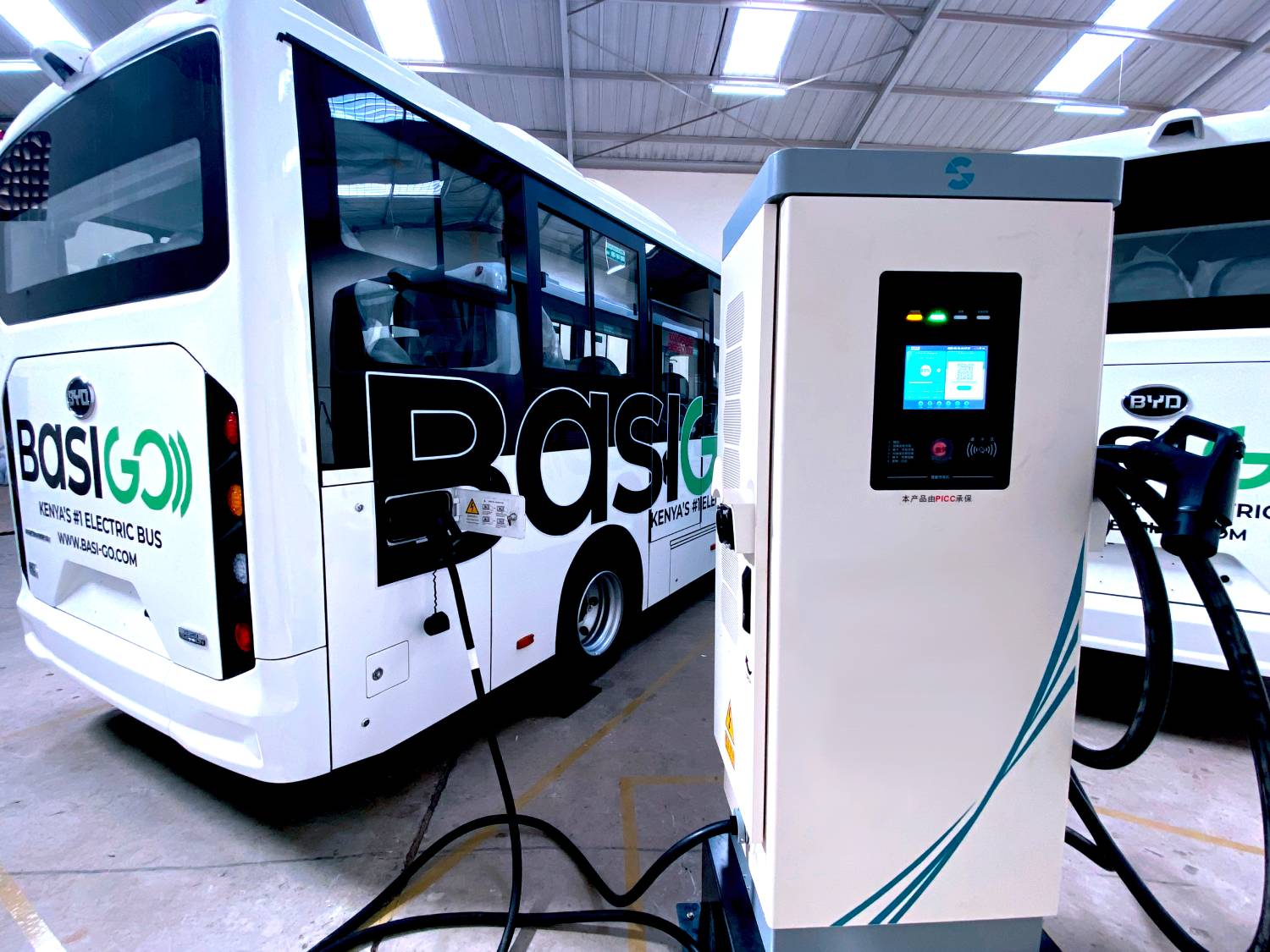
The spread of electric buses across Kenya is increasingly being determined by where charging infrastructure exists, with towns outside Nairobi beginning to emerge as key operating points for fleet movement, overnight charging and route planning.
BasiGo says charging sites are already operational or under expansion in Nakuru, Nyeri, Meru and Nanyuki as the company pushes electric buses and vans(matatus) into more commuter and regional routes.
The infrastructure rollout is shaping how operators organize daily movement. Early deployments around Nyahururu depended on vehicles returning to a central charging base at night before resuming trips to Nakuru and Nyeri during the day. As additional charging locations come online, operators are gaining more flexibility over where vehicles start, park and recharge.
Doreen Orishaba, BasiGo’s Chief Product Officer, said the company is now operating beyond the pilot phase in both Kenya and Rwanda as deployment moves into full commercial rollout.


“We’re already out of the pilot stage. Right now it’s commercial delivery,” she said during an interview.
The charging network itself is being designed around route convenience and grid access. Orishaba said BasiGo typically positions charging sites close to terminals, depots or active routes so buses can return to passenger service quickly after recharging.
“We have a standard where every charging site should be at a minimum of at least 3 kilometers from either the bus terminal or the bus stage or the bus route,” she said.
That planning model is influencing the geography of electric mobility expansion. Charging infrastructure is no longer concentrated around Nairobi alone. It is now following commuter corridors and regional transport demand.
BasiGo says some charging sites are being developed in partnership with fuel retailers as the company looks for locations with reliable high-voltage power access and room for future fleet growth. The company confirmed existing work with Shell while discussions with other fuel operators continue.
The charging infrastructure also reflects the scale of the vehicles entering service. BasiGo says battery configurations differ depending on route requirements and market conditions.
In Kenya, city buses currently operate with battery capacities ranging from 176 kWh to 210 kWh, while electric vans range between 86 kWh and 100 kWh. Rwanda deployments include larger-capacity buses ranging from 231 kWh to 282 kWh for different urban and intercity operations.
Supporting those fleets requires industrial-scale charging systems rather than standard passenger-car charging points. BasiGo says charger capacities in Kenya range from 60 kW to 200 kW, while Rwanda deployments extend up to 240 kW.
“Our main charging site has eight chargers,” Orishaba said, adding that some facilities can charge up to 16 buses simultaneously before moving into sequential charging cycles for additional vehicles.
The company says site capacity varies depending on route demand, planned fleet deployment and long-term expansion needs. Some locations are already being designed to support more than 30 buses.
The infrastructure rollout also depends heavily on grid upgrades and power distribution work. Kenya Power connects charging sites to the grid and handles transformer installation, while BasiGo manages downstream charging systems and depot energy distribution.
According to the company, access to high-voltage electricity remains one of the most important considerations when selecting charging locations.
The infrastructure build-out is also tied to environmental targets linked to diesel replacement. BasiGo estimates that each large electric bus can prevent roughly 50 tons of CO2 emissions annually compared to diesel operations, while electric vans can reduce emissions by about 20 tons per year.
Most charging is currently planned around overnight off-peak hours when electricity demand on the national grid is lower. BasiGo says the approach helps reduce strain on the grid while making use of excess nighttime generation capacity.
Public transport operators are already running electric buses on commuter routes linked to Thika Road, Jogoo Road, Waiyaki Way, Ngong Road and Mombasa Road. As charging sites continue expanding beyond Nairobi, the company expects route flexibility and regional deployment capacity to grow alongside the network.
Go to TECHTRENDSKE.co.ke for more tech and business news from the African continent and across the world.
Follow us on WhatsApp, Telegram, Twitter, and Facebook, or subscribe to our weekly newsletter to ensure you don’t miss out on any future updates. Send tips to editorial@techtrendsmedia.co.ke


