
CA Draft Rules Target Cable Clutter and Poor Fiber Installations in Kenya
Kenya’s communications regulator wants fiber rollout projects tied more closely to road agencies, counties, and utility providers

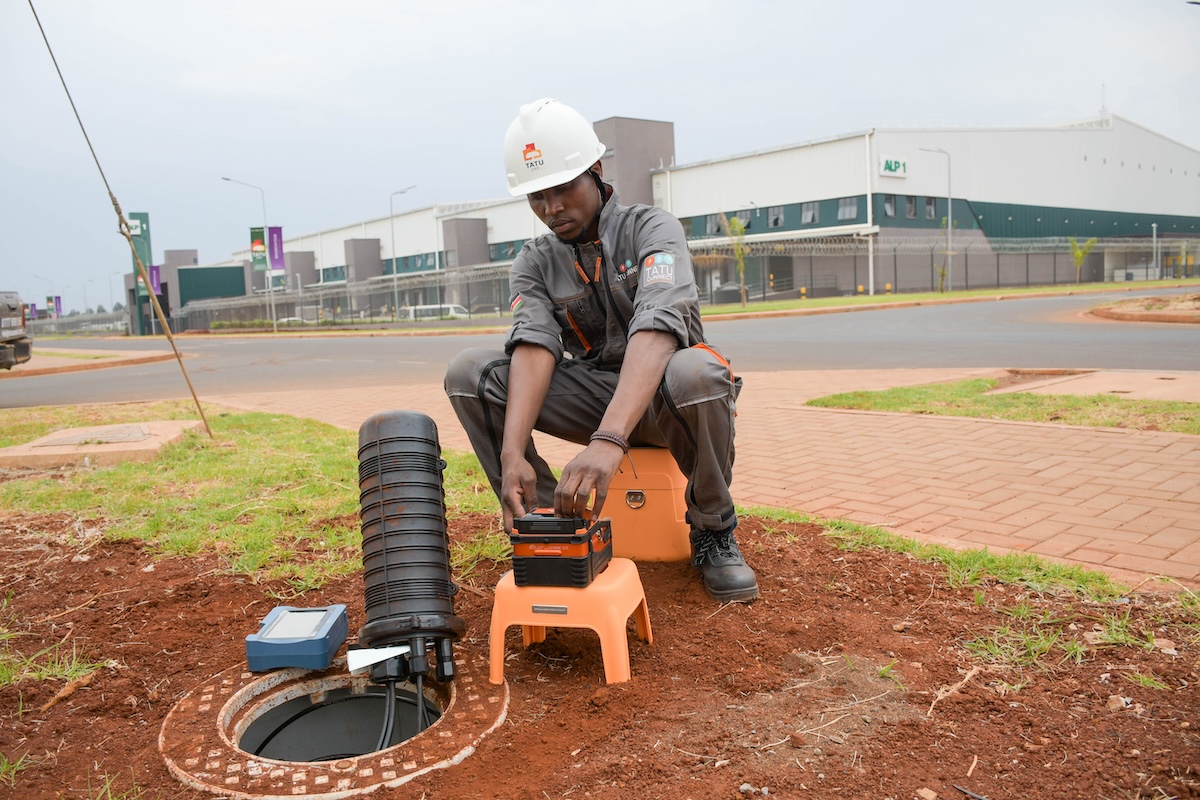
Kenya’s communications regulator has introduced a new set of technical and procedural rules that could change how fiber and telecom cable infrastructure is deployed across the country. The draft guidelines from the Communications Authority of Kenya (CA) set new requirements for approvals, infrastructure sharing, inspections, and installation standards for both aerial and underground cable networks.
The framework applies to service providers, contractors, and technical personnel involved in the rollout and maintenance of telecommunications cable infrastructure. It covers fiber optic and copper cable systems and introduces a certification process before operators can activate services on newly installed infrastructure.
The regulator says the new rules are intended to address poor installation practices, repeated excavation works, weak maintenance standards, and increasing pressure on urban infrastructure as broadband expansion accelerates.
Under the proposed framework, operators will be required to obtain approvals from multiple agencies before construction begins. County governments, road authorities, environmental agencies, Kenya Power, water utilities, and Kenya Railways are among the institutions listed in the approval chain.


Companies seeking to deploy cable infrastructure will also need to submit detailed route drawings, infrastructure-sharing capacity data, safety plans, and traffic disruption mitigation measures to the regulator.
The Communications Authority said the move is meant to improve coordination between telecom deployments and other public infrastructure systems.

“The increasing rollout of digital cable infrastructure calls on the regulator to not only standardize the installation of the various cables but also enforce compliance,” the document states.
One of the strongest themes in the draft rules is infrastructure sharing. Operators will be expected to show whether existing infrastructure along a planned route can be shared before building parallel systems.
For underground deployments, trenches will be required to accommodate at least four ducts to support future sharing arrangements. The guidelines also permit up to 10 telecom providers to share a single pole in aerial installations.
The rules introduce highly specific engineering standards for installation work. Aerial cable poles must maintain a minimum vertical clearance of 23 feet, while underground cable trenches must be excavated to a depth of at least 3 feet.
The document also sets limits for cable sag, pole spacing, duct separation, slack loop management, and fiber bending diameters. Fiber splicing must be done through fusion splicing to reduce signal loss.
Operators using shared electricity poles will be restricted to All-Dielectric Self-Supporting cable systems for fiber deployments.
The regulator is also placing greater emphasis on inspection and post-installation testing. Providers will be required to submit self-test reports, optical measurements, continuity tests, and photographic evidence after completing installations.
The Communications Authority will then conduct its own inspection and certification process within 14 days before approving the infrastructure for service activation.
The guidelines point to growing concern within government over unmanaged cable expansion in urban areas. Cable clutter, repeated trenching, overloaded poles, and poorly labeled infrastructure have increasingly become visible in major towns and cities as internet providers expand last-mile networks.
The proposed rules also introduce a six-month compliance window for operators using existing infrastructure that does not meet the new standards.
That requirement could force some providers to reorganize older aerial networks, improve labeling systems, upgrade pole installations, and regularize undocumented routes.
The draft framework reflects a broader policy direction within Kenya’s digital infrastructure sector, where regulators are placing greater attention on long-term network management, coordinated construction, and shared infrastructure use as broadband demand continues to grow.
Go to TECHTRENDSKE.co.ke for more tech and business news from the African continent and across the world.
Follow us on WhatsApp, Telegram, Twitter, and Facebook, or subscribe to our weekly newsletter to ensure you don’t miss out on any future updates. Send tips to editorial@techtrendsmedia.co.ke


