

At Safaricom Decode 4.0, Kenya Places Language and Data at the Center of Its AI Plans
As Kenya outlines its AI strategy at Safaricom Decode 4.0, the emphasis settles on language access, local data, and the reach of public infrastructure

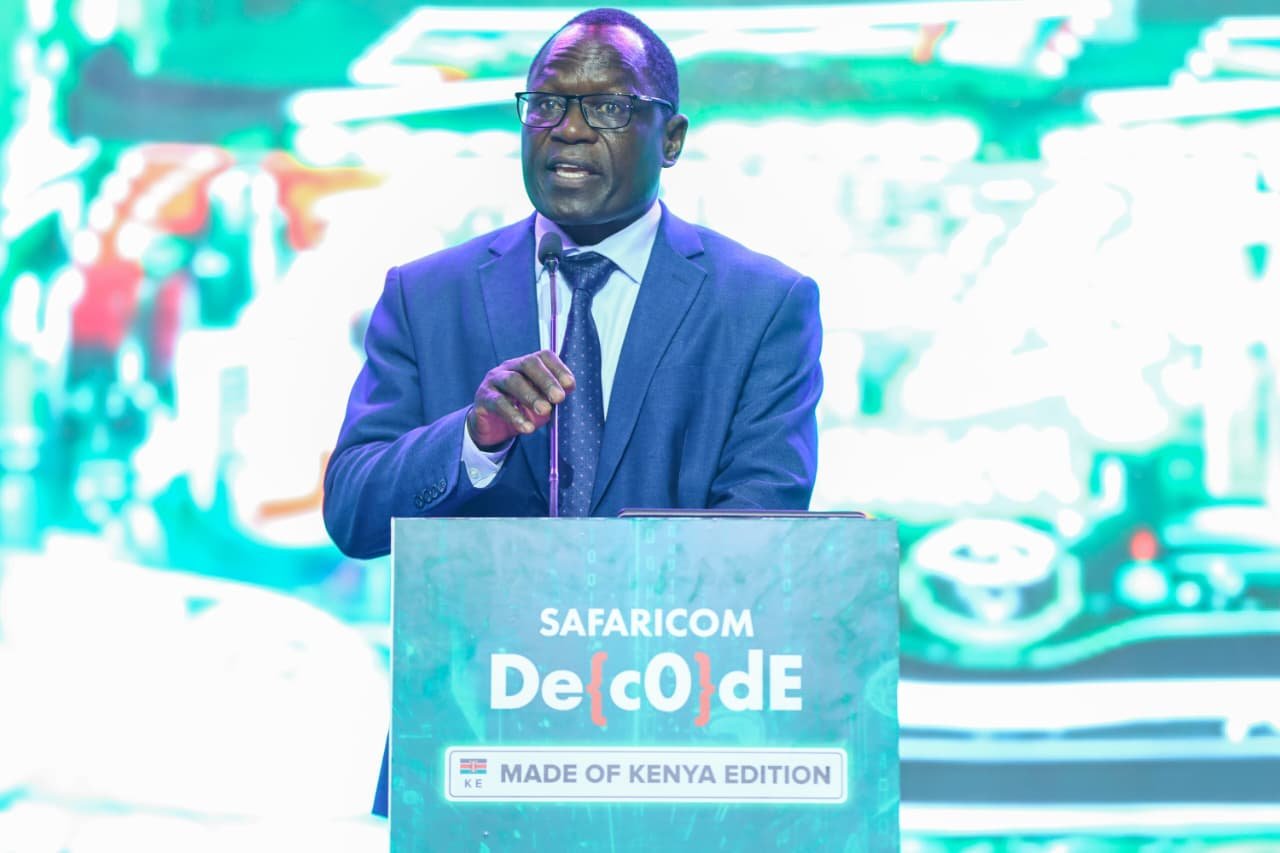
The Kenyan government is pushing to make artificial intelligence accessible to all citizens regardless of location or language, with Steve Isaboke EBS, Principal Secretary for the State Department for Broadcasting and Telecommunications, warning that the technology must not become an “elitist” preserve.
Speaking at Safaricom’s Decode 4.0 summit, Steve outlined a sweeping agenda that pairs heavy infrastructure investment with a commitment to building AI systems rooted in Kenyan data, governed by Kenyan law, and capable of communicating in Kiswahili and indigenous languages such as Kikuyu and Luo.
“AI must drive economic growth across both rural and urban centers,” Steve said, adding that the government is extending 100,000 kilometres of fibre optic cable and establishing digital hubs in every ward to draw rural youth into the national digital economy.
Central to the plan is a concept the PS called AI sovereignty, ensuring that intelligent systems are built on local data rather than imported wholesale from abroad, and that Kenyan users are not redirected to English-only interfaces. The Office of the Data Protection Commissioner (ODPC) has aligned local frameworks with international GDPR standards to protect personal data as it becomes, in Steve’s words, the “new currency.”

Steve framed Safaricom not merely as a corporate partner but as foundational infrastructure for Kenya’s digitisation, pointing to the e-Citizen platform, which allows Kenyans to apply for passports and driving licences online without travelling to urban centres, as a demonstration of what the partnership has already delivered. To sustain the data centres that power such services, the government is also expanding the national energy grid alongside the fibre rollout.
On the question of youth, Steve pushed back against the familiar political framing of young people as the country’s future, insisting they are the present innovators needed now. Safaricom, he said, should serve as a sandbox where young developers build solutions for small businesses and global markets alike.
Rather than tightening regulation, the government intends to maintain an open-ended policy environment to encourage what Steve called “amplified intelligence,” with the long-term goal of turning Kenya into a global hub for AI expertise that can be exported across Africa and beyond.
Mark your calendars! The GreenShift Sustainability Forum is back in Nairobi this August. Join innovators, policymakers & sustainability leaders for a breakfast forum as we explore sustainable solutions shaping the continent’s future. Limited slots – Get your early bird tickets now – here. Email info@techtrendsmedia.co.ke for partnership requests.
Go to TECHTRENDSKE.co.ke for more tech and business news from the African continent and across the world.
Follow us on WhatsApp, Telegram, Twitter, and Facebook, or subscribe to our weekly newsletter to ensure you don’t miss out on any future updates. Send tips to editorial@techtrendsmedia.co.ke