Kenya's Sh5.4 trillion budget exposes the growing cost of government spending and borrowing

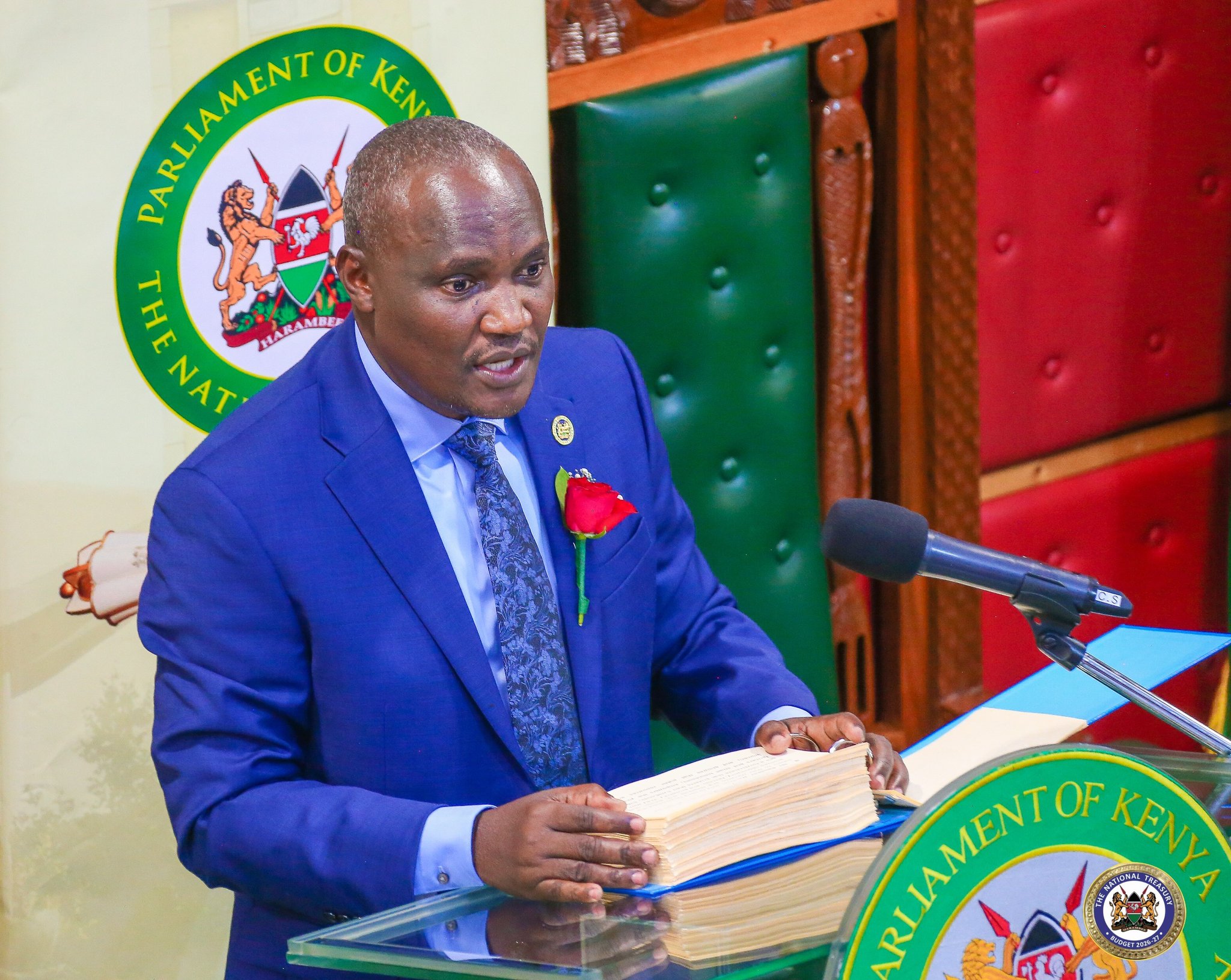
Kenya’s 2027/28 budget is projected to reach Sh5.4 trillion, with recurrent expenditure exceeding Sh4 trillion and a fiscal deficit of Sh1.35 trillion, highlighting the pressure on government finances as revenue collection struggles to keep pace with spending commitments.
The National Treasury’s October 2026 Draft Budget Policy Statement projects total expenditure and net lending of approximately Sh5.416 trillion, against total revenue of Sh4.004 trillion. Recurrent spending is estimated at Sh4.021 trillion, leaving the government with a substantial financing requirement as it prepares for the financial year beginning July 2027.
The projections point to a difficult balancing exercise for Treasury, which must meet statutory obligations, fund public services and maintain infrastructure investment while managing borrowing requirements ahead of the August 2027 general election.
Churchill Ogutu, Head of Research at Capital Investment Bank, said the expenditure estimates had risen following adjustments made during the budget preparation process, including additional requirements from ministries, departments and agencies, as well as allocations for Parliament and the Judiciary.


Kenya’s 2027/28 budget pushes expenditure to Sh5.4 trillion
The proposed expenditure represents a substantial increase from the Sh5.323 trillion projected in the earlier Draft Budget Review and Outlook Paper released in August 2026. Treasury has also raised its revenue expectations, with total collections projected at approximately Sh4 trillion.
Ogutu said expenditure estimates had increased by between Sh400 billion and Sh600 billion compared with the current financial year’s initial estimates, reflecting the additional requirements identified during consultations with government institutions.
He pointed to the budget preparation process, particularly the transition from the initial Treasury allocations to the requirements submitted by ministries, departments and agencies during the macro-sector working group consultations.
According to Ogutu, there was a variance of approximately Sh1.9 trillion between the requirements presented by government institutions and the allocations initially proposed by Treasury. Part of those additional demands was subsequently accommodated in the Draft Budget Policy Statement.
He also noted that the allocations for Parliament and the Judiciary were still preliminary, with further estimates expected from the Parliamentary Service Commission and the Judiciary Service Commission.
Ogutu described the Sh5.4 trillion expenditure projection as relatively conservative given the outstanding institutional requirements, even though the proposed spending level is already elevated.
Recurrent spending leaves little room for development
Recurrent expenditure is one of the most important features of the proposed budget, with Treasury projecting Sh4.021 trillion in spending on government operations, salaries, debt-related obligations and other recurring commitments.
For the first time, recurrent expenditure has crossed the Sh4 trillion mark, according to Ogutu, who attributed the increase to several obligations that are difficult for the government to reduce.
He identified pension payments under the Consolidated Fund Services, the public-sector wage bill and collective bargaining agreements as major sources of pressure. Pension obligations are particularly difficult to adjust because they represent statutory commitments, while public-sector salary requirements continue to grow as government employees receive revised compensation.
Collective bargaining agreements across the public service could add further pressure to the wage bill as the government implements negotiated salary arrangements.
Ogutu also pointed to growth in discretionary expenditure, explaining that ministries and agencies have continued presenting additional funding requirements beyond the initial allocations made by Treasury.
The relationship between recurrent spending and revenue is particularly important. With projected revenue of approximately Sh4 trillion against recurrent expenditure of Sh4.021 trillion, the government is budgeting to spend slightly more on recurring obligations than it expects to collect through total revenue.
This leaves borrowing and other financing arrangements central to meeting development expenditure and the government’s wider budgetary commitments.
The proposed development expenditure allocation stands at approximately Sh915.8 billion, considerably smaller than the recurrent spending allocation. The composition of expenditure also reflects the government’s plans to finance major infrastructure projects through alternative arrangements.
Infrastructure Fund changes how Kenya finances major projects
The reduction in conventional development expenditure is partly connected to the government’s plans to move major infrastructure projects outside the traditional national budget through the National Infrastructure Fund and public-private partnerships.
Ogutu said the proposed fund could explain the significant reduction in development spending under the FY2027/28 framework, as large infrastructure projects are moved into financing arrangements outside the Exchequer.
The National Infrastructure Fund is part of a broader financing strategy associated with James Mworia, which envisages using investment capital to support commercially viable infrastructure projects while attracting participation from private investors and financial institutions.
The proposed model targets approximately Sh400 billion in annual infrastructure spending through the fund, with the intention of reducing the amount that must be financed directly through conventional budget allocations.
Public-private partnerships also form part of the government’s infrastructure financing approach, allowing private capital to participate in projects across sectors such as transport, energy, water and digital infrastructure.
However, the implications extend beyond the development expenditure figures presented in the annual budget. The financing arrangements will influence how infrastructure investment is structured, how project costs are recovered and how government obligations are distributed across different financing mechanisms.
For Treasury, the approach offers another channel for funding infrastructure while managing competing demands on the national budget.
Sh1.35 trillion deficit keeps government borrowing high
The National Treasury projects a fiscal deficit of approximately Sh1.353 trillion for FY2027/28, equivalent to 5.9% of gross domestic product.
The government plans to finance the deficit through a combination of domestic and external borrowing, with net domestic borrowing projected at approximately Sh929.1 billion and net external borrowing at Sh423.8 billion.
Domestic financing would therefore account for the larger share of the borrowing requirement, maintaining the government’s dependence on the local debt market.
Ogutu said the financing composition had changed between the earlier Draft Budget Review and Outlook Paper and the Draft Budget Policy Statement, although domestic borrowing remained the dominant source.
He attributed the adjustment towards external financing partly to the identification of additional funding sources and the government’s efforts to diversify its borrowing options.
The Treasury is exploring several external commercial financing channels, including Eurobond issuance, liability management operations, Samurai bonds, Panda bonds and currency swaps.
Ogutu said the government appeared ambitious in its approach to external financing, with the success of the strategy depending heavily on timing and conditions in international capital markets.
He identified international interest rates and the availability of financing across different markets as important considerations when determining whether Kenya should pursue dollar-denominated borrowing or explore alternative currencies.
The government’s ability to access international markets will also influence how much pressure is placed on domestic investors to finance the budget deficit.
Domestic borrowing raises concerns over private-sector credit
Kenya’s projected domestic borrowing requirement comes as the Central Bank of Kenya continues efforts to lower lending rates and improve access to credit for businesses and households.
CBK Governor Kamau Thugge has warned that heavy government borrowing from the domestic market could undermine the transmission of monetary policy, particularly when banks allocate significant portions of their resources to government securities.
The proposed Sh929.1 billion in net domestic borrowing for FY2027/28 therefore has implications beyond the government’s financing needs.
Commercial banks remain important buyers of Treasury bills and bonds, while also providing loans to businesses and consumers. Their exposure to government securities influences how they allocate capital across different investment opportunities.
Moody’s has also highlighted Kenyan banks’ exposure to sovereign debt, reporting that their government securities holdings stood at 1.7 times their equity as of December 2025.
Ogutu discussed the strong liquidity conditions supporting government borrowing, particularly the subscription levels recorded in Treasury bond switch auctions.
He attributed the improved demand partly to investors’ willingness to move from short-term securities into longer-maturity bonds offering higher coupons. The reopening of existing infrastructure bonds has also attracted investors seeking opportunities to lock in longer-term returns.
Ogutu said the government had front-loaded part of its domestic borrowing programme, with monthly issuance requirements averaging approximately Sh110 billion between August and January, compared with an average of about Sh60 billion during other auction periods.
He attributed the strong subscription of infrastructure bond reopenings partly to the availability of liquidity in the market and investors’ interest in the securities.
However, the government’s borrowing needs will continue to compete with private-sector financing requirements, making the balance between domestic debt issuance and commercial lending an important consideration for the economy.
IMF engagement and debt sustainability come into focus
The size of the proposed deficit also raises questions about Kenya’s medium-term fiscal consolidation plans and its engagement with the International Monetary Fund.
Ogutu said he did not consider a conventional IMF lending programme feasible before the August 2027 elections, arguing that the remaining period would make meaningful negotiations and implementation difficult.
He noted that IMF programmes typically run for three to four years, making the election calendar an important consideration in determining the timing of any new arrangement.
Kenya’s foreign exchange reserves have also improved compared with the period surrounding previous IMF programmes, while the government has built experience accessing international capital markets.
Ogutu nevertheless pointed to the possibility of a precautionary standby arrangement, which could help reinforce investor confidence without requiring the same type of financing associated with a conventional lending programme.
He said such an arrangement could provide an external anchor for the government’s fiscal consolidation commitments, particularly as investors assess the country’s medium-term financing requirements.
The anticipated Article IV consultations with the IMF are also important for evaluating Kenya’s debt sustainability.
Ogutu said the assessment would provide an opportunity to examine the country’s debt-carrying capacity and the implications of the IMF’s evolving debt sustainability analysis framework for low-income and frontier economies.
He highlighted the potential consideration of remittance inflows and improvements in fiscal transparency as part of the discussions.
Kenya is currently assessed within the medium debt-carrying capacity category, according to Ogutu, who said the authorities could make a case for stronger debt-carrying capacity based on developments in remittances and other economic indicators.
He also identified securitisation as an important issue in discussions about fiscal transparency and the assessment of government obligations.
Revenue mobilisation faces pressure ahead of the 2027 elections
The government’s ability to reduce the deficit will depend partly on whether revenue collections can meet the ambitious targets underpinning the medium-term fiscal framework.
Ogutu said Kenya’s Medium-Term Revenue Strategy had targeted revenue equivalent to 20% of GDP by June 2026 and 25% by June 2030, while the estimates he discussed placed the current position at approximately 14.3% of GDP.
He also raised concerns about the revenue growth assumptions built into the current financial year’s budget, noting that the government was targeting a significant increase in tax collections relative to nominal GDP growth.
According to Ogutu, ordinary revenue collections had grown by approximately 13% to 14% year-on-year during the first three months of the current financial year. However, the government was targeting revenue growth of approximately 20% for the full year.
This creates a difficult position for subsequent budget projections because a revenue shortfall in the current financial year would affect the base from which Treasury calculates its future collection targets.
The Kenya Revenue Authority’s digital tax administration initiatives, including electronic invoicing through eTIMS, integration with government payment systems and efforts to capture more transactions through M-Pesa merchant channels, form part of the wider revenue mobilisation strategy.
The government’s tax policy decisions will also influence how much additional revenue can be collected without placing excessive pressure on households and businesses.
Ogutu discussed the anticipated income tax amendments, including proposals to remove PAYE obligations for workers earning below Sh30,000 and eliminate personal relief for the affected category.
He referred to approximately 403,000 workers earning below that threshold, while also discussing the implications of reducing the VAT rate on petroleum products from 16% to 8%.
According to Ogutu, the Treasury’s Draft Budget Policy Statement put tax expenditure at approximately Sh260 billion, equivalent to 1.4% of GDP, for calendar year 2025.
He said the proposed tax relief measures would need to be considered alongside the government’s efforts to reduce tax expenditure and strengthen revenue mobilisation.
The next round of tax amendments is therefore relevant to the FY2027/28 budget because changes to personal income tax, petroleum VAT and other tax measures will influence the revenue available to finance public expenditure.
With the budget process accelerated ahead of the August 2027 general election, Treasury faces a compressed timetable for finalising expenditure estimates, tax proposals and parliamentary approvals.
The resulting fiscal framework will determine how the government balances recurrent obligations, infrastructure investment and debt financing while pursuing its medium-term revenue and deficit reduction targets.
Go to TECHTRENDSKE.co.ke for more tech and business news from the African continent and across the world.
Follow us on WhatsApp, Telegram, Twitter, and Facebook, or subscribe to our weekly newsletter to ensure you don’t miss out on any future updates. Send tips to info@techtrendsmedia.co.ke