NVIDIA's Latest AI Push Focuses on the Clouds Behind the Models
The approach combines hardware sales with ongoing revenue participation, giving cloud providers more flexibility to expand computing capacity without shouldering every upfront cost.

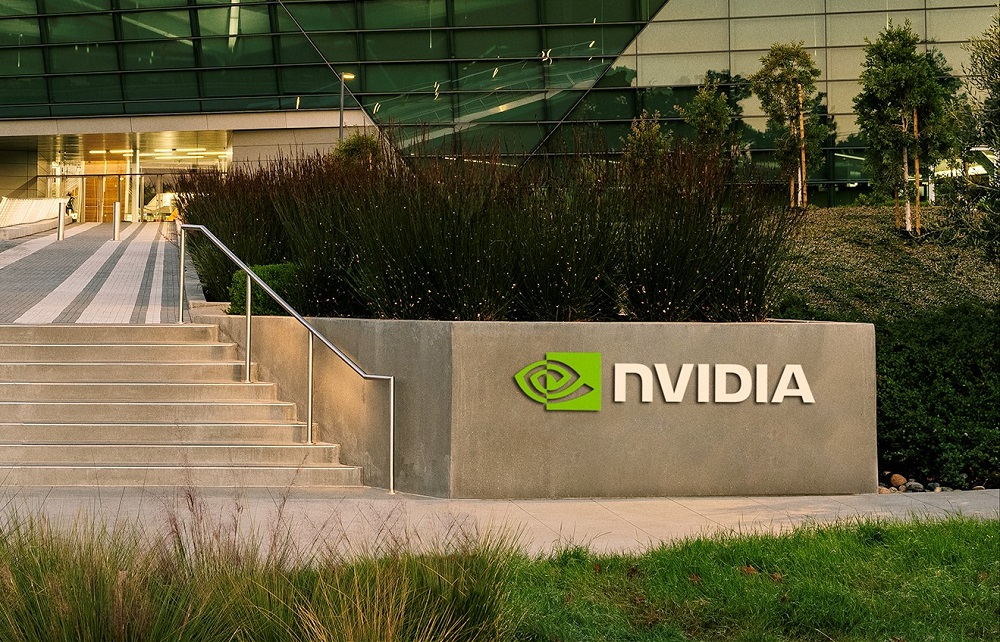
NVIDIA has unveiled a new partnership model with AI cloud providers that aims to make large-scale artificial intelligence infrastructure more accessible, as demand for inference computing accelerates worldwide.
The initiative introduces a revenue-sharing and credit-support framework that allows AI cloud companies to deploy NVIDIA-powered AI factories while reducing the financial barriers traditionally associated with building high-performance AI infrastructure. The move is designed to help startups, enterprises, research institutions and regional AI providers gain faster access to advanced computing resources without investing heavily in their own data center capacity.
Why NVIDIA Is Changing Its AI Cloud Strategy
The announcement reflects a broader shift in the AI industry, where demand is increasingly moving beyond model development toward inference, the stage where trained AI models generate responses and process real-time workloads. Unlike training, inference requires computing infrastructure capable of operating continuously at scale to support growing volumes of AI-generated tokens.
How NVIDIA’s New Partnership Model Works
Under the new commercial model, AI cloud providers will acquire NVIDIA infrastructure while offering cloud-based AI services to customers. NVIDIA will continue generating revenue from hardware sales and will also receive a share of the revenue generated from supported cloud capacity, creating an ongoing income stream linked to platform usage.


Why AI Inference Is Becoming the Industry’s Biggest Growth Driver
According to NVIDIA, the approach is intended to accelerate adoption of its AI computing platforms while helping emerging AI businesses overcome one of the industry’s biggest challenges: securing funding for expensive computing infrastructure. Even companies with long-term demand have often struggled to finance large-scale GPU deployments.
How AI Developers and Cloud Providers Could Benefit
For AI developers, model builders, inference providers and enterprises, the model is expected to shorten deployment timelines by providing immediate access to high-performance computing capacity. Customers can begin scaling AI applications without waiting for new data centers to be built, power infrastructure to be secured or hardware installations to be completed.
The First AI Cloud Providers Joining the Initiative
The strategy is already being implemented through several AI cloud partners developing NVIDIA-powered DSX AI factories.
Among the first participants is Sharon AI, which plans to deploy as many as 40,000 NVIDIA Grace Blackwell GB300 GPUs as part of its sovereign AI infrastructure strategy.
“This strategic collaboration with NVIDIA marks a pivotal moment in Sharon AI’s mission to deliver sovereign, large-scale AI compute infrastructure,” said James Manning, co-founder and CEO of Sharon AI.
Another early partner, Firmus Technologies, is constructing a DSX AI factory campus in Batam, Indonesia. Once fully developed, the facility is expected to support up to 360 megawatts of power and house approximately 170,000 NVIDIA GPUs, making it one of the region’s largest AI computing hubs.
“AI-native companies need access to scalable, energy- and cost-efficient compute infrastructure to compete globally. Firmus AI Cloud is building a NVIDIA DSX-aligned AI factory, enabling more customers to access the computing resources they need to build and scale AI,” noted Tim Rosenfield, co-CEO of Firmus Technologies.
Furthermore, NVIDIA said growing demand from AI-native companies such as Baseten, Fireworks AI and Together AI illustrates the increasing need for readily available computing capacity. These companies require large-scale GPU infrastructure not only for model training and fine-tuning but also for post-training workloads and high-volume agentic AI inference as enterprise adoption continues to expand.
What NVIDIA’s New Model Means for the Future of AI Infrastructure
The company believes the new financing and partnership structure will enable cloud providers to scale infrastructure more rapidly while giving AI developers the commercial flexibility needed to transition AI applications from pilot projects to full-scale production.
A Practical Guide for Businesses Reviewing Their Cybersecurity
Cyber threats continue to evolve, but businesses do not need to navigate those challenges without reliable information. Understanding how modern attacks work is the first step towards making informed security decisions.
The Kaspersky SMB Cybersecurity Guide examines common attack methods, explains the role of modern endpoint protection and outlines how layered security can help businesses detect and respond to threats more effectively. It is designed for organisations looking to strengthen cybersecurity without adding unnecessary operational complexity.