
Why Standard Chartered Is at the Heart of Kenya's Push for Foreign Bond Investors
The bank will handle the custody, settlement and cash flows behind overseas investment in Kenyan Treasury securities, giving it a central role as the country opens its domestic debt market to more global institutional capital.

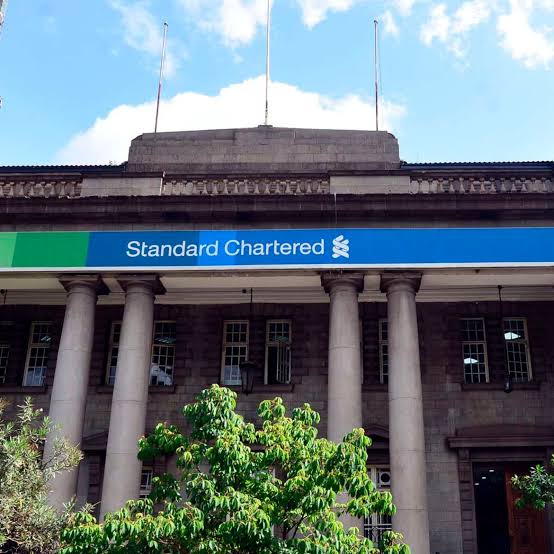
When Kenya’s new link to global securities settlement infrastructure goes live on June 29, Standard Chartered Bank Kenya will quietly assume one of the country’s most strategically important financial market roles.
While the Central Bank of Kenya’s partnership with Clearstream has been presented as a breakthrough for international investors seeking easier access to Kenyan government securities, it is Standard Chartered that will sit at the operational centre of every qualifying transaction, handling the local custody, settlement and cash movements that allow foreign capital to flow into the country’s domestic debt market.
The appointment means that whenever an overseas pension fund, asset manager or sovereign wealth fund buys a Kenyan Treasury bill, infrastructure bond or government bond through Clearstream’s network, Standard Chartered will execute the critical local functions that turn that investment decision into a completed transaction.
It is a role that extends far beyond custody. It places the bank at the centre of settlement, foreign exchange, cash management and securities safekeeping—the financial plumbing that underpins cross-border investment but rarely attracts public attention.

More Than a Custodian
The Central Bank of Kenya’s agreement with Clearstream establishes a direct market link allowing international institutional investors to access Kenyan government securities through a single omnibus account instead of opening individual accounts locally.
For investors, the arrangement removes much of the operational complexity that has historically accompanied investments in frontier markets.

For Standard Chartered, however, it creates a long-term role inside the infrastructure supporting those investments.
The bank has been appointed both the local custodian with the Central Bank and the Kenyan shilling cash correspondent for Clearstream. Those responsibilities mean it becomes the institution responsible for ensuring that money and securities move efficiently between overseas investors and Kenya’s domestic debt market.
Rather than requiring foreign institutions to navigate multiple local intermediaries, the new structure channels settlement through a single operational gateway linking Clearstream to the Central Bank’s Dhow Central Securities Depository (DhowCSD).
That appointment carries additional weight because Clearstream is one of the world’s two largest international central securities depositories, alongside Euroclear. The Deutsche Börse-owned company provides post-trade services to more than 2,500 institutional clients across 110 countries and holds approximately €19 trillion in assets under custody. Kenya becomes its 60th domestic market link and only the second in Africa after South Africa.
What Happens Every Time a Foreign Investor Buys a Kenyan Bond
Much of the infrastructure supporting government bond markets remains invisible to investors.
Buying a Kenyan Treasury bond involves considerably more than transferring money to the government.
Once an international investor places an order through Clearstream’s network, settlement instructions are transmitted into Kenya through the new market link.
At that point, Standard Chartered assumes responsibility for the local execution.
The bank receives payment instructions, converts foreign currency into Kenyan shillings where necessary, manages settlement funds, interfaces with the Central Bank’s securities depository, ensures government securities are delivered into custody and facilitates future coupon payments and redemption proceeds.
Every stage requires specialised banking infrastructure capable of processing institutional-scale transactions while meeting the operational standards expected by global financial markets.
Without those functions, the market link would remain little more than a digital connection.
Why Standard Chartered Fits the Role
The appointment reflects the bank’s long-standing strength in wholesale and institutional banking rather than consumer finance.
Standard Chartered has built much of its regional business around multinational corporations, financial institutions, correspondent banking, foreign exchange and cross-border payments.
Those capabilities make it well suited to operate inside international market infrastructure where settlement precision, regulatory compliance and global banking relationships are essential.
The mandate also strengthens the bank’s strategic position within Kenya’s capital markets as cross-border institutional investment becomes increasingly important to government financing.
Beyond transaction fees, the appointment gives Standard Chartered something that is difficult for competitors to replicate: a central position in the infrastructure through which international institutional capital enters Kenya’s domestic debt market. That role deepens relationships with global asset managers, reinforces the bank’s relevance in sovereign debt markets and embeds it more firmly within Kenya’s evolving financial architecture.
The Hidden Business Behind Every Transaction
The commercial significance of the mandate lies in activities that rarely attract public attention.
Each foreign investment into Kenya’s domestic debt market creates a chain of financial services extending beyond the purchase of government securities.
Custody services generate fees for safeguarding securities.
Settlement services ensure ownership transfers accurately between counterparties.
Foreign exchange transactions create currency conversion business whenever overseas investors convert funds into Kenyan shillings.
Cash management, payment processing and institutional account services provide additional revenue opportunities as transaction volumes increase.
Rather than relying on a single income stream, the mandate positions Standard Chartered to benefit from several services attached to every qualifying transaction processed through the new infrastructure.
The opportunity becomes increasingly valuable if foreign participation in Kenya’s domestic debt market expands over time.
Why Kenya Needs an International Gateway
The government has increasingly relied on the domestic debt market to finance budget deficits while reducing dependence on more expensive foreign commercial borrowing.
Outstanding Treasury bills and government bonds have grown to approximately Sh7 trillion, yet foreign investors account for only a small share of holdings. Most government securities remain concentrated among Kenyan commercial banks, pension funds and insurance companies.
The Clearstream connection is intended to broaden that investor base by making Kenyan government securities easier to access through infrastructure already used by international institutional investors.
The initiative also addresses one of the operational considerations assessed by major global bond index providers such as JPMorgan and FTSE Russell. International benchmark providers generally require foreign investors to access local debt markets without significant settlement or registration barriers. By simplifying market access through a recognised international securities settlement network, Kenya strengthens its case for broader inclusion in global bond indices.
Should that happen, the implications extend beyond visibility. Passive investment funds that track those benchmarks would be required to allocate capital to Kenyan government securities, creating a potentially larger and more stable source of demand for local-currency debt.
Opportunity Comes With Risk
Lowering operational barriers does not guarantee foreign investment.
International portfolio managers will continue evaluating Kenya’s fiscal position, exchange-rate stability, inflation outlook, debt sustainability and monetary policy before committing capital.
A broader foreign investor base could improve liquidity and strengthen demand for government securities, helping moderate borrowing costs over time.
At the same time, greater international participation introduces new vulnerabilities. Foreign portfolio investors can respond quickly to shifts in global interest rates or risk sentiment. During periods of market stress, rapid capital outflows could place upward pressure on domestic bond yields and increase refinancing risks for the government.
The new infrastructure therefore improves access to Kenya’s debt market without eliminating the importance of macroeconomic fundamentals.
Strengthening Kenya’s Capital Markets
For policymakers, Standard Chartered’s appointment forms part of a broader effort to modernise the infrastructure supporting Kenya’s financial markets.
More efficient settlement systems can deepen liquidity, diversify the investor base and strengthen activity in the secondary bond market.
If foreign participation grows steadily, stronger demand for government securities could improve price discovery while giving the National Treasury access to a wider pool of long-term investors.
The benefits extend beyond government borrowing. Infrastructure that meets international settlement standards makes Kenya’s capital markets more accessible to global institutional investors and strengthens the country’s position within Africa’s financial landscape.
A Strategic Position in Kenya’s Financial System
Standard Chartered’s appointment is ultimately less about winning another banking contract than becoming the institution responsible for operating one of the most important gateways into Kenya’s domestic government debt market.
Every qualifying investment entering through the Clearstream-Kenya Link will depend on local settlement, custody, foreign exchange and cash management services functioning seamlessly behind the scenes.
Those activities rarely make headlines because they occur after an investment decision has already been made. Yet they are the infrastructure that allows international capital to move into domestic financial markets with confidence.
As Kenya works to attract a broader pool of foreign investors and integrate more closely with global capital markets, the institutions operating that infrastructure become strategically important in their own right.
For Standard Chartered, the mandate secures a central role in that architecture. For Kenya, it represents another step towards making its domestic debt market easier to access, more internationally connected and better positioned to compete for global institutional capital.
Go to TECHTRENDSKE.co.ke for more tech and business news from the African continent and across the world.
Follow us on WhatsApp, Telegram, Twitter, and Facebook, or subscribe to our weekly newsletter to ensure you don’t miss out on any future updates. Send tips to editorial@techtrendsmedia.co.ke


