How a Ksh6 Billion Telkom Kenya Buyout Spiraled into an Endless Dispute
Telkom Kenya remains caught between ownership uncertainty and the need for long-term investment

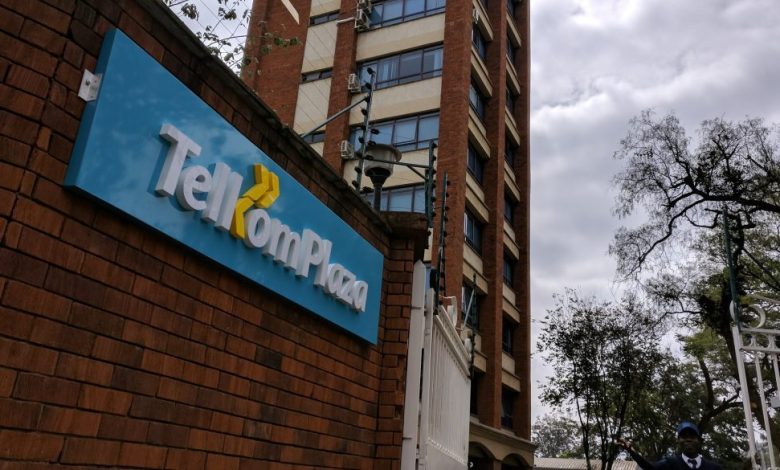
The Telkom Kenya Helios buyout was supposed to bring closure to a long-running ownership question surrounding one of the country’s strategic telecommunications assets. Instead, nearly four years after the government spent about Sh6 billion to acquire the stake held by private equity investor Helios, the transaction continues to generate court battles, anti-corruption investigations and international arbitration proceedings.
The latest chapter involves veteran investment banker John Ngumi, who has asked the High Court to shield him from continued action by anti-graft investigators despite prosecutors having twice concluded that available evidence does not support criminal charges.
His petition has revived scrutiny of a transaction that has become one of the most consequential case studies in Kenya’s recent corporate history. Beyond the immediate legal dispute, the saga raises broader questions about policy consistency, institutional coordination and the ability of governments to provide certainty after major State-backed deals have been completed.
A Deal That Refuses to End
The roots of the dispute stretch back to 2021 when Helios, through its investment vehicle Jamhuri Holdings Limited, activated a contractual mechanism allowing it to exit Telkom Kenya.


The proposal moved through multiple layers of government review. The National Treasury engaged the investor on exit terms. The National Security Council endorsed the proposal. Cabinet approved the transaction and authorized the government to acquire the investor’s 60 percent stake.
The government ultimately completed the buyout during the 2022/23 financial year at a cost of roughly Sh6 billion, restoring Telkom Kenya to full State ownership.
Because the expenditure had not been budgeted, the Treasury invoked Article 223 of the Constitution, which allows spending outside approved appropriations under limited circumstances, subject to later parliamentary approval.
At the time, officials viewed the transaction as a strategic intervention to secure control of a telecommunications asset regarded as important to the country’s digital infrastructure.
Instead, the buyout quickly became the subject of political controversy and institutional scrutiny.
Why John Ngumi Is Back in Court
Ngumi was not a government official in the transaction. He acted as transaction adviser to Jamhuri Holdings, helping structure Helios’ exit from Telkom Kenya.
His role attracted significant attention after parliamentary hearings revealed that he earned approximately Sh400 million in advisory fees during the period leading up to the buyout.
Members of Parliament questioned the size of the payment and sought explanations regarding his involvement in the transaction. Ngumi defended the compensation as a reflection of specialist expertise required to navigate a complex deal involving government and international investors.
His prominence also ensured that he became one of the most visible individuals associated with the transaction.
That visibility was amplified by his long-standing reputation as one of Kenya’s best-known investment bankers. Over a career spanning more than three decades, he held senior positions in international banking and played advisory roles in some of the region’s largest corporate transactions. He also served on several high-profile State-linked boards, including Safaricom, Kenya Pipeline Company and Konza Technopolis.
The ODPP later concluded that Ngumi operated under a separate advisory arrangement, declared taxes on his earnings and was not a party to the government’s share purchase agreement.
Yet despite prosecutors twice directing closure of the inquiry file, Ngumi now argues that continued investigative actions have exposed him to prolonged uncertainty and potential violations of his constitutional rights.
From Strategic Buyout to Institutional Dispute
What makes the Telkom saga significant is not simply the size of the transaction.
The dispute has evolved into a test of how Kenya’s institutions interact when government acts simultaneously as shareholder, regulator, investigator and commercial counterparty.
The transaction was approved through multiple State processes and ultimately implemented. However, questions later emerged regarding approvals, public finance procedures and potential conflicts of interest.
Those concerns triggered investigations by the Ethics and Anti-Corruption Commission, which submitted files to the Office of the Director of Public Prosecutions for review.
The sequence illustrates how a completed transaction can remain vulnerable to continuing scrutiny even after formal approvals have been obtained.
The Growing Disconnect Between Investigators and Prosecutors
A critical development came when prosecutors reviewed the evidence collected by investigators.
In April 2025, the ODPP directed that the inquiry file be closed, concluding that evidence was insufficient to support proposed corruption and conflict-of-interest charges.
After investigators sought reconsideration, prosecutors revisited the matter and reaffirmed the decision several months later.
The ODPP found that relevant government approvals had been obtained, that Article 223 had been lawfully invoked and that Parliament had subsequently been notified of the expenditure.
Prosecutors also examined payments made through Telkom Kenya’s management incentive framework and determined that available evidence could not sustain criminal proceedings against identified beneficiaries.
The divergence between investigators and prosecutors has become one of the defining features of the dispute.
For businesses and investors, such differences can create uncertainty regarding how regulatory and enforcement decisions ultimately reach closure.
The London Arbitration Extends the Fallout
The legal consequences of the buyout are no longer confined to Kenya.
Court records show that Kenya is defending itself in arbitration proceedings in London involving Jamhuri Holdings under the rules of the London Court of International Arbitration.
The dispute emerged after President William Ruto’s administration reversed the nationalisation arrangement approved under the previous administration and announced plans for Infrastructure Corporation of Africa to acquire the stake previously held by Helios.
The arbitration underscores the extent to which the disagreement has expanded beyond domestic politics and regulation.
Unlike investigative proceedings, arbitration can carry direct financial consequences for governments and may shape how international investors assess the reliability of contractual commitments.
The fact that Kenya has already secured legal representation and commenced participation in the proceedings suggests that the dispute remains far from resolution.
What Investors See in the Telkom Saga
For investors evaluating Kenya’s business environment, the most important lesson may not concern the allegations themselves.
Instead, it concerns the persistence of uncertainty.
The sequence is difficult to ignore. A foreign investor sought an exit. Government negotiated terms. Cabinet approved the acquisition. Public funds were deployed. Investigations followed. Prosecutors declined charges. Litigation continued. Arbitration emerged.
Each step that appeared likely to close the matter instead opened a new phase of dispute.
The case therefore highlights a broader challenge facing governments that seek to attract long-term capital. Investors place significant value on predictability, especially in sectors that require large commitments and extended planning horizons.
When major transactions remain contested years after implementation, questions naturally arise about finality and institutional consistency.
The Unfinished Business of Telkom Kenya
Lost amid the legal and political battles is Telkom Kenya itself.
The telecommunications operator continues to compete in a market dominated by larger rivals while navigating uncertainty surrounding ownership, investment and long-term strategy.
The prolonged disputes have unfolded during a period when Kenya is attempting to strengthen its reputation as a regional technology and investment hub.
Whether the remaining court cases and arbitration proceedings eventually bring closure remains uncertain.
What is clear is that the Telkom Kenya Helios buyout has evolved far beyond a corporate acquisition.
It has become a case study in how difficult it can be to achieve finality in major State-linked transactions.
Nearly four years after Helios initiated its exit, the deal remains unfinished—not because ownership changed hands, but because the institutions surrounding the transaction continue to debate what happened after it did.
Go to TECHTRENDSKE.co.ke for more tech and business news from the African continent and across the world.
Follow us on WhatsApp, Telegram, Twitter, and Facebook, or subscribe to our weekly newsletter to ensure you don’t miss out on any future updates. Send tips to editorial@techtrendsmedia.co.ke