
Google Wants Gemini Sitting Inside Everything You Do in Workspace
Google’s scale gives these Workspace experiments a different level of reach than smaller AI productivity startups can realistically match

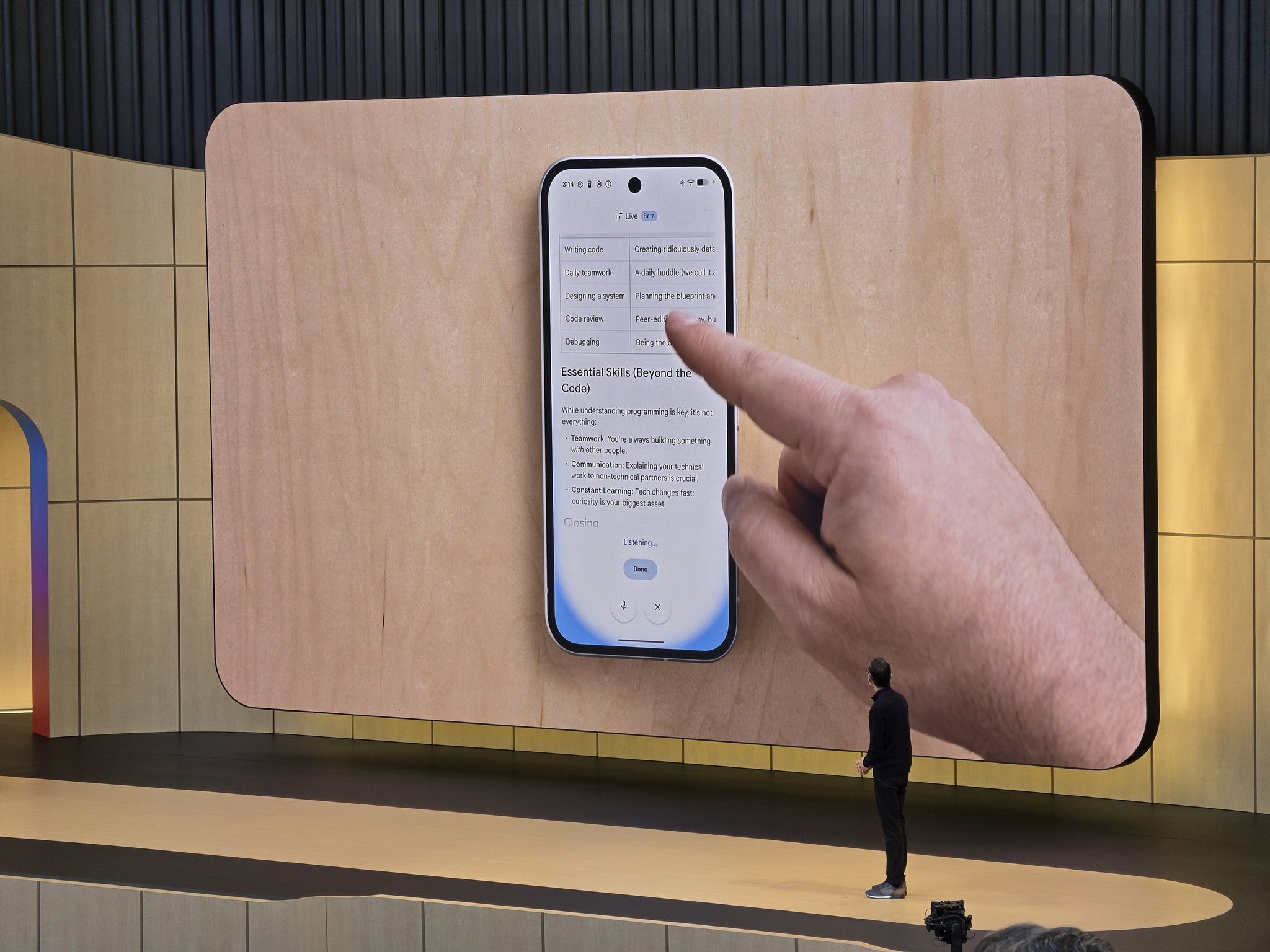
Google used its I/O 2026 developer conference to outline a broader redesign of how people interact with Workspace, moving beyond typed prompts toward continuous voice-driven AI assistance across documents, notes, email, and search.
The company introduced Docs Live, Gmail Live, and new voice organization tools inside Google Keep as part of a wider Gemini expansion that now stretches across Search, Android, YouTube, and Workspace. Executives positioned the updates as part of a longer transition away from app-by-app workflows toward conversational systems capable of operating across services simultaneously.
The announcements arrived alongside a growing stack of Gemini agent features, including Gemini Spark, a persistent assistant designed to interact with Gmail, Docs, and other Workspace products on a user’s behalf. Google said Spark will ask for approval before carrying out higher-risk actions such as sending emails or creating calendar events, an acknowledgment that users may be comfortable with AI assistance long before they are comfortable with fully autonomous execution.
In practice, Google is attempting to reduce the amount of traditional software navigation required inside its ecosystem. Instead of manually searching inboxes, organizing notes, or drafting documents section by section, users are increasingly being pushed toward spoken requests that trigger multi-step AI actions in the background.


Docs Live sits near the center of that strategy.
Google described the feature as a way for users to explain what they want to write conversationally while the system assembles a draft using relevant material pulled from Drive and other Workspace services. During demonstrations at I/O, the company showed documents being constructed from emails, files, schedules, and contextual references gathered across multiple Google products without requiring users to manually move information between applications.

The company argues that speech changes the way people interact with AI systems because users naturally provide more context when talking than typing. That matters for Gemini because the newer models are being optimized around multi-part requests, revisions, and interruptions inside a single interaction.
The redesign extends beyond documents.
Gmail Live introduces conversational inbox search, allowing users to ask spoken questions about travel bookings, schedules, or older conversations and receive synthesized answers drawn from messages. Google Keep is receiving similar functionality aimed at processing unstructured voice recordings into categorized notes and task lists.
Google is also extending the same AI workflow logic into visual production. The company introduced Google Pics, an image creation and editing application tied into Drive and Slides, alongside collaborative editing tools intended to keep AI-generated media inside the broader Workspace environment.
Individually, many of the underlying capabilities already exist in various forms across the software market. Dictation platforms, AI transcription tools, automated note organizers, and conversational assistants have been available for years. Google’s advantage comes from integration scale.
The company said 15 Google products now serve more than 1 billion users, while 5 products exceed 3 billion users globally. Google also disclosed that the Gemini app has crossed 900 million monthly users, giving the company a large installed base as it pushes conversational AI deeper into its productivity ecosystem.
That scale matters because Workspace products already operate across email, cloud storage, collaboration tools, calendars, Android devices, and enterprise systems used by billions of people worldwide. Google is not introducing these behaviors inside standalone AI products. It is embedding them into services that many users already depend on daily for communication, scheduling, search, and work coordination.
That ecosystem position allows Google to connect AI actions across products rather than limiting them to standalone apps.
The company’s broader I/O announcements reinforce that direction. Gemini Spark is intended to operate as a persistent agent capable of handling tasks across Workspace products, while Android Halo will display live status updates showing what AI agents are doing in the background across a device.
Google Search is also being reshaped around similar assumptions. The company previewed monitoring agents that continuously track topics across the web and return updates proactively instead of waiting for users to repeatedly search manually.
Taken together, the announcements point toward a larger behavioral shift Google is trying to normalize: fewer discrete software interactions and more continuous conversational computing.
The company increasingly describes Workspace less as a collection of productivity apps and more as an environment where AI systems actively participate in daily work. That framing matters because it changes the role of the software itself. Gmail, Docs, Keep, and Drive are no longer being positioned simply as destinations where tasks happen, but as connected layers feeding context into persistent AI agents.
That transition also helps explain changes to Google’s AI subscription structure.
The company said the Gemini app is moving away from fixed prompt limits toward a compute-based usage model tied to processing intensity. More demanding tasks such as multimodal reasoning, long voice interactions, video generation, and agentic workflows consume larger amounts of compute than simple text prompts.
At the same time, Google expanded its paid AI tiers, with Gemini features increasingly segmented across AI Plus, Pro, and Ultra subscriptions. Several Workspace voice tools announced at I/O will initially launch only for premium subscribers and business customers, though Google also broadened availability for AI Inbox features previously limited to its highest-tier users.
The pricing structure reflects a growing reality across the AI sector: persistent assistants and multimodal voice systems require substantially more infrastructure than traditional search or cloud software.
Google is not alone in pursuing that direction. Companies across the AI industry are racing to embed conversational agents into productivity software, operating systems, and search products. What differentiates Google is the breadth of services already tied into a single account system, from Android phones and Gmail to Docs, YouTube, and Search.
That reach gives the company a testing ground for a much larger experiment: whether users are willing to treat spoken interaction with AI as a default computing behavior rather than an occasional shortcut.
Many of the features announced at I/O 2026 will begin rolling out this summer, with availability varying by subscription tier, language support, and platform.
Go to TECHTRENDSKE.co.ke for more tech and business news from the African continent and across the world.
Follow us on WhatsApp, Telegram, Twitter, and Facebook, or subscribe to our weekly newsletter to ensure you don’t miss out on any future updates. Send tips to editorial@techtrendsmedia.co.ke


