
Google’s Latest AI Rollout Shows How DeepMind Has Moved to the Center of the Company
DeepMind’s research operation is becoming more tightly woven into Google’s commercial AI rollout

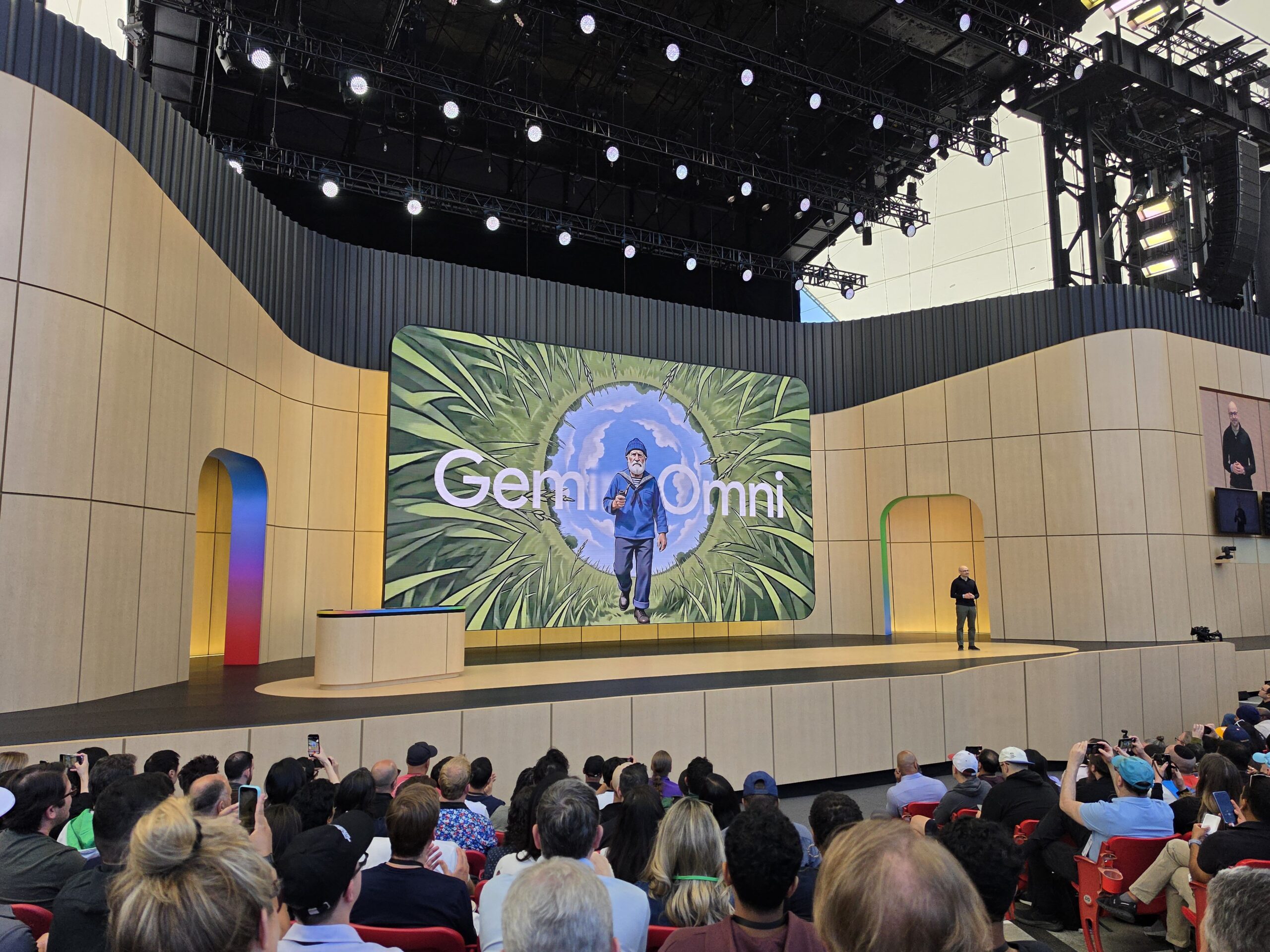
Google closed its annual developer conference with a message that extended far beyond consumer software updates.
After unveiling new AI features across search, video generation, Android, productivity tools, and developer products, DeepMind chief executive Demis Hassabis described the current period in artificial intelligence as the beginning of a broader transition toward AGI.
His comments came at the end of a presentation centered on systems designed to complete work with less human supervision. Throughout the event, Google repeatedly focused on agents, software generation, multimodal reasoning, and model coordination rather than traditional chatbot interactions.
The company’s direction reflects a wider change inside the AI industry. Large language models are increasingly being treated as operating infrastructure instead of standalone products.


Google’s recent releases suggest the company believes the next commercial phase of AI will depend on how effectively models can carry out extended tasks, interact across applications, and interpret visual environments.
DeepMind research is now tightly connected to Google products
For years, DeepMind operated with a degree of separation from Google’s core product divisions. That arrangement has narrowed considerably since generative AI competition intensified.
Research teams that once focused primarily on long-range experimentation are now feeding directly into product launches across Alphabet’s ecosystem.
The overlap was visible throughout the conference. Google linked the same underlying AI systems to search experiences, office software, coding tools, autonomous systems, and mapping products.
Executives also spent considerable time discussing reliability systems built around AI models. These frameworks are designed to structure multi-step behavior, reduce operational errors, and improve consistency during autonomous tasks.
Inside the industry, these orchestration layers are becoming strategically important. The technical challenge is no longer limited to generating convincing responses. Companies are now attempting to make AI systems dependable enough to manage sequences of actions over longer periods.
That race has become increasingly competitive as Google, OpenAI, Anthropic, and Microsoft push to embed AI deeper into workplace software and digital infrastructure.
Visual reasoning is becoming central to Google’s AI roadmap
Several of Google’s consumer-facing announcements carried a deeper research objective.
The company presented advanced video generation systems as creative tools, but Hassabis connected them to a broader effort to improve machine understanding of physical environments.
According to his view, future AI systems may require visual planning capabilities rather than relying entirely on text-based reasoning. That approach mirrors how humans process spatial information, movement, and real-world interaction.
The same concept is influencing Waymo’s work on autonomous driving.
Alphabet’s self-driving division is testing models intended to help vehicles respond more effectively to unpredictable conditions. Rather than relying only on pre-programmed reactions, newer systems are being trained to simulate possible outcomes and adapt to unusual scenarios.
Across the AI sector, video generation, simulation technology, robotics, and spatial reasoning are increasingly converging into the same research category.
That convergence is reshaping how companies position seemingly consumer-oriented AI products. Features marketed for entertainment or productivity are often being developed in parallel with systems intended for robotics, navigation, and machine autonomy.
Google is extending frontier AI research into biology
DeepMind’s ambitions are also reaching further into pharmaceutical and scientific work.
Following the success of AlphaFold, the protein prediction system that accelerated biological research, Google backed the launch of Isomorphic Labs to pursue AI-assisted drug discovery.
Hassabis framed the effort as a platform-level research initiative rather than a conventional biotech company focused on individual treatments.
The strategy differs from traditional pharmaceutical models that depend heavily on exclusive datasets or narrow therapeutic pipelines. Instead, Google is betting that advances in general-purpose machine learning can improve how researchers identify and test biological relationships at scale.
That approach has become increasingly attractive across the technology industry as AI companies search for markets capable of supporting long-term infrastructure spending.
Scientific computing, materials research, and healthcare modeling are now viewed by major AI labs as potential growth areas alongside consumer software.
Google’s advantage may come from reach rather than focus
The company enters the next phase of AI competition with a structure few rivals can replicate.
Google controls global consumer products, cloud infrastructure, custom chips, mapping systems, mobile software, research labs, and autonomous vehicle operations under the same corporate umbrella.
That breadth creates operational complexity, but it also allows the company to distribute advances in AI across multiple businesses simultaneously.
The conference reflected that interconnected strategy. Improvements in one model ecosystem are now appearing across search, developer tools, enterprise software, navigation products, and experimental research systems.
The result is an AI market that increasingly revolves around platform integration rather than isolated applications.
Hassabis’ remarks suggested Google sees the industry moving toward systems capable of combining reasoning, execution, visual interpretation, and scientific modeling inside a shared computational framework.
Whether that ultimately leads to AGI remains uncertain. What is already clear is that Google no longer presents AI as a feature layer attached to existing products. The company is positioning it as the foundation beneath them.
Go to TECHTRENDSKE.co.ke for more tech and business news from the African continent and across the world.
Follow us on WhatsApp, Telegram, Twitter, and Facebook, or subscribe to our weekly newsletter to ensure you don’t miss out on any future updates. Send tips to editorial@techtrendsmedia.co.ke


