AfriQloud: From Vision to Execution – Building Africa’s Sovereign Digital Economy

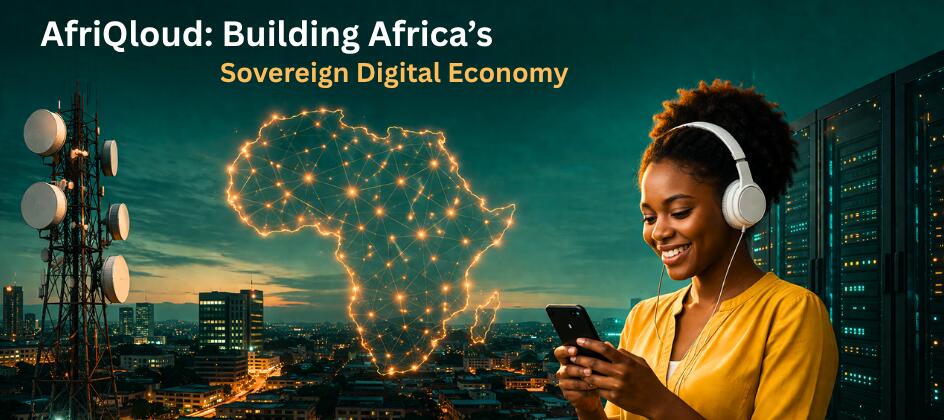
This article is a continuation of “AfriQloud: Reimagining Africa’s digital future through sovereign infrastructure“, which introduced the vision and foundational structure of the AfriQloud ecosystem. In this second installment, we examine how that vision is delivered in practice – through its implementation model, governance framework, and the opportunity it presents for the continent.
From vision to reality: The delivery model
At the heart of AfriQloud’s implementation strategy is a carefully structured Build-Operate-Transfer (BOT) model, designed to resolve a long-standing challenge in large-scale infrastructure development: how to combine global expertise and capital with true national ownership.
Under this model, infrastructure is initially built and operated by a consortium of experienced partners, financed through blended capital structures. However, this arrangement is not permanent. From the outset, skills transfer, institutional capacity building, and operational training are embedded into every phase. By the time the system transitions to national control, governments are equipped with the expertise, systems, and institutional knowledge required to operate independently.


This approach ensures that sovereignty is not an aspiration – it is engineered into the lifecycle of the infrastructure itself.
For governments, the advantages are immediate and strategic. There is no requirement for upfront capital investment, as the build phase is financed through the ecosystem’s funding mechanisms. At the same time, countries gain access to world-class infrastructure and operational expertise, while their local workforce is trained and upskilled throughout the process. Ultimately, ownership of the infrastructure – including data, intellectual property, and operations – transfers fully to the state.

For private sector partners, the model offers long-term participation in a rapidly expanding digital market, including managed service revenues during the operational phase and preferred positioning for future upgrades and expansions. It is a framework that aligns incentives across public and private actors without compromising national interests.
AfCFTA and the digital backbone of trade
The success of AfriQloud is closely tied to one of Africa’s most ambitious economic initiatives: the African Continental Free Trade Area (AfCFTA). Encompassing 55 countries and over 1.4 billion people, AfCFTA represents the largest free trade zone in the world by participation. Yet, its full potential depends on a critical enabler – digital infrastructure.
AfriQloud positions itself as that enabler.
By providing a Pan-African, interoperable digital backbone, AfriQloud transforms AfCFTA from a policy framework into a functioning digital economy. It enables cross-border trade processes to move from paper-based inefficiencies to seamless, digital workflows, including customs declarations, certificates of origin, and tariff management systems.
Equally significant is the development of cross-border digital identity and payment systems, which allow individuals and businesses to authenticate, transact, and access services across national boundaries. This creates a trusted environment for digital commerce, reducing friction and unlocking new economic activity.
Beyond trade, AfriQloud supports the harmonization of digital public services – from business registration to taxation and healthcare records – ensuring that systems across countries can communicate and operate cohesively. The result is a more integrated continent, where mobility, commerce, and service delivery are no longer constrained by fragmented infrastructure.
A governance model built for scale
Delivering infrastructure at a continental level requires more than technology – it requires a governance model capable of sustaining long-term innovation and collaboration. AfriQloud addresses this through a framework inspired by the innovation ecosystem model developed at Massachusetts Institute of Technology (MIT).
This model is built on a simple but powerful premise: sustainable innovation depends on the active participation of five key stakeholder groups – government, academia, industry, civil society, and capital. When these actors are aligned, ecosystems thrive; when they are absent or disconnected, progress stalls.
AfriQloud operationalizes this insight by embedding all five stakeholders into each country’s deployment strategy.
Governments provide policy direction and regulatory frameworks, anchoring the initiative within national priorities. Academic institutions contribute research capabilities and talent development, ensuring a pipeline of skilled professionals. Industry players – through the Consortium – drive commercial execution and service delivery, while civil society ensures that implementation remains inclusive and responsive to citizen needs. Finally, investors and financial institutions supply the capital structures necessary to sustain growth and expansion.
This approach transforms AfriQloud from a technology rollout into something far more significant: a fully activated digital ecosystem, designed to be both resilient and self-sustaining.
The strategic opportunity
The case for AfriQloud is not only technological, it is also deeply strategic. The timing, scale, and trajectory of Africa’s growth create a unique window of opportunity.
With a population of over 1.4 billion people, and projected to account for a quarter of the global population by 2050, Africa represents the fastest-growing demographic and economic frontier. The infrastructure decisions made today will shape how this population accesses services, participates in the economy, and engages with the world.
At the same time, AfCFTA is unlocking a $3.4 trillion market, creating unprecedented potential for intra-African trade and digital commerce. However, without the underlying infrastructure to support it, much of this potential risks remaining unrealized.
There is also an urgency to act. Global hyperscalers continue to expand aggressively across African markets. While their presence brings investment and capability, it also increases the risk of long-term dependency. Once systems are deeply integrated into external platforms, the cost – both financial and strategic – of transitioning to sovereign alternatives becomes significantly higher.
AfriQloud presents an opportunity to act before those dependencies are fully entrenched, allowing African nations to define their own digital architectures while the window remains open.
Call to action
AfriQloud is not a closed system; it is an open invitation to participate in shaping Africa’s digital future.
For government leaders and policymakers, the priority is clear: engage with the ecosystem, assess national readiness, and explore how sovereign infrastructure can be integrated into long-term development strategies. The decisions made at this level will determine the trajectory of national digital economies for decades to come.
For telecommunications providers, ISPs, and technology investors, AfriQloud offers a chance to play a foundational role in building the continent’s digital backbone. Early participation provides not only commercial opportunity but also strategic positioning within one of the world’s fastest-growing markets.
For system integrators and service providers, the ecosystem opens access to large-scale digital transformation projects across multiple sectors -health, education, finance, and public administration – creating new avenues for growth and innovation.
And for development finance institutions and impact investors, AfriQloud represents a vehicle to support sustainable, inclusive digital development, aligning capital with long-term economic transformation.
If you would like to be part of this transformative journey – whether as a government stakeholder, technology partner, investor, or ecosystem contributor – we invite you to take the next step. Engage directly with the AfriQloud team to explore collaboration opportunities or request further information. To express your interest or begin the conversation, please reach out via this email: hello@afriqloud.com.