The Connective Economy: The Five Startups Honored by the Orange Social Ventures Prize 2025 That Are Knitting Africa’s Fractured Systems Together
Reading the unwritten language of African growth: What these awards tell us about the continent’s true economic priorities for 2025

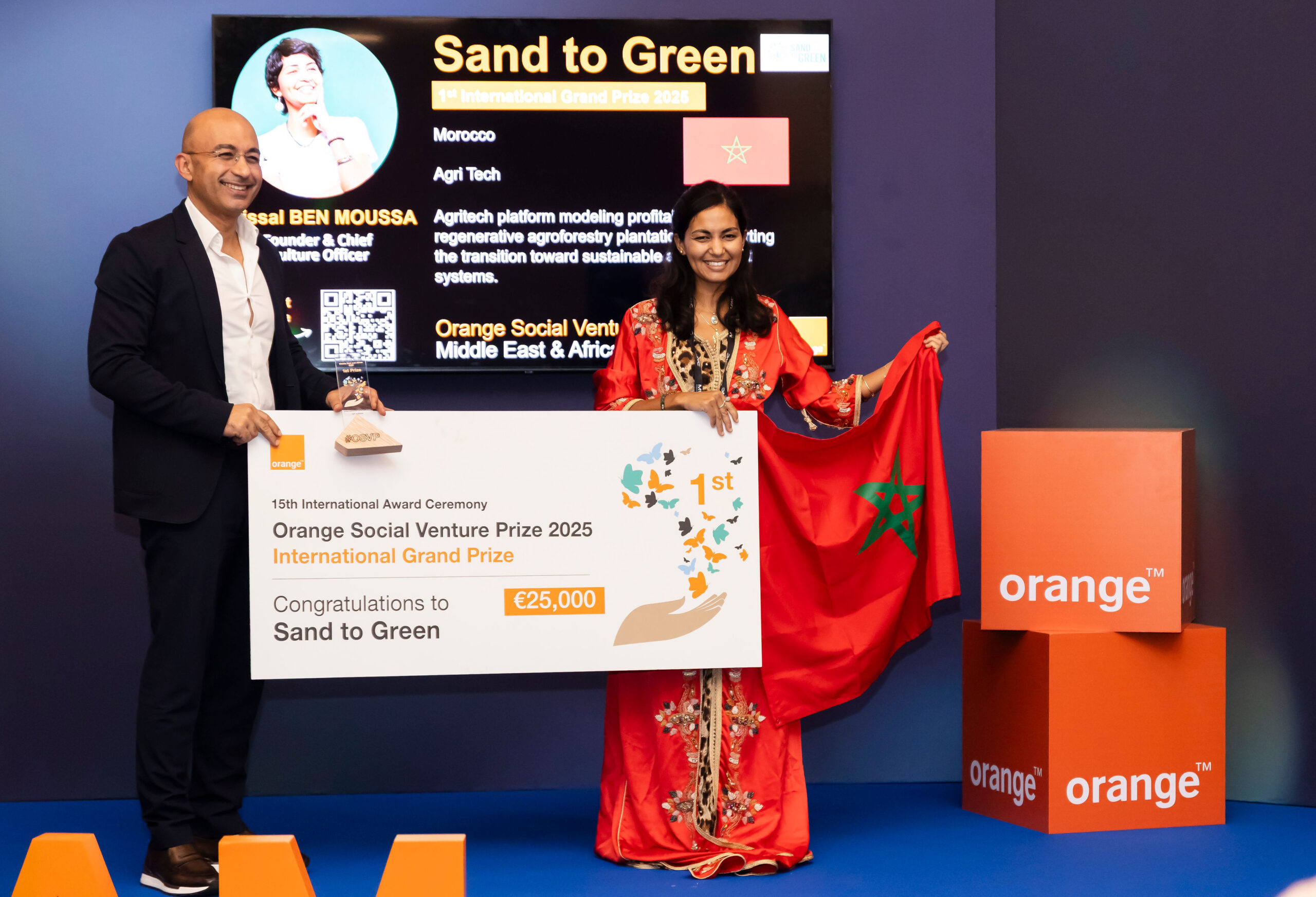
Orange’s fifteenth Social Ventures Prize drew a field of seventy finalists from seventeen African countries, and the results say something about where the continent’s tech imagination is moving. Five startups took home top honors, each proposing not just invention but endurance — projects that translate digital tools into daily utility.
The company’s continued investment through its Digital Centres gives these ideas a second life beyond the award stage. It anchors them in a network that can test, fund, and integrate them into regional systems. In that sense, the prize doubles as a snapshot of emerging priorities: food security, health logistics, carbon transparency, and access to learning.
The new face of applied innovation
Sand to Green, from Morocco, claimed the top prize of €25,000. Its platform designs agroforestry models that turn degraded land into productive farmland, tying ecological recovery to commercial incentives.
E-Blood Bank Makila, from the Democratic Republic of the Congo, won €15,000 for building a digital bridge among hospitals, blood banks, and donors. The platform enables payments and rapid deliveries by drone or motorcycle — a rare example of logistics design tuned precisely to its environment.


The €10,000 third prize went to Côte d’Ivoire’s N’Zassa Fund, a mobile app that converts micro-donations into small, community-based funding rounds. The concept borrows from local giving habits but modernizes the flow and transparency.
Two special recognitions followed. Tunisia’s Proverdy earned the International Women’s Prize for developing an AI platform that helps companies measure and reduce carbon emissions through verified offset projects. Botswana’s Maarifa received the Coup de Coeur award for its AI-powered online learning ecosystem built around affordable, self-paced courses.

Beyond the prize money
The immediate financial rewards are modest compared to the weight of the problems the winners are tackling. But the surrounding structure — mentorship, technical support, access to Orange’s infrastructure — can be catalytic. For small ventures that often spend months chasing pilots or market validation, that institutional backing can mean survival.
There is, however, an open tension between innovation and integration. Once a startup enters a corporate orbit, it gains reach but risks dilution. The prize model works when both sides stay pragmatic: Orange acting as a systems partner rather than an overseer, and the founders treating the relationship as a laboratory, not an endorsement.
Reading the field: where priorities converge
Look closely and a pattern emerges. The winning projects turn technology into connective tissue. Each one links actors who rarely coordinate: farmers and financiers, hospitals and donors, corporations and verifiers, learners and educators. This connective instinct defines much of Africa’s tech energy today — less about disruption, more about knitting fractured systems back together with small, adaptable tools.
Another thread is the emphasis on measurable outcomes. From soil fertility to delivery times, emissions, and education access, the value propositions lean on data that can be verified. It’s a form of accountability that suits regions where trust is fragile and institutional proof carries weight.
Still, challenges will come quickly. Sand to Green’s model hinges on patient capital and local buy-in. E-Blood Bank Makila must navigate regulation and healthcare bureaucracy. Proverdy steps into a carbon market still sorting credibility from speculation. N’Zassa and Maarifa must sustain user engagement beyond novelty. Each will need both engineering and diplomacy.
Possible turns ahead
If this year’s winners manage to convert visibility into lasting footholds, the prize will have functioned as more than recognition — it will have become a quiet incubator for regional infrastructure. One possible outcome is gradual embedding: startups gain government or corporate partners, refine their data practices, and evolve into service providers that blend social value with profitability.
Another path could be uneven growth. Some winners might thrive through partnerships, while others struggle with bureaucracy, funding cycles, or scaling costs. Those that survive may not be the ones with the flashiest technology but the ones that learn to move slowly, align with policy, and stay solvent while proving their models.
Either way, this year’s cohort represents a particular kind of confidence: that African-founded technology can take on systemic problems not through slogans but through durable, applied design. The Orange Social Ventures Prize remains one of the few platforms where that ambition is tracked — and occasionally, rewarded.
Go to TECHTRENDSKE.co.ke for more tech and business news from the African continent.
Mark your calendars! The GreenShift Sustainability Forum is back in Nairobi this November. Join innovators, policymakers & sustainability leaders for a breakfast forum as we explore sustainable solutions shaping the continent’s future. Limited slots – Register now – here. Email info@techtrendsmedia.co.ke for partnership requests.
Follow us on WhatsApp, Telegram, Twitter, and Facebook, or subscribe to our weekly newsletter to ensure you don’t miss out on any future updates. Send tips to editorial@techtrendsmedia.co.ke
TechTrends Media Podcasts