Kenya’s Smartphone Financing Boom: 1.4 Million Loans and Watu Africa’s Rising Reach
How a single smartphone loan is opening doors to new jobs, income streams, and digital opportunities across kenya


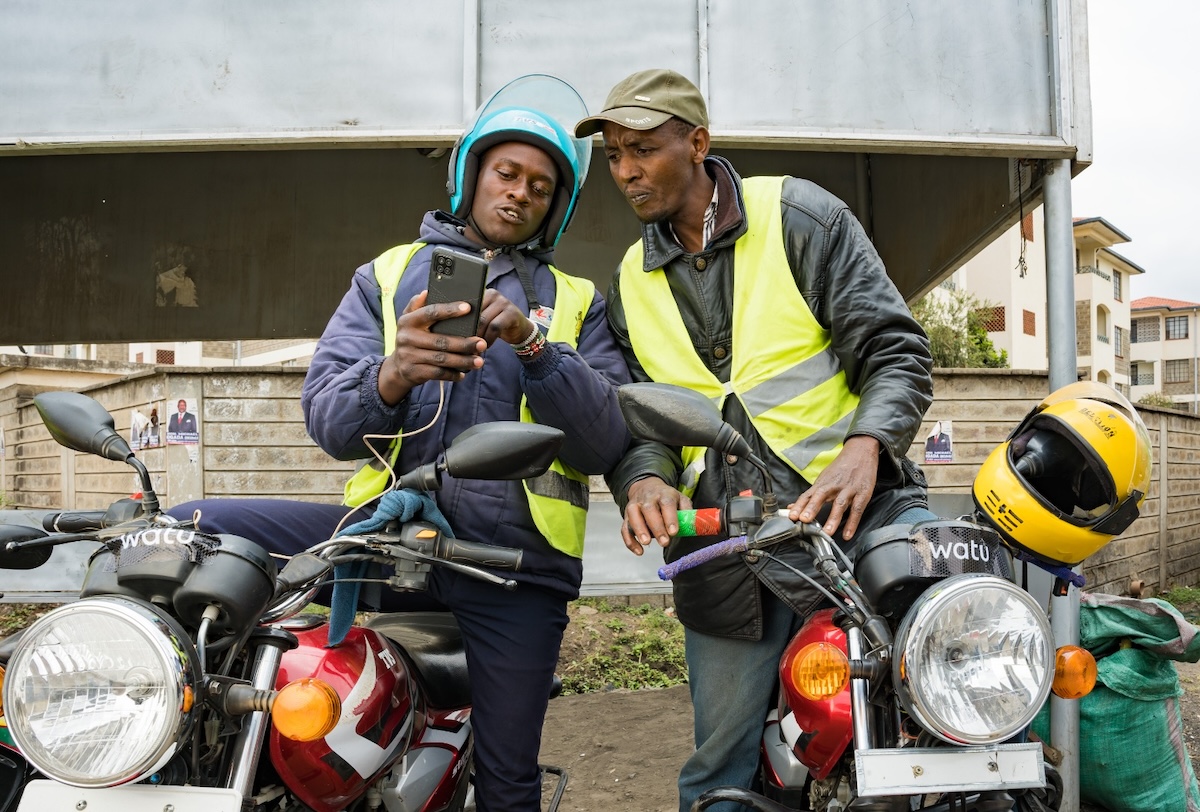
In Nairobi’s crowded streets and rural villages alike, a smartphone is no longer just a communication device. For many Kenyans, it is a bridge to income, digital finance, and social mobility. Watu Africa has tapped directly into this dynamic, moving 1.46 million smartphones through its Watu Simu buy-now pay-later programme last year. That is nearly half of all devices financed by the company across seven African markets.
Customers take devices home immediately, paying in installments. The catch is a noticeable premium over the cash price—a point critics often cite as the dark side of the BNPL craze. Yet for many users, the trade-off is a first-ever smartphone, access to digital services, and new economic opportunities.
Phones as Gateways to Digital Inclusion
Watu’s surveys highlight a striking trend: roughly 40 percent of Kenyan customers reported income growth after acquiring a device, while 30 percent gained access to new jobs. Digital participation in rural areas surged 30 percent, narrowing the urban-rural gap in financial services.
Watu is not alone in this space. M-Kopa, a Nairobi-based fintech that started with solar kits, has leveraged a similar approach to reach 7 million Africans across five countries, financing smartphones and embedding them with its Smart Money Platform for credit, insurance, and device protection. Around 2.5 million users now own their first smartphone thanks to M-Kopa’s installment model. These devices function as financial lifelines, particularly for Africa’s “thin-file” borrowers who lack formal credit histories.


The comparison underlines a broader trend: phones are increasingly acting as entry points into financial systems, turning simple consumer electronics into tools of inclusion. Watu and M-Kopa show how device financing can unlock income streams and access to digital services for low-income populations.
Beyond Phones: Expanding the Asset Portfolio
Smartphones are just the tip of Watu’s asset iceberg. The company also financed nearly 5,000 motorcycles, 2,000 electric bikes, and 140 tuk-tuks last year. Kenya alone accounted for 2.63 million active loans, with projections of over four million across its markets by 2025, almost three million linked to smartphones.
Similarly, M-Kopa’s Nairobi assembly plant—Africa’s largest by volume—produces smartphones locally, creating hundreds of jobs and reinforcing a digital manufacturing ecosystem. Local assembly allows better quality control and cost management, setting a precedent for asset-financing companies like Watu to consider scaling beyond imports.
Buy-Now Pay-Later: Opportunity and Risk
The BNPL craze thrives on the tension between accessibility and debt. Watu loans carry premiums, and while many benefit economically, the potential for overextension is real. Kenya’s FinAccess Survey shows users of hire purchase and Lipa Mdogo Mdogo services tripled from 579,000 in 2021 to 1.75 million in 2024. Watu’s strategy rides this wave but exposes the sector to regulatory scrutiny and consumer protection questions, particularly as smartphone prices continue to rise globally.
M-Kopa, for instance, uses device locks to enforce repayment—a controversial tactic that works but can heighten financial stress for vulnerable users. Watu, with its scale, may face similar dilemmas as it grows its BNPL portfolio.
The Economics Behind Watu and the Market
Financially, Watu posted $230 million (Sh29.7 billion) in revenue last year, earning $6.5 million (Sh839.7 million) net profit. Kenya remains the dominant market, though M-Kopa’s scale shows the potential for multi-country growth. Both companies underscore the emerging device-financing ecosystem in Africa, where phones double as credit, income tools, and gateways into the digital economy.
Future trajectories depend on balancing growth with risk: default rates, competitive pressures, and rising device costs all pose challenges. M-Kopa and Watu illustrate how financial inclusion can scale rapidly, but also highlight the delicate balancing act between opportunity and sustainability.
Social Impact, Inclusion, and Gender
Device financing is more than economic—it is social. Over 40 percent of M-Kopa’s customers live on less than $3.20 a day, while Watu surveys indicate notable income gains. Phones foster mobile money use, social connectivity, and entrepreneurial activity.
Gender remains a frontier. Women are historically underrepresented among first-time smartphone owners. M-Kopa’s research partnerships with institutions like Yale are exploring how to broaden access for women—a lesson Watu could apply as it expands. Both firms also integrate refurbished devices, signaling attention to sustainability in high-turnover tech markets.
Looking Ahead: Scaling Trust, Not Just Credit
Watu and M-Kopa show that smartphones are more than devices—they are digital passports, bridging gaps in financial services, entrepreneurship, and access to information. The path forward involves scaling responsibly: enforcing repayment discipline without alienating users, expanding device access without saturating low-income markets, and innovating faster than competitors.
By 2030, M-Kopa aims for 10 million users, while Watu targets over three million smartphone loans by 2025. Both companies illustrate a new chapter in Africa’s financial story: one where access, credit, and technology converge to create opportunity, yet demand careful oversight and social responsibility.
Watu vs M-Kopa Smartphone Financing
| Company | Users / Loans | Countries | Model Highlights | What To Know |
|---|---|---|---|---|
| Watu Africa | 1.46M loans in Kenya | 7 | BNPL, flexible installments | Focus on phones + motorcycles/e-bikes |
| M-Kopa | 7M users | 5 | PAYG, Smart Money platform | Device locks, assembly plant, financial inclusion focus |
Go to TECHTRENDSKE.co.ke for more tech and business news from the African continent.
Mark your calendars! The GreenShift Sustainability Forum is back in Nairobi this November. Join innovators, policymakers & sustainability leaders for a breakfast forum as we explore sustainable solutions shaping the continent’s future. Limited slots – Register now – here. Email info@techtrendsmedia.co.ke for partnership requests.
Follow us on WhatsApp, Telegram, Twitter, and Facebook, or subscribe to our weekly newsletter to ensure you don’t miss out on any future updates. Send tips to editorial@techtrendsmedia.co.ke
TechTrends Media Podcasts

