

Tech Leaders Shift Focus From AI Hype to Practical Implementation at Ai Kenya Breakfast Summit

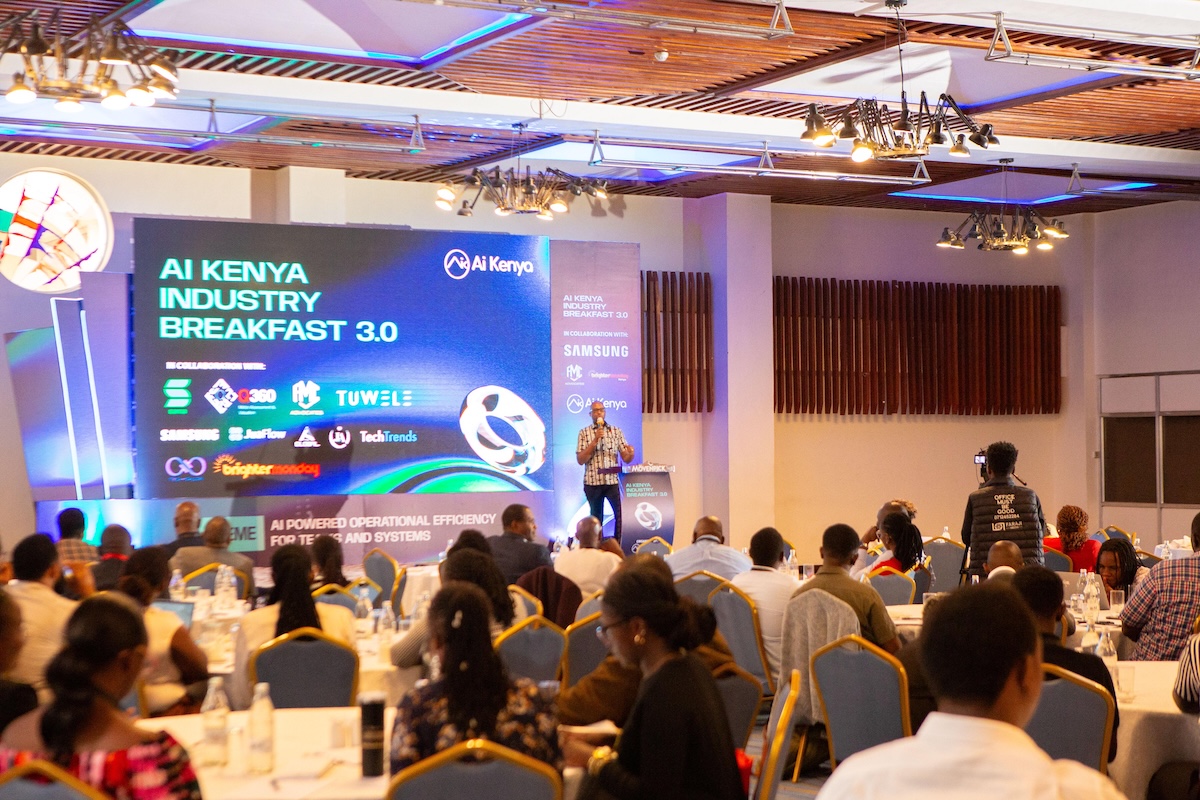
The third edition of the AI Kenya Industry Breakfast has concluded in Nairobi, signaling a growing shift among Kenyan enterprises from experimental Artificial Intelligence (AI) pilots to real-world operational deployment.
Held at the Mövenpick Hotel in Westlands under the theme “AI-Powered Operational Efficiency for Teams and Systems,” the summit convened more than 100 senior decision-makers, including CEOs, CTOs, founders, and government representatives. The event focused on how organizations can translate AI investment into measurable productivity and cost efficiencies across traditional sectors such as banking, manufacturing, logistics, and public service.
Organized by AI Kenya, the breakfast summit has quickly positioned itself as a leading regional forum for enterprise AI adoption. Opening the session, Alfred Ongere, Founder and CEO of AI Kenya, noted that 2026 marks a turning point in how businesses approach AI.
“2026 is the year of Agentic AI,” Ongere said. “These are systems that don’t just generate responses, but execute workflows. We are moving away from pilots and promises. This summit is where AI builders meet strategic businesses to see what is actually working in African operations today.”


Speakers throughout the morning highlighted how AI is already being embedded within Kenya’s economic infrastructure. James Ayugi, CEO of Webmasters Kenya, shared insights into the integration of AI within the government’s eCitizen platform, outlining how automation and intelligent systems are improving efficiency in public service delivery.
Bernard Momanyi, Co-founder of Sanifu AI, alongside Somet Kipchilat, CTO of Quanta 360, discussed the data architecture and processing capabilities required for local enterprises to scale AI workloads sustainably. Their sessions emphasized the importance of robust data pipelines, compute infrastructure, and locally relevant datasets in driving meaningful outcomes.
A key highlight of the summit was the participation of Samsung East Africa, represented by Ryan Mule, Product Manager for Mobile Experience. Mule addressed one of the most common bottlenecks in enterprise AI adoption: enabling a secure, mobile-first workforce. His presentation demonstrated how Samsung’s Knox security platform is being used to support AI-driven mobile workflows, effectively repositioning smartphones as full-scale productivity tools rather than simple communication devices.
Samsung’s involvement reflects a broader strategy to bridge the gap between AI theory and everyday enterprise use. By integrating capabilities such as Galaxy AI into its enterprise ecosystem, the company is positioning itself as a foundational infrastructure partner for organizations navigating digital transformation. This approach aligns with Samsung’s recent launch of the Samsung Innovation Campus at JKUAT, which aims to train 240 Kenyan youths annually in AI and coding skills.
Discussions also focused heavily on computer vision and its immediate impact on asset-intensive industries. Experts highlighted how image-based AI systems are being deployed to improve speed and accuracy in vehicle assessments within the transport and insurance sectors, offering a clear example of specialized AI tools delivering tangible value.
As the summit progressed, regional considerations came into sharper focus. While Kenya benefits from strong fiber connectivity and a growing number of data centers, speakers emphasized that data sovereignty and localization remain critical. Participants argued that for AI to drive inclusive growth, systems must be trained on local languages, operational contexts, and cultural nuances.
The event concluded with a clear message for organizations planning their 2026 strategies: AI adoption must be tightly aligned with defined business outcomes. With industry reports suggesting that nearly 70 percent of Kenyan firms aim to fully adopt AI by the end of the year, speakers warned against what they termed “AI roulette,” where technology investments are made without clear return-on-investment metrics.
The consensus among attendees was that while AI technologies are rapidly advancing, long-term success will depend on human expertise, localized data, and disciplined execution rather than hype alone.
The Ai Kenya Breakfast Summit also featured participation from Sama, Brighter Monday, Horizon offices, among other brands.
[Secure Your Seat at Africa Tech Summit Nairobi 2026 | February 11–12 here] Use code TTRENDS10 at checkout to save 10% on your pass and join the leaders building Africa’s $1 trillion cross-border payment future.
Go to TECHTRENDSKE.co.ke for more tech and business news from the African continent.
Follow us on WhatsApp, Telegram, Twitter, and Facebook, or subscribe to our weekly newsletter to ensure you don’t miss out on any future updates. Send tips to editorial@techtrendsmedia.co.ke