
AWS's $100 million healthcare investment comes as Kenya scales digital health services

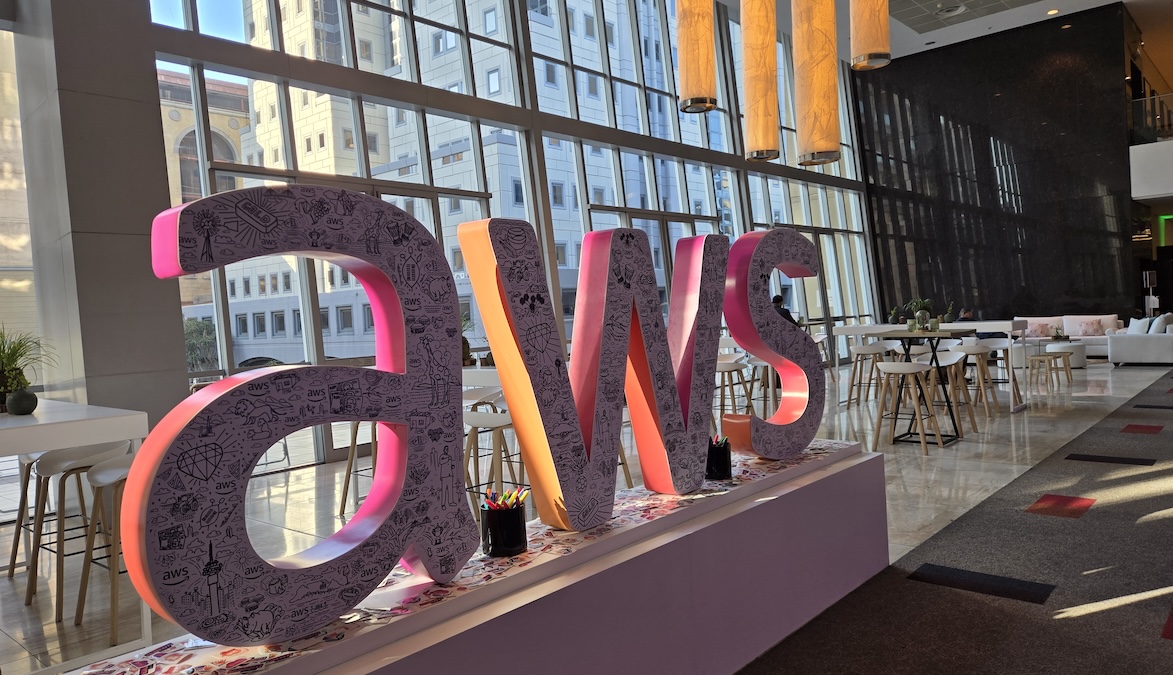
Kenya’s expanding digital healthcare infrastructure provides a useful context for Amazon Web Services’ (AWS) new $100 million commitment to artificial intelligence and cloud computing in healthcare.
The five-year investment will support organisations developing medical services, research applications and food distribution technologies, with a particular focus on underserved communities.
The AWS healthcare AI investment comes as hospitals, research institutions and technology companies look for ways to extend services without relying entirely on additional physical facilities and medical personnel. Its potential applications include patient management, diagnostic support, medical data analysis and automated administrative processes.
The company is making cloud infrastructure, AI tools and agentic AI services available through its AWS Health Impact Initiative. Eligible organisations include healthcare nonprofits, government agencies, research institutions and technology companies. Projects can qualify at different stages, from initial prototypes to applications approaching wider deployment.



The funding also creates an opportunity for organisations that have identified healthcare problems but lack the computing resources required to develop and operate technology solutions. AWS says it has supported more than 600 healthcare organisations across over 80 countries since 2021. Of its previous recipients, 92% focused on improving access to or the quality of healthcare services, while 53% incorporated AI or machine learning.
For AWS, the programme also extends the use of its cloud infrastructure and AI services into a sector where organisations increasingly depend on digital records, remote consultations and large volumes of sensitive information.
Kenya’s healthcare systems are becoming a market for AI infrastructure
Kenya has already begun exploring how AI can support healthcare delivery beyond major hospitals. A programme involving the Ministry of Health and Barcelona-based Causal Foundry, reported by TechTrendsKE in March 2026, sought to put AI-assisted decision-support tools into the hands of community health workers.
The initiative targeted a community health workforce of more than 100,000 Community Health Promoters across the country’s 47 counties. Proposed applications included household data collection, clinical triage, immunisation tracking, prenatal screening and nutrition monitoring.
The programme illustrates a different application of healthcare AI from the development of sophisticated diagnostic systems. Rather than replacing clinical professionals, these tools are intended to help frontline workers collect information, identify potential health concerns and support referrals.
Kenya’s investment in digital healthcare has also involved the infrastructure needed to connect facilities that cannot easily access specialist services.
In Murang’a County, a telemedicine programme involving Paratus Kenya and Starlink connected 170 public health facilities through the Essential Access platform. The rollout was designed to reach approximately 1.2 million residents, particularly in rural communities, by enabling consultations with specialists and the digital sharing of patient information.
The programme included a central telemedicine hub staffed by 15 doctors, with a stated capacity of 450 to 600 patients. Community Health Promoters could also submit information digitally, while medical professionals could review patient records and laboratory results remotely. The county expected another 302 facilities to be connected by the end of 2026.
These deployments demonstrate why access to computing resources is only one component of digital healthcare. Hospitals also need reliable connectivity, functioning devices, trained personnel and systems that can exchange information without interrupting patient care.
AWS is targeting organisations working on some of these problems through its new initiative, although the Kenyan programmes and companies discussed here should not be confused with confirmed recipients of the newly announced funding.
AWS directs funding towards three healthcare priorities
The initiative is organised around healthcare access, medical research involving women and children, and technology addressing access to nutritious food.
The healthcare access component covers community healthcare providers, outpatient services, hospitals, diagnostic testing and medical research. AWS intends to prioritise projects serving rural communities and populations in low- and middle-income countries.
The research component addresses gaps in the evidence available to clinicians treating women and children. AWS cites estimates that only 5% of healthcare research funding goes towards women’s health, while up to half of medicines administered to children lack paediatric clinical validation.
The company is also directing support towards technology that can improve food distribution, forecast food insecurity and expand access to nutritious food.
AWS says malnutrition among pregnant women, breastfeeding mothers and adolescent girls has increased by 25% since 2020 across the 12 countries most affected by the global food and nutrition crisis.
The three priorities broaden the initiative beyond applications that directly involve hospitals. They also create opportunities for research organisations and technology providers working with medical evidence, population health information and food supply systems.
One example is Eve’s Ark, which uses AWS infrastructure to preserve women’s health research data and provide researchers with secure access to datasets that could otherwise become unavailable when laboratories close or research grants expire.
The organisation says it began with a small AWS award and one at-risk dataset. It now preserves more than one petabyte of women’s health data and is developing a secure research environment.
Its co-founder and CEO, Melissa Antal Iftimie, said the loss of research datasets when institutions close or funding ends can deprive scientists of information needed for future discoveries.
The initiative also supports US Hunger, which uses AWS analytics and AI services to coordinate food assistance, healthcare referrals and benefits navigation for families experiencing hardship.
Kenyan health-tech companies are building digital care systems
Several organisations operating in Kenya demonstrate the range of applications emerging around digital patient management, maternal healthcare, medical research and clinical support.
AAR Healthcare is deploying a health management information system across rural hospitals to help healthcare workers manage patient care in economically constrained communities.
Cogni-X Kenya is developing MOYO, an AI-powered wellbeing platform offering round-the-clock emotional support, clinical assessments, self-help resources and crisis triage. The platform can refer users to local helplines when professional assistance is required.
Jacaranda Health uses two-way text messaging to help mothers access healthcare services across sub-Saharan Africa. Its approach illustrates how relatively accessible mobile technology can support communication between healthcare providers and patients.
Proximie is working on surgical workforce development in East Africa through a digital Community of Practice, while Savannah Informatics operates an electronic medical records platform with approximately 350 active users. The company says its systems indirectly reach more than 271,000 people through patient care, data management and health monitoring.
TibERbu Healthnet provides another example of the relationship between cloud infrastructure and healthcare delivery. The company is expanding hospital and pharmacy systems built using Amazon Bedrock across more than 200 facilities that it says serve 30.4 million Kenyans.
These applications do not all use AI in the same way. Some focus on communication and record management, while others incorporate AI-assisted support or cloud-based processing. Their common requirement is dependable technology that can operate within the practical and regulatory conditions of healthcare delivery.
Patient records and cloud costs expose challenges for digital healthcare
Kenya’s experience with Afya.ke illustrates the consequences when healthcare systems lose access to digital platforms.
In October 2026, a dispute between Murang’a County and the Ministry of Health brought the platform’s availability into question. Afya.ke had been used across 165 health facilities in the county to store and retrieve patient information.
The disagreement raised concerns about access to medical histories, continuity of telemedicine services, the migration of patient records and the requirements for integrating independently developed systems with national healthcare infrastructure.
The Ministry maintained that digital health systems required assessment for functionality, data security, privacy and interoperability before approval. Murang’a County also raised concerns about the costs associated with migrating its records.
The dispute provides an important consideration for organisations applying for AWS support. Developing a digital healthcare application is only one part of the investment. Its operators must also maintain access to records, support users, finance continued operations and ensure that patient information remains available when technology arrangements change.
A similar regulatory debate emerged from the Rology Medical Kenya case, which brought questions about licensing, medical data management and the provision of technology-enabled healthcare services before the courts.
Rology disputed suggestions that its platform generated diagnoses through AI, describing its operations primarily as connecting hospitals with qualified radiologists. Its position was that Kenyan practitioners reviewed and validated reports.
The case illustrates why different forms of healthcare technology require distinct oversight. A system that organises patient records carries different clinical responsibilities from one that supports diagnostic decisions or generates medical recommendations.
For AWS, whose initiative includes agentic AI services, these distinctions will matter as healthcare organisations move applications from development environments into operational settings.
Data protection will shape the next stage of healthcare AI adoption
Patient information presents another challenge for organisations using external cloud and AI services. Medical records can contain diagnostic images, treatment histories, laboratory results and other sensitive personal information that requires appropriate safeguards.
TechTrendsKE’s reporting on proposed guidance from Kenya’s Office of the Data Protection Commissioner in August 2026 examined the handling of personal information by offshore AI providers.
The proposals addressed safeguards for international data transfers and the responsibilities of organisations that use overseas technology providers to process personal information.
The issue is relevant to healthcare organisations considering cloud-based AI services because storing or processing information through an external platform does not remove the responsibility to protect that data.
Kenya’s regulatory debate has also extended to wider international healthcare cooperation. A court challenge involving the Kenya-US health framework raised questions about the protection and sharing of patient information, even as implementation was allowed to proceed while the substantive privacy dispute continued.
These developments place greater importance on the contractual, technical and institutional arrangements governing healthcare data. Providers need to establish where information is processed, who can access it and what safeguards apply when third-party systems are involved.
AWS says organisations can apply for support through their AWS account teams or a public application portal. Initial awards of up to $10,000 are available for organisations seeking early assistance, while other allocations are determined according to estimated project requirements.
The credits generally remain valid for 12 months, although extensions can take the maximum period to 24 months. Applicants must explain the problem they intend to address, their proposed solution and the number of people expected to benefit. AWS says applications will be reviewed weekly.
That funding structure makes the period after deployment an important consideration. Organisations that build applications using subsidised cloud resources will still need to finance hosting, security, technical maintenance and regulatory compliance once their credits expire.
AWS’s $100 million commitment could help more healthcare organisations develop and deploy AI-powered services, particularly those that lack the infrastructure to build independently. Whether those systems remain useful to patients will depend on the ability of healthcare providers to maintain them, protect the information they handle and integrate them into existing medical services.
Go to TECHTRENDSKE.co.ke for more tech and business news from the African continent and across the world.
Follow us on WhatsApp, Telegram, Twitter, and Facebook, or subscribe to our weekly newsletter to ensure you don’t miss out on any future updates. Send tips to editorial@techtrendsmedia.co.ke

