Water Purifier Kenya: Health Risks and Home Solutions

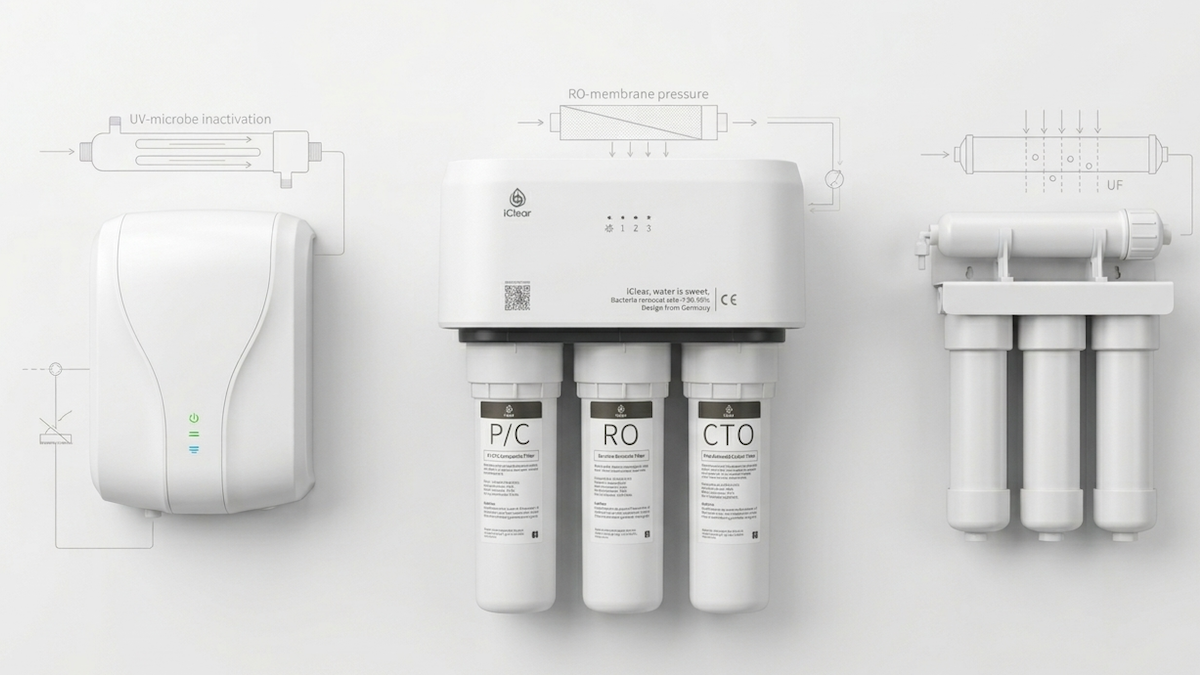
Access to safe drinking water remains a significant public health challenge across Kenya. Many households searching for a water purifier in Kenya are primarily concerned with contaminants such as fluoride, salinity, and microbiological risks in their local water supply. A large proportion of households rely on water sources carrying elevated levels of chemical contaminants, dissolved minerals, or biological pathogens. These risks vary by region depending on geology, infrastructure, and source type, and they affect urban, peri-urban, and rural populations in different but equally serious ways. This article examines the nature of those risks, the documented health consequences, and the household-level purification technologies available in the Kenyan market.
Water Quality Risks by Region
Fluoride Contamination in the Rift Valley
Kenya’s Rift Valley sits above volcanic rock formations that dissolve fluoride into groundwater through mineral weathering and leaching. A peer-reviewed study of Nakuru County boreholes published in Environmental Earth Sciences found that over 87% of sampled boreholes exceeded the WHO guideline of 1.5 mg/L, with fluoride concentrations ranging from 0.5 to 72 mg/L and a mean of 11.08 mg/L.[1] A separate study of the Naivasha catchment recorded groundwater fluoride concentrations between 0.09 and 43.6 mg/L, with 73% of sources exceeding the health limit across both dry and wet seasons.[2] Field analysis by Davis and Shirtliff’s Kenyan water testing laboratory found borehole fluoride levels in Nairobi and the Rift Valley reaching up to 15 mg/L, while Kenya’s 2015 National Oral Health Survey recorded a dental fluorosis prevalence of 41.4% among children nationally.[3] Prolonged exposure to elevated fluoride causes dental fluorosis and, at concentrations above 4 mg/L, skeletal fluorosis, both of which are irreversible once developed.[2]
Salinity and Elevated TDS in Coastal and Peri-Urban Areas
In coastal counties and peri-urban areas such as Syokimau and parts of Machakos, groundwater sources frequently carry high salinity and elevated total dissolved solids (TDS), driven by distinct geological and hydrogeological conditions. Prolonged consumption of high-TDS water has been associated with increased kidney and cardiovascular burden. For households in these areas, untreated borehole water is often the only practical alternative to purchasing bottled water at significant recurring cost.
Microbiological Risk in Urban Areas
Municipal water in Nairobi is treated at source, but distribution system failures including pipe leaks, pressure drops, and cross-connections with sewage infrastructure can reintroduce bacterial contamination before water reaches the household tap. A scoping review published in AAS Open Research confirmed that insufficient or intermittent piped water supply is closely linked to elevated rates of diarrhoea, cholera, and typhoid in urban sub-Saharan African settings including Nairobi.
Comparing Household Water Purification Methods
Several water treatment technologies are available to Kenyan households, each with different capabilities and limitations. Understanding these differences is important for selecting the appropriate solution based on the specific contamination risk of the source water.
Boiling and Chemical Treatment
Boiling is the most widely practised household water treatment method in Kenya and is effective against biological pathogens including bacteria, viruses, and parasites. However, it has no effect on chemical contaminants such as fluoride, dissolved salts, heavy metals, or nitrates. In fluoride-affected areas such as Nakuru, Baringo, and Elgeyo-Marakwet, boiling water may actually concentrate dissolved minerals by reducing water volume through evaporation. Chlorination using products such as WaterGuard similarly addresses microbiological risk but provides no protection against chemical contamination.
Ceramic and Activated Carbon Filters
Ceramic filters and activated carbon units reduce suspended particles and can lower chlorine levels and some organic compounds. They are generally not effective at removing dissolved fluoride, salts, or nitrates, and their performance against viruses is inconsistent depending on pore size and filter integrity. These systems require regular maintenance to avoid recontamination and are best suited to areas where the primary concern is biological rather than chemical.
UV Purification
Ultraviolet (UV) purification uses light at a specific wavelength to inactivate the DNA of bacteria, viruses, and other pathogens, rendering them unable to reproduce. UV systems are highly effective against microbiological contamination and operate without adding chemicals to the water. Like boiling and filtration, however, UV provides no protection against dissolved chemical contaminants. It is most appropriately used in settings where the source water is chemically acceptable but microbiologically unsafe.
Reverse Osmosis
Reverse Osmosis (RO) technology uses a semi-permeable membrane to remove contaminants at the molecular level. RO systems address the full range of Kenya’s documented water quality risks within a single system, covering fluoride, dissolved salts, heavy metals, nitrates, and biological pathogens simultaneously. This makes RO particularly well-suited to areas with complex or multi-contaminant water quality challenges, including the Rift Valley, coastal counties, and peri-urban areas with high-TDS borehole sources. The primary operational considerations are inlet water pressure requirements and the periodic need for filter and membrane replacement.
The Household Purification Market in Kenya
The market for household water purification equipment in Kenya has grown steadily in recent years, driven by increased health awareness, expansion of borehole-dependent peri-urban areas, and falling equipment costs. The African water purifier market was valued at approximately USD 377.5 million in 2020 and is projected to grow at a compound annual growth rate of 7.7%, with RO purifiers representing the fastest-growing technology segment across the continent.[6]
A number of companies supply RO-based water purification systems to the Kenyan domestic and commercial market. Established players include Davis and Shirtliff, which has operated in Kenya’s water sector for over 70 years and offers a broad portfolio of treatment systems; Watertech, a Kenya-based manufacturer of RO purifiers operating since 2015; AquaSure Kenya, which provides RO and UV systems to residential and commercial clients; and Kridha Limited, which has focused on water treatment solutions in Kenya for over two decades. The market also includes international product distributors such as Lotus Africa, which supplies systems from global brands including KENT.
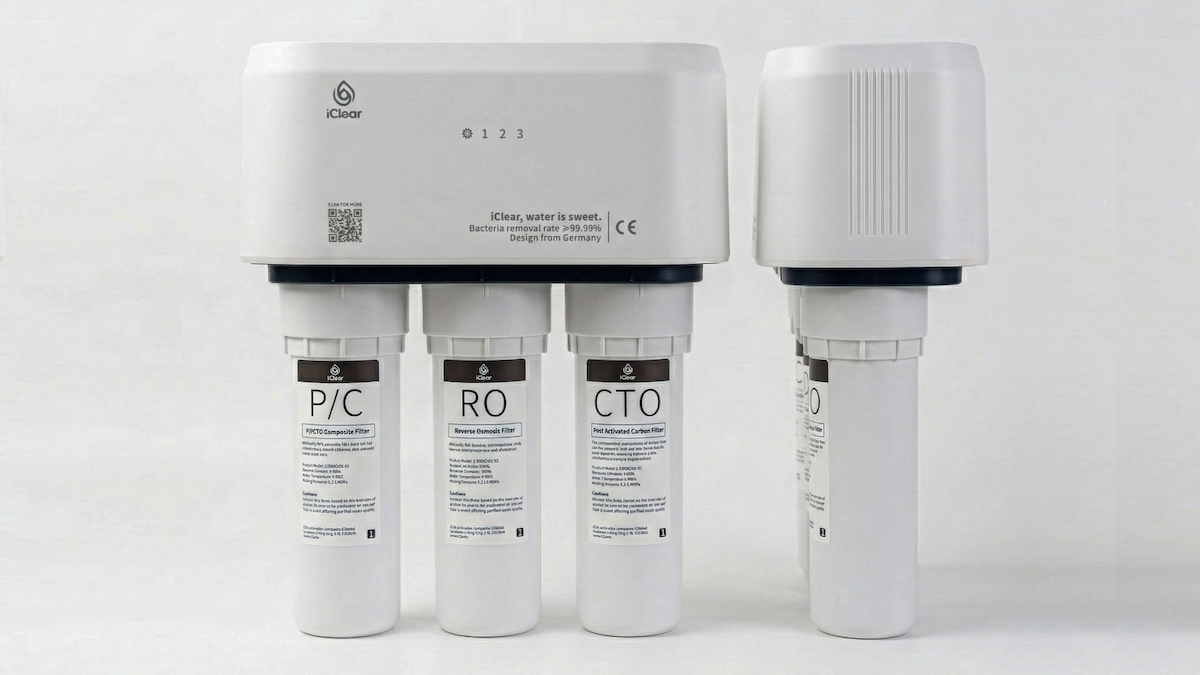
In addition to these established providers, newer entrants have introduced more service-oriented delivery models, particularly around RO-based systems for households and offices. Some companies, including iClear Water (iClear Wellife Service Limited), have incorporated leasing and maintenance-inclusive options in selected segments, alongside conventional purchase-based models.
Selecting the Right System for Your Water Source
The appropriate water purification technology depends on the specific contaminants present in the source water. Households in the Rift Valley facing high-fluoride borehole water require a system capable of fluoride removal at the molecular level, for which RO is the most effective point-of-use option available. Households in coastal or peri-urban areas dealing with high salinity similarly require a system rated for dissolved salt removal. For households on municipal supply where the primary risk is microbiological, UV or a combination of UV and carbon filtration may be adequate, although RO addresses both chemical and microbiological risks simultaneously.
In all cases, consumers are advised to have their source water tested before selecting a purification system. KEBS certification is a baseline quality indicator for any purification equipment purchased in Kenya. Products without KEBS certification have not been assessed against Kenya’s mandatory health and safety standards and carry undefined performance risks.
Cost Considerations
A household spending Ksh 3,000 per month on bottled water accumulates Ksh 36,000 in annual expenditure. A household consuming one 20-litre container per week at approximately Ksh 1,200 per unit spends over Ksh 62,000 annually. This cost structure has driven growing adoption of RO systems among Kenyan households seeking a long-term alternative to bottled water.
Conclusion
Kenya’s water quality risks are geographically varied, chemically complex, and carry measurable long-term health consequences. Boiling and basic filtration remain the most common household responses but are insufficient where chemical contamination, particularly fluoride, is the primary concern. Reverse Osmosis technology addresses the full range of documented risks and is now available through a growing number of Kenyan providers at price points competitive with medium-term bottled water expenditure. Consumers are advised to verify their source water quality, confirm KEBS certification for any equipment purchased, and evaluate long-term costs before selecting a purification method. Consumers can also compare certified providers based on service coverage, maintenance support, and suitability for their specific water conditions.
Frequently Asked Questions
Is RO water safe to drink in Kenya?
Yes. Reverse Osmosis water that has passed through a properly maintained, KEBS-certified system is safe to drink. RO membranes remove contaminants at the molecular level including fluoride, bacteria, viruses, heavy metals, and dissolved salts. Some RO systems include a remineralisation stage to restore trace minerals to the treated water, which can be beneficial for long-term daily consumption.
How do you remove fluoride from drinking water in Kenya?
Reverse Osmosis is the most effective point-of-use method for fluoride removal and is widely recommended in high-fluoride areas such as Nakuru, Baringo, and Elgeyo-Marakwet. Boiling, chlorination, UV treatment, and standard carbon filters do not remove fluoride. Activated alumina filters can reduce fluoride levels but are less commonly available for household use in Kenya than RO systems.
What is the best water purifier in Kenya for borehole water?
For borehole water, particularly in areas with high fluoride, salinity, or elevated TDS, an RO-based purifier is generally the most appropriate choice as it removes the widest range of dissolved contaminants. Several companies supply KEBS-certified RO systems in Kenya, including Davis and Shirtliff, iClear Water and Watertech among others. The appropriate model depends on household size, source water TDS levels, and available water pressure.
What is the difference between RO and UV water purification?
UV purification uses ultraviolet light to inactivate biological pathogens such as bacteria and viruses. It does not remove chemical contaminants including fluoride, nitrates, or dissolved salts. RO uses a membrane filtration process that removes both chemical and biological contaminants. In areas where both chemical and microbiological risks are present, some systems combine RO membranes with UV stages for comprehensive treatment.
How much does a water purifier cost in Kenya?
Household RO water purifiers in Kenya range in price from approximately Ksh 29,000 to Ksh 60,000 for domestic models, depending on capacity, brand, and features. Commercial systems for offices and larger premises are priced higher. Many suppliers include installation in the purchase price, and some offer service and maintenance packages. Prices should be verified directly with certified suppliers as they vary by model and may change over time.
Go to TECHTRENDSKE.co.ke for more tech and business news from the African continent and across the world.
Follow us on WhatsApp, Telegram, Twitter, and Facebook, or subscribe to our weekly newsletter to ensure you don’t miss out on any future updates. Send tips to editorial@techtrendsmedia.co.ke