How M-PESA Optimization is Localizing Liquidity for Kenyan Traders

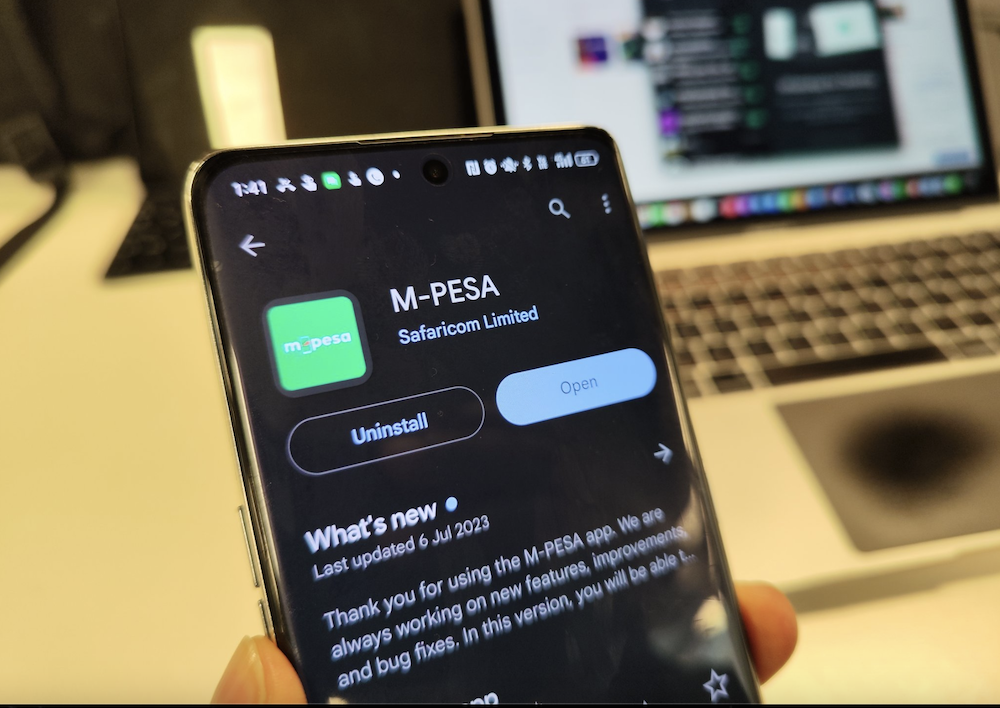
For years, participating in the global forex market meant playing by the rules of the US dollar and the SWIFT banking system. Kenyan retail traders faced a frustrating reality where depositing funds meant enduring steep currency conversion fees from local banks, and withdrawing profits required waiting days for offshore funds to clear through correspondent networks.
Today, that friction is vanishing. Driven by aggressive optimizations in Safaricom’s M-PESA API architecture and the rise of local payment aggregators, global forex brokers are fundamentally restructuring how they handle capital in Kenya. They are shifting from offshore dependency to localized liquidity, reshaping the East African trading landscape in the process.
The transformation is rooted in the evolution of Safaricom’s Daraja API, particularly the recent rollouts of Daraja 3.0 and Fintech 2.0, which scaled the network’s capacity to handle thousands of transactions per second. This infrastructure allows payment gateways and dedicated forex aggregators to build direct, high-speed bridges between trading terminals like MetaTrader and traders’ mobile wallets.
Instead of routing every micro-deposit through international banking rails, these API optimizations allow brokers to settle transactions locally. When a trader deposits or withdraws, the transaction is executed against a pool of Kenyan Shillings held by the broker or their regulated liquidity provider right here in Nairobi. Advanced API webhooks instantly verify M-PESA Customer-to-Business (C2B) deposits, allowing trading accounts to be credited in milliseconds, day or night.

Conversely, Business-to-Consumer (B2C) integrations enable brokers to process withdrawal requests programmatically. The system bypasses manual financial department reviews for standard retail amounts, pushing funds directly to the trader’s phone.
“Kenya’s evolution toward localized liquidity represents a structural shift in how retail traders access global markets. By integrating directly with optimized M-PESA infrastructure and maintaining local liquidity pools, brokers can significantly reduce friction, eliminate unnecessary costs, and deliver near-instant settlement. For traders, this means greater capital efficiency, faster execution during high-volatility events, and improved cash-flow management. Localized payment architecture is not just a convenience feature it strengthens trust, enhances transparency, and supports a more resilient trading ecosystem aligned with the needs of the Kenyan market,” says Terence Hove, Senior Financial Markets Strategist at Exness.

Why Local Liquidity is a Game-Changer
By maintaining local KES liquidity pools, brokers licensed by the Capital Markets Authority (CMA) such as Exness, are unlocking massive operational and financial advantages for their clients. The most significant benefit is the elimination of the dreaded conversion tax. Historically, traders deposited KES, which a bank converted to USD at a premium, only to convert it back to KES at a lesser rate upon withdrawal. Localised liquidity enables brokers to offer base-currency accounts in KES, thereby entirely neutralising exchange rate spread losses for retail traders.
Uninterrupted market access is another critical advantage. In highly volatile events, such as a sudden central bank interest rate decision or a Non-Farm Payroll release, traders need to fund their accounts immediately to capitalize on moves or avoid margin calls. M-PESA’s instant clearing ensures traders are never locked out of the market due to traditional banking delays. Furthermore, because the cost of processing a local M-PESA transaction is pennies compared to a standard SWIFT wire fee, brokers can profitably support micro-deposits as low as KES 1,300. This drastically lowers the barrier to entry for a new generation of traders.
Liquidity localization goes beyond convenience for the trader; it serves as a primary retention strategy for the broker. Industry analysts in Nairobi note that when a broker holds funds locally and connects to M-PESA via robust APIs, the trader experiences zero friction. In the retail trading world, speed equates to trust. If a trader can pull their profits in five seconds while waiting for their coffee at a Restaurant in Kenya’s Central Business District (CBD), they are highly unlikely to switch to an offshore broker that forces them to wait three business days.
As Kenya continues to champion digital finance frameworks, echoed in the National Financial Inclusion Strategy for 2025 to 2028, the synergy between mobile money and retail capital markets will only deepen. Safaricom’s recent moves to integrate trading services directly into M-PESA via mini-apps signal a broader merging of telecommunications and investment infrastructure. The localized liquidity model pioneered in Kenya is no longer just a regional quirk; it is increasingly viewed as a blueprint for other emerging markets across Africa, proving that accessing global financial markets no longer requires relying on slow global banking rails.
Go to TECHTRENDSKE.co.ke for more tech and business news from the African continent and across the world.
Follow us on WhatsApp, Telegram, Twitter, and Facebook, or subscribe to our weekly newsletter to ensure you don’t miss out on any future updates. Send tips to editorial@techtrendsmedia.co.ke