
Kenya’s Venture Scene Finds Its Nerve Again With Delta40’s New Fund
Capital is returning to African startups with less patience for narrative and more attention on execution, as Delta40 places early bets on founders expected to build through tighter conditions and longer timelines

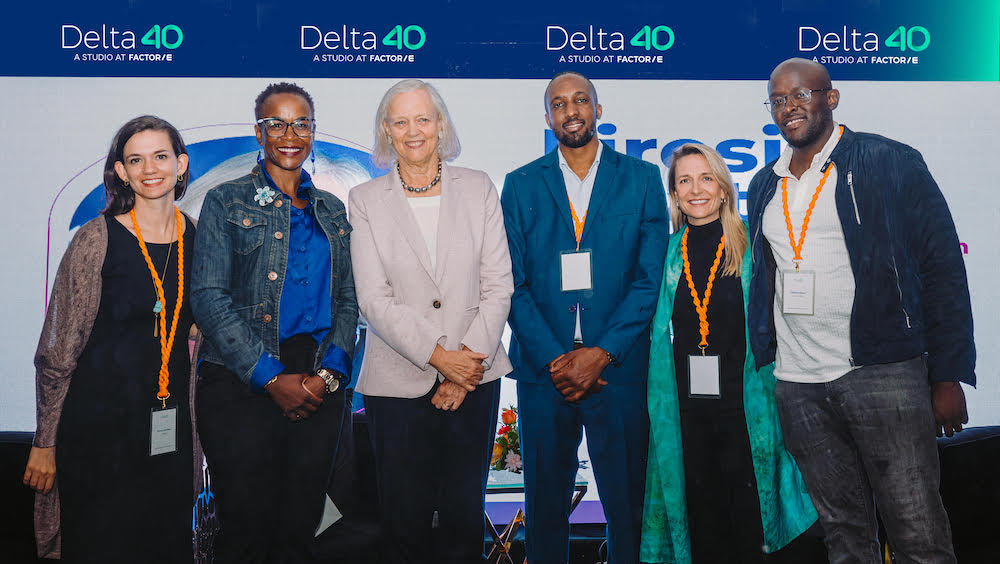
Venture capital conversations around African startups has for years leaned on expansion stories. Larger rounds, faster growth, new capital entering unfamiliar markets. The tone has changed. Money is still moving, but the language around it sounds more cautious, almost procedural. Delta40’s $20 million raise sits inside that change rather than outside it.

The Kenyan venture capital firm is positioning itself at the earliest point in company formation, where risk is highest and valuations remain negotiable. Its model blends capital with operational involvement through a venture studio structure, an approach that has gained traction in markets where founders often build without deep institutional support. The premise is straightforward. Capital alone has not solved execution problems across African startups. The argument now is that proximity and involvement might.
The investors backing the fund reflect another layer of the moment. Development finance institutions, philanthropic capital, foundations and private investors appear alongside startup founders themselves. That mix says something about how risk is currently being distributed. Commercial returns remain part of the equation, but so does long-term market formation. The line between investment and development policy has become less distinct.
Venture Studios and the Search for Control
The venture studio model tends to appear during periods when investors want more influence over outcomes. Rather than funding companies after they have taken shape, studios intervene earlier, sometimes helping define the business itself. In African markets, where infrastructure gaps often dictate business models more than customer demand, that level of involvement can look less intrusive and more practical.


Delta40’s approach reflects that logic. Initial investments between $100,000 and $500,000 target idea-to-seed stage companies across energy, mobility, agriculture and fintech. Artificial intelligence appears less as a standalone sector and more as an embedded layer, integrated into existing industries rather than treated as an independent opportunity.
This approach also reflects investor memory. The funding slowdown in 2023 exposed how fragile some growth assumptions had been. Rising interest rates and currency pressures forced international capital to retreat, leaving startups to confront unit economics earlier than expected. Venture studios promise a way to manage those risks before they compound.

Still, the model carries tension. Close operational involvement can strengthen early execution, but it also concentrates decision-making power. Founders gain support while surrendering a degree of autonomy. Whether that trade-off produces stronger companies or simply more controlled ones remains unresolved.
Kenya’s Position in a Reordering Market
Kenya’s venture environment has retained momentum even as continental funding cooled. Startups in the country raised $984 million in 2025, accounting for 32 percent of the $3.2 billion deployed across Africa. Large energy deals drove much of that volume, reinforcing a broader pattern in which infrastructure-adjacent sectors attract capital more reliably than consumer-focused ventures.
Eastern Africa’s share of venture funding reached 34 percent during the same period, placing the region ahead of Western, Northern and Southern Africa. That distribution reflects both investor familiarity and regulatory predictability. Kenya’s ecosystem has matured into a staging ground where investors can test models intended for wider regional expansion.
Delta40’s strategy aligns with that reality. Its portfolio already spans 30 African countries, including companies such as Gridless and Lori Systems. Expansion beyond Kenya is built into the investment logic from the beginning rather than treated as a later ambition. Pan-African scale has become less of a slogan and more of a structural requirement for venture returns.
Capital Returns With Different Expectations
The reappearance of capital does not mean a return to earlier optimism. Investors now talk more about operational depth than rapid scale. Growth remains important, but durability has taken precedence. That emphasis is visible in sectors attracting attention. Energy, agriculture and logistics address constraints that persist regardless of economic cycles.
Artificial intelligence sits within this framework differently than in previous technology cycles. Instead of attracting funding on narrative alone, it is increasingly framed as an efficiency layer inside existing industries. The question is less about building AI companies and more about whether AI lowers costs or expands margins in sectors already under pressure.
There is also a broader institutional question beneath the funding numbers. Development finance institutions and philanthropic capital continue to anchor early-stage investment across Africa. Their presence stabilizes funding during downturns but also raises questions about long-term independence. If early capital depends heavily on mission-driven investors, the path toward fully commercial venture ecosystems becomes more complex.
Founders Backing Founders, and the Limits of Familiarity
Delta40’s emphasis on founder participation in its investor base reflects another recurring idea in African venture capital. Experience circulates within relatively small networks. Founders who have exited reinvest into the next generation, carrying lessons from earlier cycles. The model builds continuity, but it can also reinforce consensus thinking.
African startup ecosystems have often struggled with overconcentration around familiar sectors and business models. Logistics, payments and energy infrastructure dominate because they address visible constraints. Less obvious opportunities receive less attention, particularly when capital becomes cautious. The risk is not lack of funding, but lack of experimentation.
At the same time, founder-led investment networks can correct earlier excesses. Entrepreneurs who have navigated operational challenges tend to apply stricter discipline than distant investors chasing growth narratives. That dynamic may explain why newer funds emphasize operational involvement rather than passive capital deployment.
The Longer Arc Behind the Funding Cycle
Delta40’s raise arrives at a point when African venture capital appears to be stabilizing rather than accelerating. Funding levels remain below the highs of 2022, yet the structure of investment looks more deliberate. Smaller initial cheques, tighter follow-on criteria and closer investor participation point toward a slower build.
Whether that produces stronger outcomes will depend less on funding totals and more on execution across sectors that rarely attract headlines. Energy distribution, agricultural supply chains and mobility infrastructure do not scale quickly, but they tend to persist once established. Investors appear increasingly comfortable with that trade-off.
The larger question is whether this period produces companies capable of surviving beyond cycles of foreign capital inflows. If venture studios succeed, they may reduce dependence on external momentum by embedding operational discipline early. If they fail, the ecosystem risks repeating familiar patterns with different structures attached.
For now, Delta40’s $20 million raise reads less as a milestone and more as a marker of mood. Capital has returned, but with restraint. The ambition remains. The terms have changed.
Go to TECHTRENDSKE.co.ke for more tech and business news from the African continent and across the world.
Follow us on WhatsApp, Telegram, Twitter, and Facebook, or subscribe to our weekly newsletter to ensure you don’t miss out on any future updates. Send tips to editorial@techtrendsmedia.co.ke


