
Inside the Africa Tech Summit Investment Showcase, Where Growth Talk Met Cash Flow Reality
Founders came prepared to talk about scale, yet the discussion kept returning to margins, timelines, and the cost of getting paid late

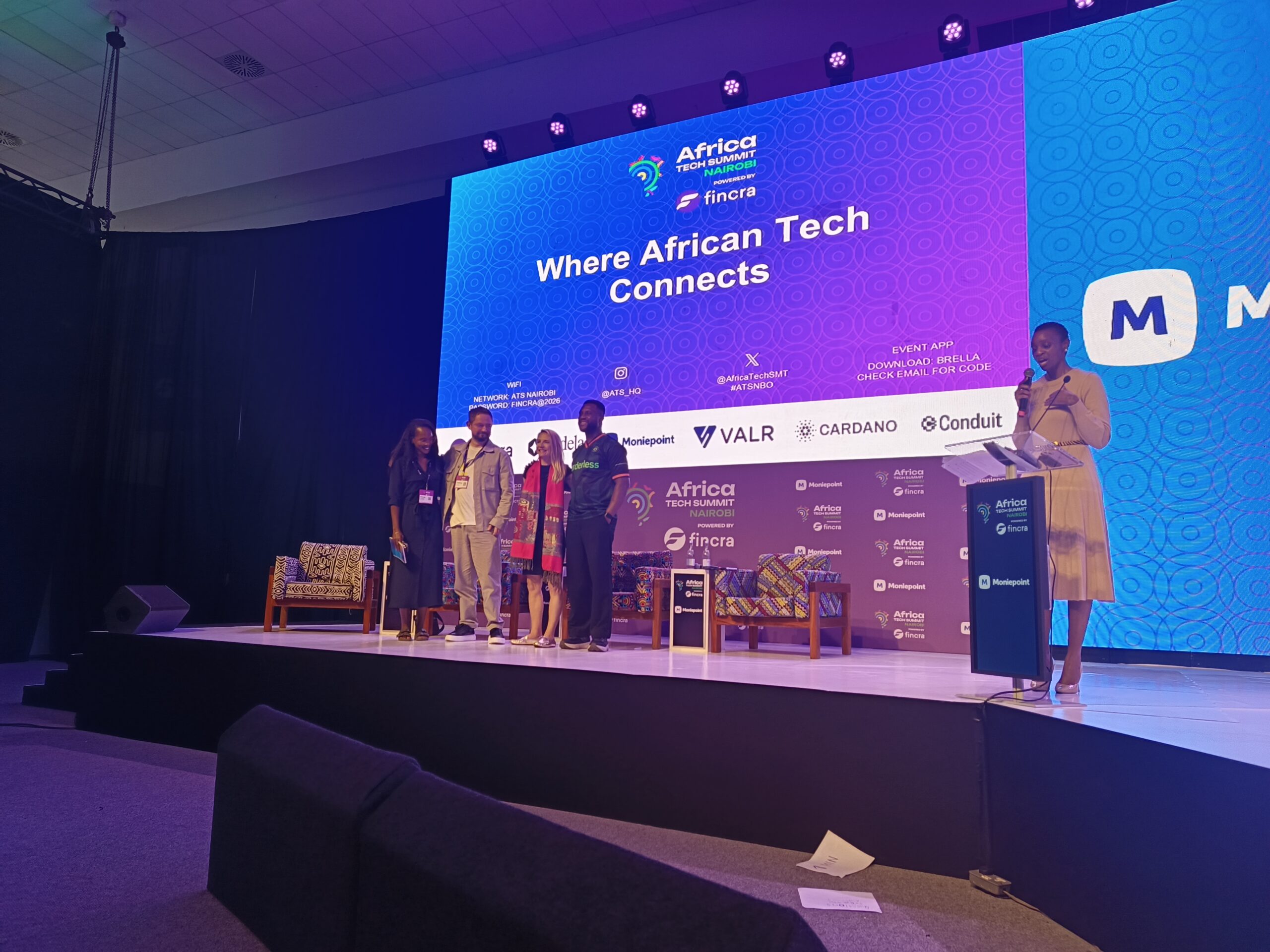
Last evening, the Moniepoint Stage at Africa Tech Summit moved from polite introductions to something closer to a stress test.

Nonnie Wanjihia Burbidge of Enza Capital, Vladimir Dugin of E3 Capital, Lyndsay Handler of Delta40 Studio, and Joe Kinvi of Borderless were not there to trade optimism. They were there to price risk. Their firms span early stage venture, climate and energy capital, venture studio building, and syndicate infrastructure. Different mandates, same concern: durability.
Jason Carmichael of Tibu Health stood up to make the case that primary care in Africa does not need more buildings. It needs better placement. A few minutes later, Alaa Afifi of Bekia argued that waste is less a sanitation problem than a data and routing problem. Then came Chefaa’s Rasha Rady, mapping Egypt’s 90,000 pharmacies into a single digital grid. Hizo Africa and Niteon followed with financial infrastructure plays aimed at manufacturers and cross-border trade.
On paper, these are unrelated sectors. In practice, they are variations on one theme: distribution is king, and capital is cautious.


Africa Tech Summit did not produce spectacle. It revealed discipline.
Healthcare without new buildings
Carmichael began with a blunt observation. In Kenya, roughly 60% of patients start at a pharmacy when they feel unwell. Not a hospital. Not a specialist clinic. A pharmacy.

Tibu Health’s model follows that behavior rather than trying to change it. The company embeds “Minute Clinics” inside existing pharmacies and supermarkets. Setup cost per location is about $5,000. The retail partner pays for retrofitting. Tibu avoids rent and electricity costs. In return, the pharmacy keeps prescription revenue while Tibu collects clinical fees.
The economics are not theoretical. Carmichael told investors the clinics can pay for themselves within 6 weeks. Gross margins average about 60%. The company works with 28 insurance providers. It has 7 operational sites and expects 10 by the following month, with a target of 20 to 25 within the year, though he made clear he is not chasing expansion for its own sake.
There was no bravado about hypergrowth. In fact, the opposite. He spoke about almost going bankrupt after investing in heavy infrastructure post-COVID. Physical clinics ramp slowly. Healthcare revenue grows linearly, not exponentially. He learned the hard way.
The adjustment was practical. Co-locate. Reduce capital expenditure. Push higher margin services into a central hub. Avoid public payer bottlenecks when cash flow risk is too high. Tibu is accredited with SHIF, the successor to Kenya’s National Health Insurance Fund, but does not actively serve those patients yet due to delayed reimbursements. The working capital burden would be too heavy.
That comment landed harder than any growth claim. In this room, liquidity is not a footnote. It is survival.
Waste, data, and the long road to B2B margins
Bekia’s pitch from Egypt followed a similar arc, though the surface narrative was different. Afifi described a continent generating 280,000 tons of waste annually, with recycling rates as low as 4% in some markets. In Egypt alone, he cited 100 million tons of waste per year and 15,000 tons daily in Cairo.
The early vision leaned on consumers downloading an app and earning money for recyclables. It worked to a point. But inflation, logistics costs, and informal competition ate into margins. Afifi was candid about it. B2C proved expensive.
The company’s revenue mix has since tilted toward corporate clients. He said 85% of revenue now comes from B2B. Corporates use Bekia’s SaaS tools for waste tracking, carbon reporting, and regulatory compliance. Revenue from raw material resale remains part of the model, but enterprise contracts bring steadier cash flow.
An investor on stage pressed the uncomfortable question many funds ask privately: without strict regulation, waste management margins are thin. In Europe and parts of Asia, policy drives profitability. In African markets, enforcement can be uneven.
Afifi’s answer was pragmatic. Focus on enterprise demand. Sell reporting and data access. Monetize logistics efficiency. In other words, treat regulation as a tailwind where it exists, not as the sole engine.
He is raising $1 million to scale technology and operations. That number is modest by recent standards. It also reflects current investor appetite. Capital is available, but it is not indulgent.
The pharmacy grid no one sees
Rasha Rady’s Chefaa pitch tackled fragmentation from another angle. Egypt has more than 90,000 pharmacies, most operating with disconnected inventory systems. Patients cannot see stock in real time. Manufacturers lack reliable demand data. Insurers face fraud and misuse risks.
Chefaa began as an e-pharmacy interface. Patients upload prescriptions, are routed to the nearest pharmacy using GPS, and choose delivery options. The model earns through commission or retainer arrangements. Over time, the company layered analytics, subscription data for pharmaceutical manufacturers, and eventually a fintech component supplying inventory to partner pharmacies based on predicted demand.
The growth numbers were not splashed across slides in dramatic fashion. Instead, Rady emphasized structural access. Chefaa graduated from Google’s accelerator in 2021. It now works toward becoming a digital arm supporting Egypt’s Universal Health Insurance framework.
The arc mirrors Tibu’s experience. COVID boosted online pharmaceutical sales. When the surge faded, the company expanded into supply chain finance and data monetization. Not because it sounded innovative, but because churn forced adaptation.
What emerges is less about e-commerce and more about interoperability. Africa Tech Summit did not spotlight flashy consumer apps. It showcased companies stitching fragmented systems together, often in unglamorous ways.
Trade finance and the search for sturdier rails
The later pitches from Niteon and Hizo Africa extended the pattern beyond health and waste. Trade finance, cross-border manufacturing, and pan-African banking remain constrained by fragmented payment systems and liquidity gaps.
While details varied, the premise was familiar. Build infrastructure that manufacturers and SMEs can rely on. Reduce friction in settlements. Provide clearer rails for capital movement.
These are not new ideas. What felt different was tone. Founders spoke less about exponential user growth and more about contracts, recurring revenue, and capital efficiency. Investors asked about unit economics and regulatory exposure before they asked about total addressable market.
Africa Tech Summit has always mixed ambition with realism. This year, realism dominated.
From expansion fever to margin arithmetic
The funding cycle across African tech changed sharply after 2022. Venture capital volumes contracted. Valuations corrected. Bridge rounds replaced splashy Series A announcements.
That context hung over the Moniepoint Stage even when it went unspoken. Founders referenced profitability, operator ratios, and cash flow timelines. Tibu said it was about $10,000 away from being consistently cash flow positive. That level of specificity would have felt almost defensive in 2021. In 2026, it reads as responsible.
Investors on the panel did not indulge projections detached from operating history. They asked about working capital constraints, inflation exposure, and regulatory environments. When Bekia was challenged on unit economics in weak regulatory settings, the question was not rhetorical. It was core to investment committee discussions.
Africa Tech Summit revealed a maturing venture ecosystem that now treats capital as finite rather than abundant.
Distribution as the new moat
Across healthcare, waste, pharma, and fintech, one theme repeated. Do not build what already exists. Embed within it.
Tibu leverages 30,000 plus pharmacies in Kenya rather than constructing new clinics. Chefaa integrates existing pharmacies instead of replacing them. Bekia outsources logistics instead of owning fleets. Hizo works within existing financial systems to extend reach.
Distribution networks, not software alone, are the defensible layer. Africa’s markets are fragmented. Physical presence and trust are hard earned. Startups that acknowledge that constraint tend to last longer.
The deeper implication is institutional. African venture is moving away from transplanting Silicon Valley growth scripts and toward models that respect local infrastructure realities. That does not mean smaller ambition. It means ambition grounded in cash flow.
If this discipline holds, future Africa Tech Summit stages may look less theatrical and more operational. Founders will arrive with fewer grand claims and more spreadsheets. Investors will continue asking about margins before vision.
For an ecosystem that once chased valuation headlines, that restraint may prove healthier than any surge of capital.
Go to TECHTRENDSKE.co.ke for more tech and business news from the African continent and across the world.
Follow us on WhatsApp, Telegram, Twitter, and Facebook, or subscribe to our weekly newsletter to ensure you don’t miss out on any future updates. Send tips to editorial@techtrendsmedia.co.ke


