
The Infrastructure Question Sitting Under African Fintech
Africa talks integration with confidence, but the daily work of moving money between neighbors still feels heavier than it should

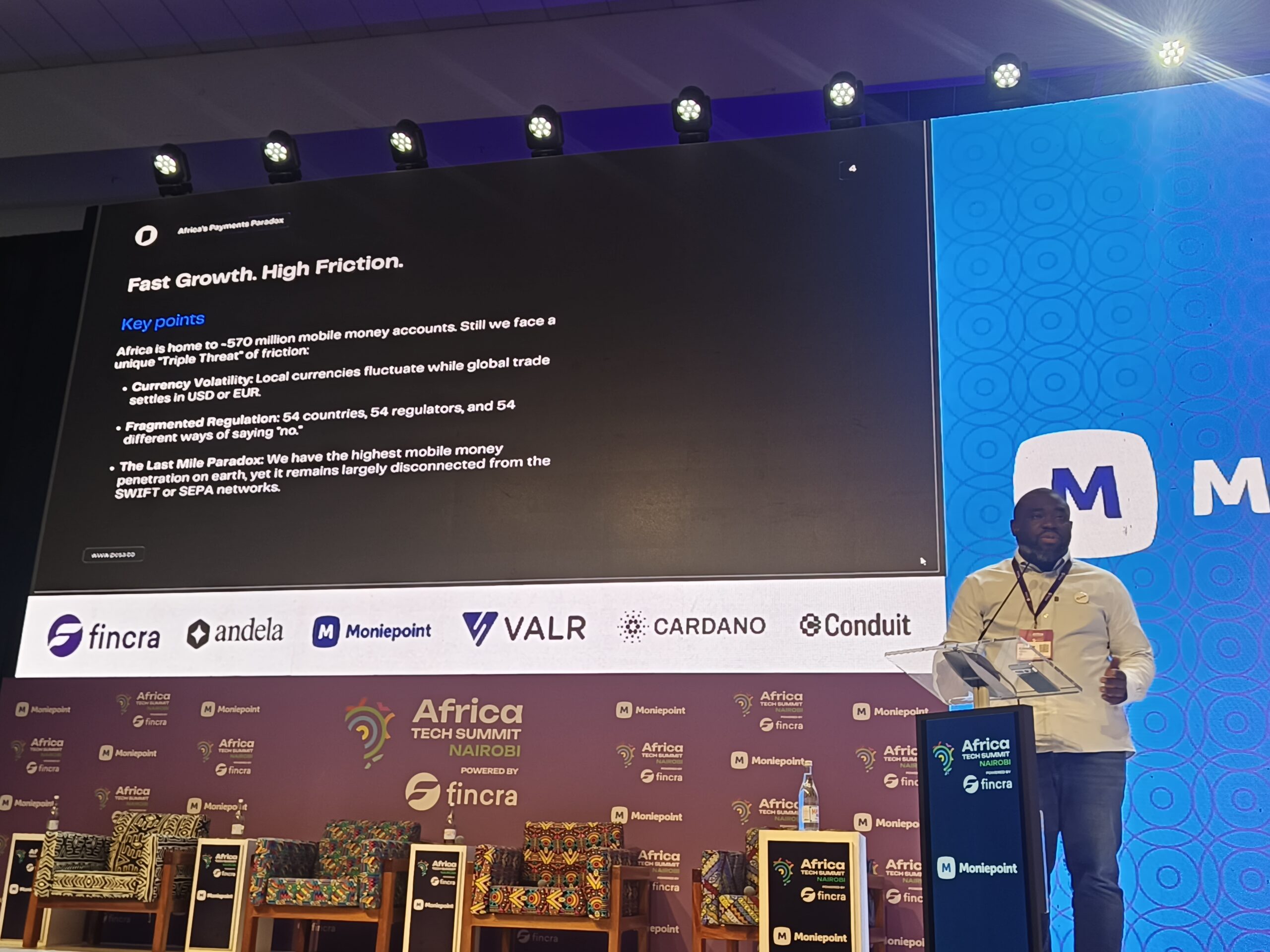
The conversation around African payments often begins with ambition. Integration, digital finance, continental trade. Yet the practical experience remains stubbornly physical. Money slows down at borders. Settlement stretches. Exchange rates move while transactions wait. Businesses adjust prices not because demand changes but because time does.

At the Moniepoint Stage during Africa Tech Summit Nairobi, Adewale Afolabi, CTO and co-founder of Pesa, described a problem that has outlived several waves of fintech optimism. Moving money across African borders still carries friction that companies elsewhere stopped thinking about years ago. The difficulty is not only technological. It sits in liquidity constraints, regulatory fragmentation, and the basic mechanics of settlement across jurisdictions.
That reality shapes trade long before it shows up in policy speeches.
A business in Lagos selling to Nairobi is already operating internationally, whether it frames itself that way or not. Customers, suppliers, and partners exist across multiple currency regimes. Payments infrastructure becomes the invisible constraint on growth. When settlement drags, risk accumulates. Margins thin. Decisions become defensive.

The conversation has matured. The question is no longer whether digital payments exist. It is whether they function well enough to support trade at scale.
Fragmentation as the default condition
Africa’s payments environment reflects history more than design. Fifty-four countries, distinct regulatory expectations, uneven banking infrastructure, and currencies exposed to external pressure. The result is a system where interoperability is negotiated corridor by corridor rather than assumed.

Afolabi framed fragmentation as both regulatory and infrastructural. Integrations multiply. Redundancies become necessary. Systems require backups for their backups because reliability cannot be assumed across every network involved in a transaction.
This produces a familiar contradiction. Local payments inside many markets have improved dramatically over the past decade. Cross-border transactions have not advanced at the same pace. The last mile still determines success or failure. Delivery to a mobile wallet or bank account remains uneven across corridors, even when the initiating system functions smoothly.
There is also a political dimension that rarely receives sustained attention. Financial systems mirror national priorities. Regulators are accountable domestically, not continentally. Alignment happens slowly. Businesses, meanwhile, operate in real time.
The gap between those timelines defines much of the friction.
Liquidity, compliance, and the unseen cost of delay
Payments infrastructure conversations tend to gravitate toward speed. Instant settlement has become the aspirational endpoint. The more revealing issue is liquidity. Transactions fail or stall not because systems cannot transmit information, but because funds are not positioned where they need to be when settlement occurs.
Pesa’s argument centers on liquidity engines and corridor coverage as foundational layers rather than product features. Without available liquidity, settlement stretches into days. In volatile currency environments, delay becomes cost. Afolabi cited cases where businesses could lose as much as 35% of revenue through depreciation and settlement lag combined, a figure that reframes payments delays as operational risk rather than inconvenience.
Compliance sits alongside liquidity in shaping outcomes. Cross-border payments carry documentation requirements that differ by jurisdiction. Inconsistent standards slow processing. Financial institutions err toward caution. Transactions pause for verification. From the outside, the delay looks technical. In practice, it reflects institutional risk management.
The ambition to move money at near real-time speeds, described as T+0 settlement, therefore depends less on software and more on coordination between regulators, banks, and infrastructure providers.
Trade first, payments second. Or perhaps the other way around
A recurring idea surfaced during the session. Trade cannot expand without reliable settlement. It sounds obvious. In practice, payments infrastructure often trails commercial activity rather than enabling it.
African trade projections continue to rise, driven by intra-continental commerce and digital marketplaces. Yet settlement inefficiencies mean businesses frequently rely on workarounds. Offshore accounts, intermediary currencies, informal reconciliation processes. These solutions function, though inefficiently. They also reinforce dependency on external financial systems.
The emergence of infrastructure players positioning themselves as connectors between African networks and global payment rails reflects this tension. Integration with systems such as SEPA, FPS, or real-time payment networks outside the continent introduces speed but also raises questions about dependency. Does global connectivity strengthen local systems, or does it bypass the incentive to harmonize internally?
There is no settled answer. Both outcomes can exist simultaneously.
The politics of interoperability
Efforts such as PAPSS under the African Union attempt to standardize cross-border settlement within the continent. Private infrastructure providers approach the problem differently. They build bridges first, often connecting external systems before internal alignment is complete.
That approach carries its own logic. Businesses cannot wait for institutional consensus. Commerce moves where friction is lowest. Infrastructure follows demand.
Still, interoperability introduces trade-offs. A unified integration layer simplifies access for businesses, yet it concentrates operational responsibility within fewer intermediaries. Trust becomes critical. So does regulatory oversight.
The long-term structure of African payments may depend less on technology choices and more on governance. Who controls settlement pathways. How disputes are resolved. Which standards become default.
Those questions remain open.
Payments as infrastructure, not product
The language around fintech has changed. Earlier cycles emphasized access and inclusion. Current discussions lean toward reliability and scale. Less emphasis on user interfaces, more on the plumbing beneath them.
Afolabi described Pesa’s trajectory from peer-to-peer payments toward infrastructure provision, reflecting a broader pattern across the sector. Consumer-facing innovation reaches saturation quickly. Infrastructure problems persist longer because they sit at the intersection of finance, regulation, and trade policy.
Businesses ultimately require predictability. They need payments that settle when expected, at costs that remain stable long enough for planning. When that foundation exists, commerce expands almost automatically. When it does not, growth becomes episodic.
The conversation at Africa Tech Summit did not present a finished model for continental payments. It revealed something more useful. The recognition that payments infrastructure now sits at the center of Africa’s economic conversation, not at its edges.
Trade follows settlement. The rest tends to fall into place afterward.
Go to TECHTRENDSKE.co.ke for more tech and business news from the African continent and across the world.
Follow us on WhatsApp, Telegram, Twitter, and Facebook, or subscribe to our weekly newsletter to ensure you don’t miss out on any future updates. Send tips to editorial@techtrendsmedia.co.ke


