
The Tax System is Getting Stricter About Where Invoices Come From
KRA has spent years chasing numbers. Now it is asking where they actually come from.


Tax invoices in Kenya are being forced to settle down. Under a new georeferencing policy, the Kenya Revenue Authority is binding electronic tax invoices to specific locations tied to a seller’s premises or a declared service point. Each eTIMS invoice now carries coordinates. Place has become evidence.

The policy targets a long-running fault line in VAT administration. Fictitious invoices, often detached from any real transaction, have drained revenue for years. KRA estimates the annual exposure at up to Sh30 billion. The scale explains the shift toward controls that leave little room for interpretation. An invoice issued repeatedly from a single location, yet attributed to multiple unrelated businesses, no longer passes as coincidence.
Location data narrows that ambiguity. It does not prove fraud on its own. It makes patterns unavoidable.
Fraud that repeats itself
Within KRA, fictitious invoicing is not treated as episodic. Officials track it as a steady monthly phenomenon. Between Sh2 billion and Sh2.5 billion in VAT equivalents are linked to fake invoices each month, according to internal estimates. These claims concentrate around the same traders, addresses, and networks.
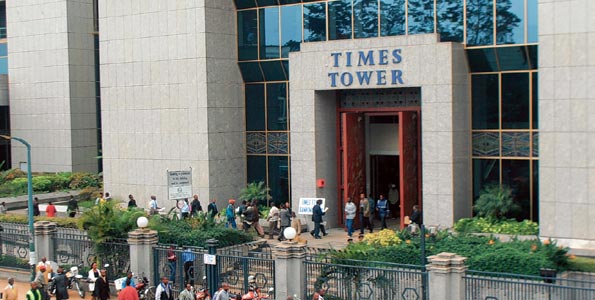
Pressure intensified as KRA began validating income and expenditure declarations for the January to December 2025 period. Section 16(1)(c) of the Income Tax Act allows only expenses backed by eTIMS invoices. Anything else is disregarded. The rule has turned invoices into defensive assets. Demand surged. So did fabrication.
Georeferencing interrupts that dynamic by attaching cost claims to physical reality. An invoice that cannot plausibly exist where it claims to originate becomes difficult to defend.

When place becomes a filter
Tax administration already relies on cross-checking. What georeferencing adds is a spatial filter. Turnover figures can now be read alongside where invoices are generated. Volume can be assessed against distance. Frequency against plausibility.
Clusters stand out quickly. High-value invoices emerging from the same coordinates across multiple entities invite scrutiny without the need for whistleblowers or tips. The system does not accuse. It prioritises.
This is enforcement by elimination. Legitimate activity blends into the background. Repetition sharpens focus.
The Special Table and its limits
Georeferencing enters a system already marked by exclusion tools. Chief among them is the Special Table, an administrative list that blocks certain taxpayers from filing VAT returns. Firms on it cannot support input VAT claims. Most compliant businesses avoid transacting with them altogether.
KRA says about 100,000 taxpayers currently sit on the Special Table. Roughly 80,000 were added around 2 years ago and have never engaged to regularise their status. Many are missing traders, entities that issue invoices without supplying goods or services, then disappear when liabilities arise.
Inclusion criteria are broad. Non-filing for 6 months. Nil filing for 6 months where input claims are made against the taxpayer. Failure to comply with eTIMS rules. Filing returns without payment for 6 months where recovery efforts fail. Removal requires engagement with a KRA tax service office.
The list deters some abuse. It does not stop serial offenders from abandoning compromised PINs and re-entering the system. Georeferenced invoices constrain that tactic by tying behaviour to physical locations rather than paperwork alone.
Stock as constraint, not record
KRA is extending control beyond invoices. A stock management module is being built into eTIMS, linking issued invoices to declared inventory. Businesses will be expected to invoice only what they hold or legitimately provide.
Once operational, the module turns stock into a limiting factor. An invoice unsupported by inventory becomes suspect by default. For goods with clear unit counts, discrepancies surface quickly. For services and blended operations, the exercise becomes more complex but no less revealing over time.
This approach tightens enforcement without expanding headcount. Systems do the watching. Audits follow the trail.
Fuel stations under scrutiny
Fuel retail has drawn particular attention. KRA has identified transactions that should be business to customer being converted into business to business invoices. Individual motorists fuel without requesting receipts. Stations later aggregate those sales and issue a single invoice to a firm, which then claims VAT and expenses that never belonged to it.
Here, georeferencing aligns neatly with stock tracking. Fuel volumes are fixed. Pumps do not move. Timing is precise. Patterns surface without elaborate investigation.
The practice exposes a wider vulnerability in VAT administration. Consumption easily masquerades as cost when documentation is malleable.
Escalation beyond administration
Some fictitious invoicing cases have already been referred to the Director of Public Prosecutions. That escalation changes the risk profile. What once sat in the realm of penalties and adjustments now carries criminal exposure.
Whether prosecutions alter behaviour across the tax base remains uncertain. High-value fraud tends to adapt. What changes is the price of participation. Georeferenced invoices raise that price by reducing anonymity and increasing traceability.
Compliance becomes less about negotiation and more about alignment.
A system insisting on coherence
KRA georeferenced tax invoices reflect a broader insistence on coherence. Declared income, claimed expenses, stock levels, and physical location are being forced into agreement. Documents that add up on paper but make no sense on the ground are losing credibility.
For compliant firms, the system adds discipline. For habitual abusers, it removes cover. The invoice is no longer just a record. It is a statement anchored to place, inventory, and time.
The contest over VAT compliance will not end here. It rarely does. But the ground has narrowed. The floating invoice, long tolerated, is becoming harder to sustain.
[Secure Your Seat at Africa Tech Summit Nairobi 2026 | February 11–12 here] Use code TTRENDS10 at checkout to save 10% on your pass and join the leaders building Africa’s $1 trillion cross-border payment future.
Go to TECHTRENDSKE.co.ke for more tech and business news from the African continent.
Follow us on WhatsApp, Telegram, Twitter, and Facebook, or subscribe to our weekly newsletter to ensure you don’t miss out on any future updates. Send tips to editorial@techtrendsmedia.co.ke

