
OpenAI Opened the Door to Ads. Google Did Not
A casual answer in Davos that quietly raised the stakes for how AI gets paid for

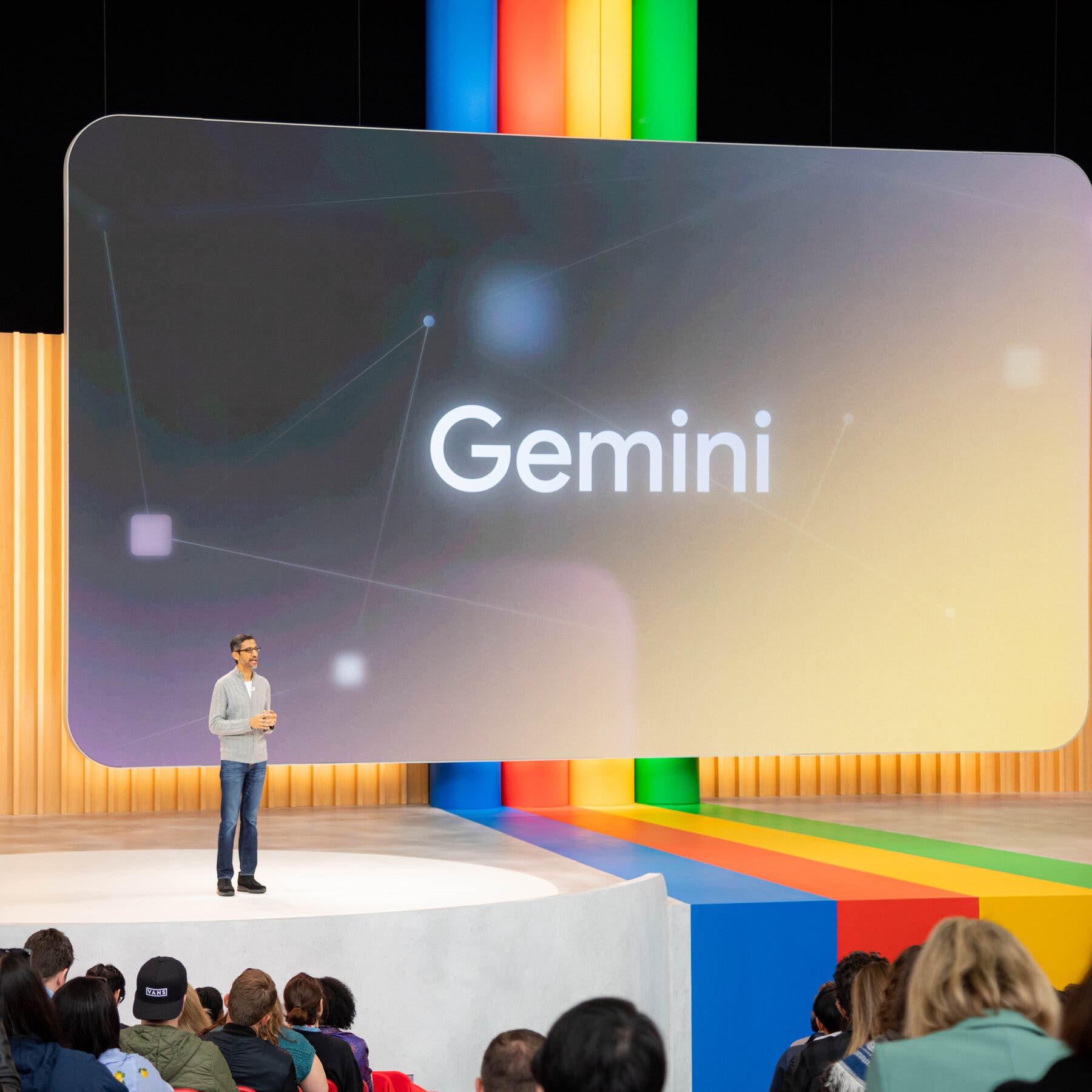
Davos does strange things to conversations. People arrive sleep deprived, guarded, and oddly candid at the same time. In one of those half-lit rooms off the World Economic Forum circuit, Demis Hassabis gave a reply that cut against expectations. Asked about monetization, the Google DeepMind chief said there are no plans to put ads in Gemini.

The line landed with weight because of timing. Just days earlier, OpenAI confirmed it would begin introducing advertising into parts of ChatGPT. The move broke a long running assumption that the dominant AI chat interfaces would resist the ad model, at least publicly, for as long as possible. Hassabis did not moralize. He sounded curious, almost puzzled. “It’s interesting they’ve gone for that so early,” he said, adding that revenue pressure may be the driver.
That small exchange now sits at the center of a bigger argument about how consumer AI will be paid for, and who blinks first.
Google’s ad empire meets its most delicate product
Google saying no to ads inside Gemini is not an act of corporate restraint in the abstract. This is a company that built one of the most efficient advertising machines in modern business. Ads fund search, maps, video, and much of the open web as people know it. Which is precisely why Gemini is different.

A conversational system that answers questions, summarizes documents, and writes code sits closer to cognition than to navigation. Drop ads into that flow and the product risks feeling less like a tool and more like a pitch. Google understands this tension better than anyone because it has spent years calibrating how much commercial weight users will tolerate in search results before trust erodes.
The internal logic seems to be that Gemini must first earn legitimacy as an assistant before it becomes a surface for monetization. Once ads appear inside a conversational model, every answer becomes suspect. Even Google, with its tolerance for monetized interfaces, knows that suspicion is hard to reverse.
OpenAI’s turn toward the cash register
OpenAI’s decision to move earlier says less about ideology and more about arithmetic. Large language models are expensive to train and even more expensive to run at scale. Every user prompt carries a compute cost. Free usage multiplies that burden.
Introducing ads into the free and lower priced tiers of ChatGPT is an attempt to square a circle that has been obvious for more than 2 years. Subscriptions alone will not cover the bill if the product is meant to be universal. Enterprise deals help, but they do not solve the mass market problem.
There is also a cultural friction here. OpenAI spent years positioning itself against the ad driven incentives of Big Tech. Ads inside ChatGPT challenge that self image. Inside the company, this is unlikely to be a smooth consensus. Engineers tend to worry about output integrity. Product teams worry about retention. Finance worries about burn.
If ads work, meaning users accept them without disengaging, the model suddenly looks sustainable. If they do not, OpenAI will have tested the limits of its relationship with its own audience.
The Apple factor lurking in the background
Hassabis also referenced Google’s new deal with Apple, a reminder that distribution still matters. Apple controls one of the largest consumer gateways on the planet. Any AI system that becomes default on Apple devices inherits a scale problem and a revenue problem at the same time.
Apple itself remains hostile to obvious advertising in core user experiences. That posture likely reinforces Google’s reluctance to pollute Gemini early. A chatbot that ships deep into consumer hardware has to feel neutral, almost invisible in its incentives.
This is where strategy gets subtle. Ads in Gemini might arrive one day, but once a conversational assistant is embedded at the operating system level, monetization choices ripple far beyond a single app.
Ads are not just a business model, they are a behavior change
The debate is often framed as money versus purity. That misses the deeper point. Ads change how people behave inside a system. They ask different questions. They trust answers differently. They become alert to persuasion.
In search, users learned to scan past sponsored links. In chat, there is no margin for scanning. The answer is the interface. Insert commercial influence there and the relationship changes in a way that is harder to compartmentalize.
This is why Google’s stance on ads in Gemini reads less like a promise and more like a delay. The company is buying time to see how users react elsewhere. OpenAI is running the experiment first, whether it wants to or not.
Where this leaves the economics of AI assistants
If ads fail to carry the load, other pressures surface. Higher subscription prices risk narrowing access. Usage caps frustrate power users. Enterprise cross subsidies create uneven incentives between consumer and business customers.
None of these options are clean. The industry is feeling its way toward a stable equilibrium that probably does not look like search ads or app subscriptions as people know them.
For now, Google is choosing caution. OpenAI is choosing exposure. Both are rational. Both are risky.
The more interesting question is not who adds ads first, but which company figures out how to pay for intelligence without corroding trust. That answer will shape how people live with AI far longer than any single product decision made in Davos on a tired January afternoon.
[Secure Your Seat at Africa Tech Summit Nairobi 2026 | February 11–12 here] Use code TTRENDS10 at checkout to save 10% on your pass and join the leaders building Africa’s $1 trillion cross-border payment future.
Go to TECHTRENDSKE.co.ke for more tech and business news from the African continent.
Follow us on WhatsApp, Telegram, Twitter, and Facebook, or subscribe to our weekly newsletter to ensure you don’t miss out on any future updates. Send tips to editorial@techtrendsmedia.co.ke


