
Kenya’s Mobile Wallets Hold Billions. The Protection Behind Them Is Thinner Than Most Users Think
Mobile wallets grew into savings accounts by habit, long before regulators decided how they should be protected

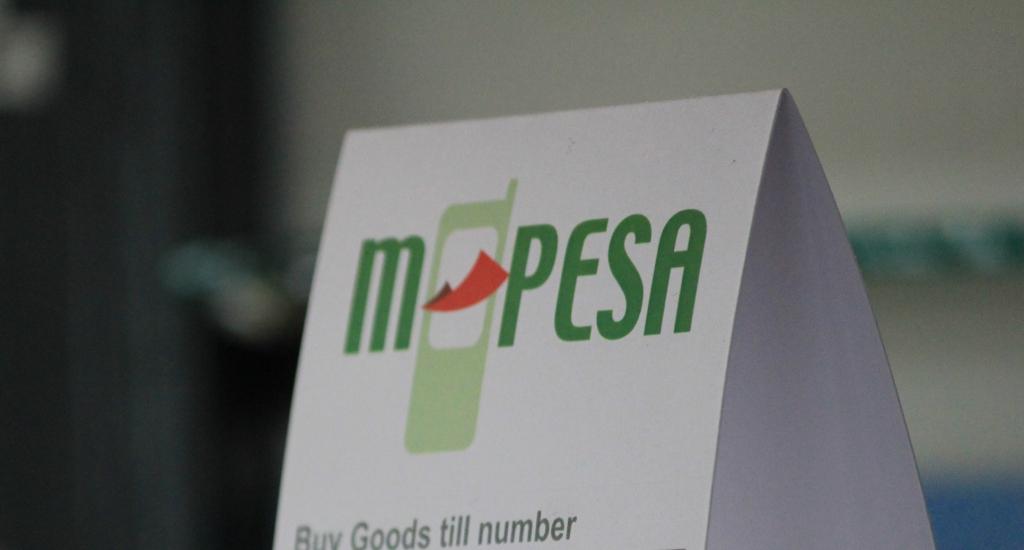
Mobile money in Kenya has always projected certainty. Balances appear instantly. Transfers clear in seconds. Withdrawals feel final in the hand. That sense of solidity has become so familiar that few users stop to ask what actually sits beneath the numbers on their phones.
Regulators are now asking that question more openly.
The State, through the Kenya Deposit Insurance Corporation and the Central Bank of Kenya, is weighing whether mobile money deposits should be brought under a formal insurance framework. The conversation is not driven by panic or scandal. It is driven by scale, exposure, and a legal structure that has not kept pace with how Kenyans actually store money.
For millions of users, mobile wallets are no longer transactional tools. They function as savings accounts, emergency funds, and short term stores of value. Yet they sit outside the safety net that protects bank depositors.


That tension has been manageable only because nothing has gone wrong.
Pooled money, individual risk
Mobile money balances are backed by cash held in ring fenced trust accounts at commercial banks. The funds are legally separate from telecom operating accounts and overseen by the central bank. This architecture has often been cited as proof that customer money is safe.

It is safer than many alternatives, but it is not insured in the way users assume.
Deposit insurance in Kenya protects individual bank accounts up to Sh500,000. Mobile money trust accounts are pooled. One account can hold billions of shillings on behalf of millions of customers. If a bank holding those funds were to collapse, insurance would apply to the trust account as a single depositor, not to the people whose money makes up the pool.
The math is uncomfortable. A payout designed for a single account does little for a balance sheet representing the daily liquidity of households, traders, and small firms across the country.
Earlier industry studies have pointed out another complication that rarely features in public debate. Even if trust assets are legally segregated, there is no clear operational pathway for individual customers to claim their money directly in the event of a bank insolvency. The law recognises the trust. The plumbing for distribution is far less obvious.
Trust carried the system further than policy did
For years, consumer protection in mobile money leaned heavily on brand confidence. Safaricom’s dominance helped. M-Pesa holds close to nine out of every ten mobile money users, and the company has long argued that it places customer funds in large, stable banks and government securities.
That approach lowers risk, but it does not remove it.
KDIC’s recent position reflects a subtle but important change. The institution is no longer satisfied with trust as a substitute for explicit protection. In its assessment, excluding mobile money from deposit insurance leaves a large share of the population exposed to a failure they cannot influence or hedge against.
More than four out of five Kenyans use mobile money. For many, it is their main link to the formal financial system. The idea that their savings are protected only indirectly sits awkwardly with how central mobile platforms have become to daily economic life.
The rise in formal financial access over the past decade owes more to phones than to bank branches. The safety framework still looks like it was designed for the branch era.
When unlikely events carry heavy consequences
Regulators are careful with their language, but the direction of their thinking is clear. They are not only concerned about the collapse of a bank holding trust funds. They are also modelling operational and institutional failures that would freeze access to mobile balances, even temporarily.
Mobile money has reached a point where concentration itself creates vulnerability. Vast sums flow through a small number of systems every day. Any prolonged disruption would ripple quickly through households, supply chains, and government revenue collection.
This does not require a telecom to fail outright. Legal disputes, cyber incidents, or a sudden loss of banking counterparties could all produce similar stress. The existing framework assumes continuity. Insurance exists to deal with moments when continuity breaks.
A framework designed for another time
Kenya’s deposit protection rules were written with traditional banking in mind. One person, one account, one limit. Mobile money blurred those lines by design. It aggregated millions of small balances into a handful of large accounts and then scaled faster than regulation could follow.
Bringing mobile money deposits into an insurance scheme raises difficult questions. Who pays the premiums. How coverage is calculated. Whether protection attaches to the user, the trust, or the platform. None of these issues have simple answers.
What is becoming harder to defend is the status quo.
Mobile money is no longer peripheral to the financial system. It sits at its core. The legal distinction between a bank deposit and e money remains, but the economic function looks increasingly similar from the user’s point of view.
Kenya built a global reference point for mobile finance by moving early and moving fast. The current debate suggests the next phase will be slower, more technical, and less visible. It will also decide how much risk ordinary users are expected to carry in a system that has outgrown the assumptions it started with.
Go to TECHTRENDSKE.co.ke for more tech and business news from the African continent.
Follow us on WhatsApp, Telegram, Twitter, and Facebook, or subscribe to our weekly newsletter to ensure you don’t miss out on any future updates. Send tips to editorial@techtrendsmedia.co.ke
TechTrends Media Podcasts

