
The Fixed-Internet Race And How Safaricom, Faiba, Zuku And Poa Are Drawing New Boundaries In Kenya’s Connectivity Market
Why the fight for home internet has turned into a block-by-block contest where every provider edges in hoping the others have left a gap

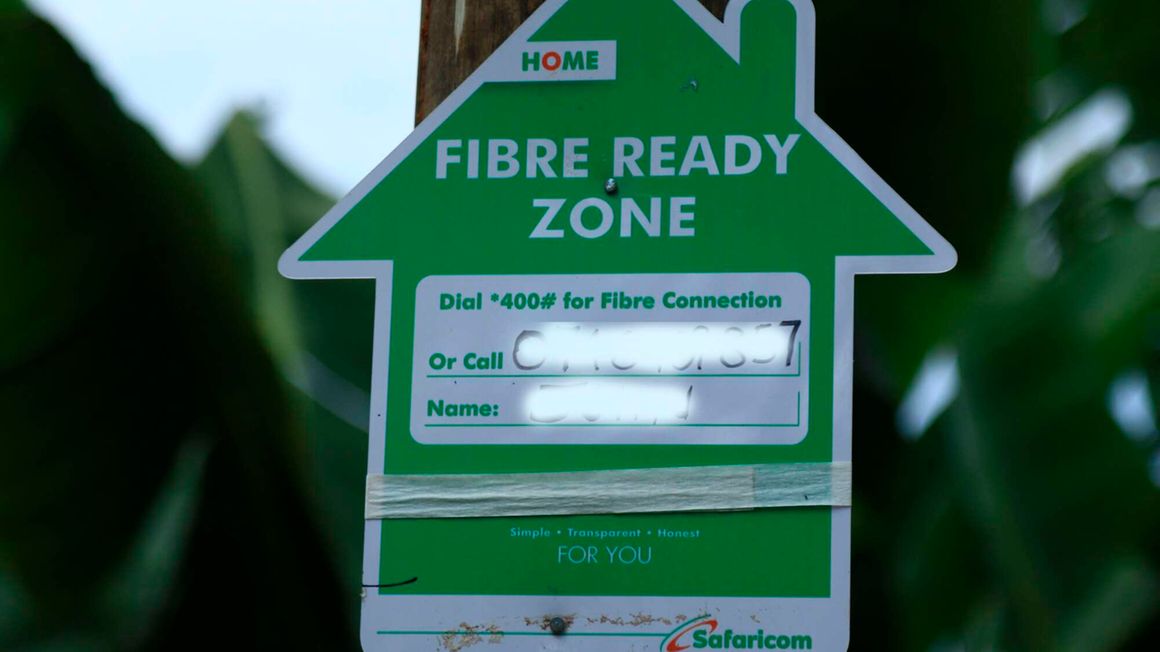
Kenya’s fixed internet competition has taken on new intensity, and it is no longer a simple question of who offers the fastest link. The field has become layered, with each provider building a presence shaped by terrain, pricing, household routines and the stubborn reality of where fiber can actually be pulled through.

Safaricom, Faiba, Zuku and Poa now operate in a landscape where coverage maps never stay still for long and where small pockets of demand can redefine entire local strategies.
Safaricom carries the weight of scale, but scale creates its own tensions. High-density estates stretch its last-mile lines, especially during peak streaming hours. Faiba leans on a reputation for efficiency in areas where its network runs cleanly, though its coverage map remains selective. Zuku’s strength sits in estates where early investment gave it a head start, but maintaining that lead has become harder as rivals enter the same corridors. Poa, meanwhile, has rooted itself in neighbourhoods that often fall outside the traditional playbook. Its model depends on being present where the others see low commercial appeal, turning overlooked areas into footholds.
Different models, different pressures
Each provider carries its own structural limits. Safaricom’s network expansion moves steadily but contends with rapid population growth in many urban zones. Faiba has strong pockets of performance but finds growth slower in regions that require heavier infrastructure investment.


Zuku faces the challenge of aging lines in some early-build estates, which introduces small inconsistencies that frustrate long-time customers. Poa’s model relies on scale through affordability, but that same model demands constant back-end tuning to keep neighbourhood links stable during busy hours.
The competition becomes clearer when viewed estate by estate. One neighbourhood may rely almost entirely on Safaricom because of its clean fiber rollout. Another may favour Zuku due to legacy presence. A third may gravitate toward Poa because residents value affordability above speed. That patchwork creates a market where no player has a universal advantage, only clusters of influence.

Coverage gaps and the scramble to fill them
Despite ambitious expansion, fiber remains uneven across the country. Small gaps, often only a few streets wide, can shape how households pick providers. A tower or cabinet placed a block too far can leave dozens of homes leaning on pricey mobile data or waiting months for trenching crews. These gaps turn into opportunities. Poa moves into them quickly. Faiba follows where feasible. Zuku sometimes regains ground in places it once dominated. Safaricom fills in corridors where population density turns the math in its favour.
This messy distribution means the fixed-internet race does not unfold at a national scale but through local battles repeated hundreds of times across the map.
How consumer behaviour tilts the field
Household routines have changed. Remote work remains common. Multi-device homes strain links every evening. Parents stream content while children run game updates in the background. Even modest households are now bandwidth heavy. Providers that cannot maintain stable throughput during these pressure windows lose ground quickly.
Customer churn reflects this. Many households think in terms of reliability rather than brand. If a line holds steady, they stay. If not, they start asking neighbours for alternatives. Informal word-of-mouth channels often influence provider swings more than formal advertising.
Where the race is heading
Several outcomes feel increasingly likely. The first is more intense micro-competition in dense estates where every provider already has a presence. These zones will become the front line for upgrades, especially as traffic volumes keep rising. The second is steady movement toward underserved areas, not out of charity but because these places now hold enough paying households to justify investment. The third involves product experimentation. Providers may explore hybrid bundles, fixed-wireless fallbacks or lighter installation paths to reduce the cost of onboarding new users.
Long term, Kenya fixed internet competition will hinge on consistency. The provider that maintains stable evening speeds across the most estates will gain a quiet advantage that spreads slowly but firmly. Speed still matters, but stability now shapes loyalty, and loyalty shapes revenue.
A market held together by local battles
The fixed-internet contest has no single leader across the entire country. Instead, it is a stitched-together landscape of small wins and steady losses. Safaricom, Faiba, Zuku and Poa are all expanding, but they expand into different kinds of neighbourhoods for different reasons. The result is a market defined not by sweeping national moves but by granular fights for streets, estates and clusters of households whose daily routines decide who stays ahead.
Follow us on WhatsApp, Telegram, Twitter, and Facebook, or subscribe to our weekly newsletter to ensure you don’t miss out on any future updates. Send tips to editorial@techtrendsmedia.co.ke

