
Tanzanian Payments Go Global as Vodacom Connects M-Pesa to Visa, Alipay and Regional Wallets
Why the expansion of M-Pesa into global payment rails is starting to redraw the routes small businesses use to settle their dealings across borders

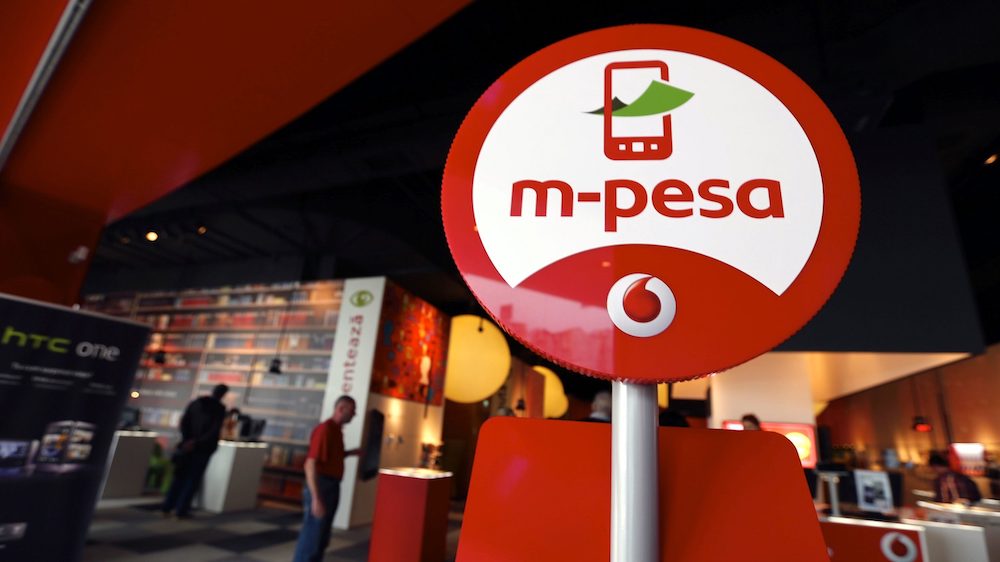
Vodacom Tanzania has moved M-Pesa into a wider commercial role with the introduction of M-Pesa Global Payment, a suite of tools designed to connect Tanzanian traders and travelers with payment systems across several major markets. The new capability rests on a web of partnerships that draw in Visa, Alipay, Network International, Magnati, TerraPay, Thunes and MTN Uganda. Each partner sits at a different point in the payment chain, allowing M-Pesa users to transact across regions often marked by friction, delays or high transaction costs.

The project gives M-Pesa users a tokenized Visa card inside the M-Pesa menu or Super App. Customers can now tap their phones at any Visa contactless terminal around the world without exposing sensitive card details. It is a simple interaction, yet it places M-Pesa within an established global payment rail. Vodacom positions this as a response to an ongoing pattern: more Tanzanians are conducting business with suppliers in Asia, trading regularly across the East African corridor, or visiting Gulf hubs like Dubai. Those cross-border routines have grown faster than the tools supporting them.
Epimack Mbeteni, M-Pesa Director at Vodacom Tanzania, framed the roll-out as part of a broader effort to deepen digital financial participation. He underscored the need for dependable infrastructure that treats regional and global transactions with the same ease as domestic payments. The partnerships across Visa, Alipay, Network International and MTN Uganda are meant to create that consistency, lowering the burden on traders who have long wrestled with slow or fragmented systems.
Visa’s participation is central to the Tap & Pay component. Victor Makere, Visa Country Manager for Tanzania, noted that tokenization improves security and allows customers to rely on their phones as the primary payment tool. It also places Tanzanian users inside a global acceptance framework that has long been out of reach for small traders who lack traditional bank-backed cards.

Thunes provides the connector to China through its Direct Global Network. The company’s integration with Alipay gives M-Pesa users a direct line to Chinese merchants, a development that aligns with the steady expansion of Tanzania–China trade across manufacturing, textiles and consumer goods. Andrew Stewart, Chief Revenue Officer at Thunes, stressed the value of instant merchant payments for small importers who rely on predictable transactions to keep goods moving.
Dubai joins the ecosystem as well. TerraPay’s international merchant infrastructure allows M-Pesa users to transact with select merchants across the city, a location that anchors much of East Africa’s re-export trade. Willie Kanyeki, TerraPay’s Vice President for Sub-Saharan Africa, described the collaboration as a practical way to support African buyers and sellers who depend on Dubai for stock, logistics and market access.

Regional trade receives another extension through MTN Uganda. Payments made by M-Pesa users to Ugandan merchants can now flow directly into MTN MoMo wallets. For many traders moving goods between the two countries, this removes familiar pain points such as reliance on cash, conversion hurdles or intermediate settlement agents. Richard Yego, MTN Mobile Money Uganda Director, pointed out that thousands of small businesses stand to benefit from the simplified process.
These integrations follow the trajectory of mobile money adoption in Tanzania, where mobile tools sit at the center of many commercial routines. Small and medium enterprises often operate across borders in short cycles, and fast settlement can determine whether goods reach markets on time or whether suppliers release the next batch. A reliable digital mechanism matters in those moments, particularly for traders who operate beyond formal banking systems.
M-Pesa Global Payment marks another step in Vodacom’s attempt to position M-Pesa as both a domestic utility and an outward-facing commercial tool. The company notes that its goal is to widen access, not by replicating traditional banking functions but by building a set of pathways that treat mobile money as a primary account for cross-border activity. The emphasis remains on predictable payments, safer digital interactions and a system that can carry the weight of real commercial routines without slowing them down.
Go to TECHTRENDSKE.co.ke for more tech and business news from the African continent.
Follow us on WhatsApp, Telegram, Twitter, and Facebook, or subscribe to our weekly newsletter to ensure you don’t miss out on any future updates. Send tips to editorial@techtrendsmedia.co.ke

